
The Ghost in the Wall: A Forensic Discovery
I was called to a century-old row house where the owner complained that her bricks were ‘shedding.’ To the untrained eye, it looked like a bit of dust on the porch. But when I pulled my inspection scope and peered into a hairline fracture near the soldier course, I didn’t see solid masonry. I saw a void where the structural wythe had literally dissolved into a pile of red flour. The previous contractor had used a modern, high-strength Portland cement to ‘fix’ a lime-based wall. He matched the color perfectly, but he signed the building’s death warrant. The mortar was so hard that it forced every ounce of moisture and thermal stress into the soft, historic brick. This is the reality of stone facade restoration: if you don’t respect the chemistry, the physics will tear your house apart.
The Sacrificial Principle: Why Mortar Must Be Weak
In the world of tuckpointing brick walls, there is one golden rule: the mortar must always be softer and more permeable than the masonry units themselves. This is known as the sacrificial principle. When a wall breathes, moisture moves through the path of least resistance. In a correctly built historic wall, that path is the mortar joint. When water evaporates from the ‘mud,’ it leaves behind salts. If that evaporation happens inside the brick because the mortar is too dense, the salt crystals grow inside the clay pores and ‘pop’ the face off. This is brick spalling prevention 101. You aren’t just filling a gap; you are installing a specialized filter that protects the brick from internal pressure.
“Water penetration is the single greatest threat to masonry durability. The use of mortar with high water-retention and low compressive strength is often necessary to accommodate the movement of older masonry units.” – BIA Technical Note 7
The Chemistry of the ‘Mud’: Portland vs. Lime
Modern masonry relies on hydration—a chemical reaction where Portland cement turns into a crystalline matrix almost overnight. It’s fast, it’s hard, and it’s brittle. Historic mortar matching services, however, have to deal with carbonation. Traditional lime mortar doesn’t ‘set’ in the modern sense; it absorbs carbon dioxide from the air over months and years, slowly turning back into limestone. This creates a flexible, self-healing joint. When the building shifts—and all buildings shift—micro-cracks form in lime mortar. When it rains, the water dissolves a bit of free lime and redeposits it into those cracks, effectively sealing them. Try doing that with a bag of pre-mix from a big-box store. You can’t. That stuff is too rigid; it doesn’t move, it just snaps, creating a cold joint where water can pour in.
The Forensic Lab: Testing for More Than Pigment
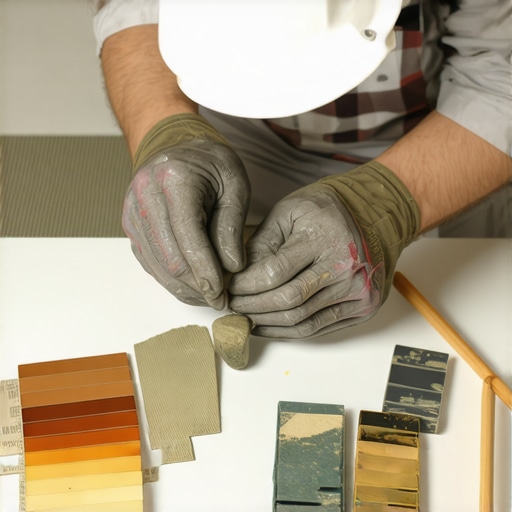
When we perform mortar matching services, we aren’t just holding up a color wheel. We start with an acid digestion test. We take a sample of the original ‘mud’ and dissolve the binder in a bath of hydrochloric acid. What’s left behind is the aggregate—the sand. We look at the sand under a microscope to determine the gradation, the ‘tooth’ of the grains, and the mineralogy. Was it river sand with rounded edges? Was it crushed limestone? The ratio of binder to aggregate is the DNA of the wall. If you get the sand wrong, the texture will never match, and more importantly, the capillary action—the way the wall ‘wicks’ water—will be fundamentally altered. This is critical for chimney interior parging and exterior pointing alike.
The Physics of the Strike: Striking and Tooling
Once the mix is right, the application is where the ‘Old World’ skill comes in. You don’t just ‘butter’ the joint and walk away. You have to wait for the mortar to be ‘thumbprint hard.’ That’s when you take the slicker or the jointer tool and strike the joint. This compaction is what creates the weather-seal. In historic pointing styles, such as a weather-struck or a grapevine joint, the goal is to shed water away from the brick. If the mason is lazy and leaves ‘honeycombing’—small voids in the mortar—you’ve just built a series of tiny buckets that will catch water, freeze, and expand. Remember, water expands by 9% when it turns to ice. That 9% is enough to crack a granite lintel if the pressure has nowhere to go.
“Mortar shall be specified by either proportion specifications or property specifications… For restoration, the lowest strength mortar that meets the structural requirements should be selected.” – ASTM C270 Standard
Foundations and Parging: The Invisible Battle
The struggle isn’t limited to what you see at eye level. Foundation helical pier installation often follows years of masonry neglect. When commercial masonry maintenance is ignored, hydrostatic pressure builds up against the basement walls. If the chimney interior parging has crumbled, acidic flue gases eat away at the mortar from the inside out. I’ve seen chimneys that looked fine on the outside but were essentially hollow tubes of soot and loose brick because the internal parging had failed. This is why we use sustainable block cutting techniques to replace only what is broken, preserving the structural integrity of the original stack while ensuring the new ‘mud’ bonds perfectly to the soot-stained substrate.
The Fallacy of ‘Lick-and-Stick’
The modern obsession with thin stone veneer—what I call ‘lick-and-stick’—is the antithesis of real masonry. These systems rely on chemical adhesives and thin layers of mortar that have zero breathability. In a stone facade restoration project, we often find that these veneers have trapped moisture against the structural sheathing, rotting the house from the outside in. Real masonry is a mass-wall system. It’s thick, it’s heavy, and it manages water through bulk and permeability. When we perform patio stone realignment, we aren’t just leveling rocks; we are rebuilding the drainage substrate to ensure that the freeze-thaw cycle doesn’t turn the backyard into a wavy mess of heaving limestone.
The Master’s Conclusion: Do It Once
In this trade, you either do it once, or you do it twice. Doing it twice usually costs four times as much because you have to grind out the failed modern cement before you can put the right lime mortar back in. Whether it is tuckpointing brick walls on a 1920s bungalow or managing a commercial masonry maintenance contract for a downtown high-rise, the physics remain the same. Respect the material. Match the chemistry, not just the color. And never, ever trust a man who says he can ‘seal’ a historic brick wall with silicone. You might as well wrap your house in plastic wrap and wait for the rot to start. Real masonry doesn’t need a sealer; it needs a master who knows how to mix the mud.