
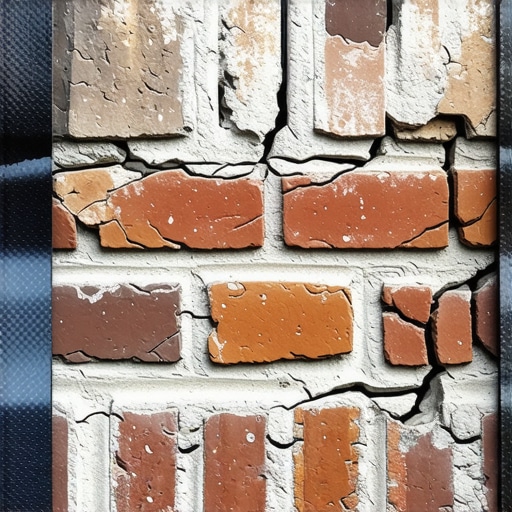
The Forensic Scene: When the Corner Tells a Lie
The homeowner thought it was just a hairline crack, a little ‘character line’ on the 1920s Georgian manor. But when I put my scope inside that vertical fissure running through the brick quoins, I saw the structural steel was rusted to dust, and the corner was effectively floating. This wasn’t a job for a bucket of pre-mix and a prayer. This was a structural failure in the most critical part of the masonry envelope. Quoins are the teeth of a building; they lock the walls together. When they split, the building is losing its grip on reality. Many handymen would suggest a simple crumbling mortar joint repair, but that is like putting a band-aid on a broken femur. We needed to talk about tensile strength, load redistribution, and the surgical application of carbon fiber straps.
The Physics of the Failure: Why Quoins Snap
Masonry is a champion of compression. You can stack bricks to the moon and they will hold the weight. But masonry is a coward when it comes to tension. When a foundation settles or a lintel fails, it creates shear forces. In a quoin—those decorative or structural corner blocks—the stresses are concentrated. If the soil shifts, even by a fraction of an inch, the corner wants to pull away from the main field of the wall. This creates that classic stair-step crack or, worse, a vertical shear through the brick itself. Professional masonry restoration requires understanding that the brick has already failed at a molecular level.
“Water penetration is the single greatest threat to masonry durability, leading to internal corrosion of reinforcing elements and subsequent cracking.” – BIA Technical Note 7
The Enemy of the South: Thermal Expansion and Poor Drainage
In the heavy, humid heat where the sun beats on a southern-facing quoin all day, the bricks expand. If the wall is long enough and lacks proper control joints, that expansion has nowhere to go but out. This is where emergency masonry repair often starts. The mortar ‘burns’ or flash-sets if it was applied in the heat without wetting the bricks, leading to a weak bond. When you add hydrostatic pressure from poor chimney flashing repair or faulty gutters, the water enters the cracks, sits behind the brick, and pushes. In the south, we don’t worry about the freeze-thaw as much as we worry about the sheer force of expanding materials and the rot of the internal structure.
Why Carbon Fiber? The Modern Master’s Solution
Traditional methods involved ‘stitching’ the wall with more brick, but if the movement continues, the new bricks just crack again. Carbon fiber reinforcement changes the math. Carbon fiber has a tensile strength ten times that of steel but weighs next to nothing. We are talking about a modulus of elasticity that allows the strap to absorb the movement of the building without snapping. When we perform stone wall repair or fix structural quoins, we are embedding these straps into the mortar joints—a process often called ‘near-surface mounted’ reinforcement. This isn’t some robotic masonry repair gimmick; it’s high-level material science applied with a trowel. We grind out the crumbling mortar joint, clean the ‘tooth’ of the brick to ensure the epoxy can grab, and then we ‘butter’ the groove with a high-viscosity structural resin.
The Execution: Buttering the Groove and Setting the Strap
First, you don’t just slap the strap on the outside. That’s ‘lick-and-stick’ behavior, the same garbage you see with cheap stone veneer over brick installations. You have to carve a channel into the bed joint. I use a diamond-blade grinder to clear out the old ‘mud’ to a depth of about an inch and a half. You need to see the raw, red heart of the brick. Next, you blow out the dust—dust is the silent killer of adhesion. If there is brick efflorescence removal needed, you do it now, because those salts will push your epoxy right out of the wall. Once the joint is surgical, you load your hawk with structural epoxy. You ‘butter’ the back of the carbon fiber strap, ensuring 100% coverage. No voids. No ‘honeycombing’ of the resin. You press the strap into the joint using a slicker or a narrow jointer, making sure it’s centered.
“The use of Fiber Reinforced Polymers (FRP) in masonry provides a non-corrosive solution to structural instability while maintaining the aesthetic integrity of the historic fabric.” – ASTM D7522/D7522M
The Finish: Pointing and Aesthetics
After the strap is set and the resin has cured—usually a 24-hour cycle where it reaches a rock-hard state—you have to cover your tracks. This is where brickwork pointing styles come into play. You don’t want to use a hard Portland cement on an old lime-mortar building. If the building is pre-1940, you’re mixing up a Type O or Type N mortar, matching the aggregate size and the color of the original ‘mud.’ You ‘strike’ the joint to match the existing profile—whether it’s a weather joint, a grapevine joint, or a simple concave. The goal is for the repair to be invisible. A year from now, a passerby shouldn’t be able to tell that the corner of the building was nearly falling off.
Comparing the Base: Lessons from the Ground Up
When I see a failing quoin, I often look down. Is there a brick paver driveway repair happening nearby? Often, the same poor compaction that causes a driveway to ripple is what caused the house corner to sink. If your base isn’t right, the masonry will tell on you. Whether it’s 8 inches of compacted gravel for a driveway or a reinforced concrete footing for a quoin, the physics remain the same: you cannot build a permanent structure on temporary ground. Do it once, or do it twice. I’d rather do it once and leave something that will last another hundred years. Don’t fall for the ‘handyman special’ where they just smear some caulk in the crack and call it a day. That’s not masonry; that’s a crime scene waiting to happen.
The Verdict on Structural Integrity
Structural cracks in brick quoins are a warning shot across the bow. You can ignore them until the wall starts to ‘belly’ out, or you can intervene with carbon fiber technology and professional masonry restoration techniques. This isn’t just about aesthetics; it’s about the survival of the structure. Use the right ‘mud,’ respect the ‘tooth’ of the stone, and never trust a contractor who doesn’t own a level. Real masonry is a marriage of chemistry and sweat. If you treat it with respect, it’ll stand long after we’re all dust. If you cheat it, the building will eventually find a way to shake you off.[IMAGE_PLACEHOLDER]”