
The Forensic Scene: A Hidden Decay
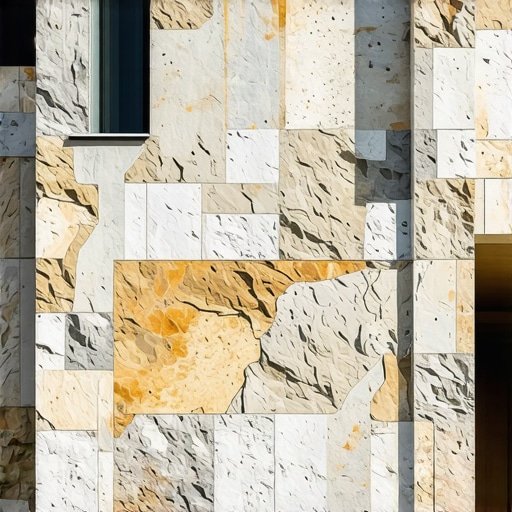
The homeowner thought it was just a hairline crack. But when I put my scope inside the cavity of that 1925 Dutch Colonial, I saw the structural steel was rusted to dust. The culprit wasn’t a sudden flood or a seismic shift. It was paint. Specifically, three coats of heavy-duty, film-forming latex paint that someone had slapped over the original masonry to ‘freshen it up.’ For seventy years, those bricks had breathed, exhaling the moisture that wicked up from the earth. Then, someone choked them. By the time I arrived, the faces of the bricks were spalling off in sheets, a process where the trapped vapor pressure exceeds the internal tensile strength of the clay, literally exploding the stone from the inside out.
The Molecular Lie of Modern Paint
To understand why natural stone stains win the war against paint, we have to talk about the physics of adhesion. Traditional paint is a film. It relies on a mechanical bond—essentially tiny hooks grabbing onto the surface ‘tooth’ of the masonry. But masonry is a living, breathing sponge. It is subject to hydrostatic pressure. When moisture enters the wall from a leaking gutter or capillary rise through a concrete block foundation repair, it moves toward the exterior. If it hits a layer of paint, it gets trapped. This leads to ‘honeycombing’ in the mortar and eventually, the paint bubbles and peels. Natural stone stains, however, operate on the principle of silicate bonding. We are talking about an ion exchange where the stain becomes an integral part of the stone’s crystalline lattice. It doesn’t sit on top; it lives inside.
“Water penetration is the single greatest threat to masonry durability. The use of non-breathable coatings can lead to accelerated deterioration of the masonry units and the mortar joints themselves.” – BIA Technical Note 7
The Chemistry of Petrification
When I talk about ‘mud’ and ‘butter,’ I’m usually talking about the mortar repointing services I provide to save these old structures. But the chemistry of the stain is just as vital. High-quality masonry stains utilize potassium silicates. When applied, a chemical reaction called silicification occurs. The stain bonds with the mineral substrate of the brick or stone, creating a breathable, yet hydrophobic, surface. This is critical in North/Freeze-Thaw climates. If water stays liquid, it’s a nuisance. If it freezes, it expands by 9%. If that expansion happens behind a rigid paint film, the brick face pops. If you use a stain, the vapor can escape. You aren’t just coloring the wall; you are petrifying it. This is why a soldier course on a ledge stays vibrant for decades with a stain, while paint would be flaking off within three seasons.
Restoration Reality: Arches and Curved Walls
We often see the limits of modern materials during a brick arch restoration. An arch is a masterpiece of compression, where every unit relies on the ‘ring’ of the brick. If the mortar is too hard—say, a high-content Portland cement used by a ‘handyman special’—the brick will fail first. This is the sacrificial principle of masonry: the mortar must always be softer than the brick. When we perform tuckpointing curved walls, the geometry is even more unforgiving. We use tuckpointing machine services for efficiency on long runs, but for the delicate work of an arch or a tight radius, it’s all about the hand-tooling with a slicker. If you coat these intricate features in paint, you lose the shadow lines and the texture that define the craftsmanship. More importantly, you trap moisture in the most structurally sensitive parts of the building.
The Foundation of the Problem
Most masonry failures I inspect start at the dirt. I’ve seen modular masonry construction projects that look beautiful on day one but are leaning by year five because they skipped the foundation waterproofing or failed to understand soil heaving. In many cases, we have to look at retaining wall geogrid installation to handle the lateral earth pressure that is bowing a wall. If that wall is painted, the moisture from the soil will eventually push that paint off in unsightly white crusts called efflorescence—the salt deposits left behind after water evaporates. A natural stone stain allows those salts to pass through or be washed away without destroying the finish. It’s the difference between a skin that can sweat and a plastic bag that just collects rot.
“The mortar should be considered a sacrificial element… it must be more permeable and softer than the masonry units to ensure the longevity of the structure.” – ASTM C270 Standard Specification for Mortar for Unit Masonry
The Physics of the Mix
In modern builds, we often see concrete pump masonry mixes that are ‘too hot’—meaning they have too much cement and not enough lime. This leads to ‘flash setting,’ where the mix dries before it can properly hydrate. When we are doing mortar repointing services, we look for that perfect ‘suction’ of the brick. If the brick is too dry, it sucks the water out of the mud, and you get a cold joint that will crack if a truck even drives by too fast. We use a hawk and trowel to butter the joints carefully, ensuring we aren’t creating a bridge for water to enter. Using a stain on top of this carefully prepared work preserves the ‘wicking’ action of the lime, whereas paint would create a moisture trap that leads to the very cracks we are trying to fix. Whether it is tuck pointing services for a historic chimney or a full-scale restoration, the goal is always the same: keep the water moving out, not in.
The Hard Truth about Value
I’ve seen people try to save a buck by using leftover interior paint on an exterior brick wall. It’s a death sentence for the masonry. Within five years, they are calling me for a total facade overhaul. Doing it right the first time—using mineral-based stains and professional tuckpointing machine services—might cost more upfront, but you aren’t doing it twice. You are preserving the ‘tooth’ of the stone and the integrity of the original build. In this trade, you either respect the physics of the wall, or the wall will eventually remind you why you should have. Don’t be the homeowner who thinks a bucket of white latex is a ‘fix.’ It’s just a colorful way to hide a crumbling foundation until the day the rubble finally hits the ground.
{“@context”:”https://schema.org”,”@type”:”HowTo”,”name”:”How to Identify Masonry Coating Failures”,”step”:[{“@type”:”HowToStep”,”text”:”Inspect the surface for bubbling or peeling paint, which indicates trapped hydrostatic pressure.”},{“@type”:”HowToStep”,”text”:”Check for efflorescence, a white powdery substance that suggests water is pulling salts through the masonry.”},{“@type”:”HowToStep”,”text”:”Tap the brick or stone with a hammer; a hollow ‘thud’ indicates the face has delaminated from the core due to freeze-thaw damage.”}]}