
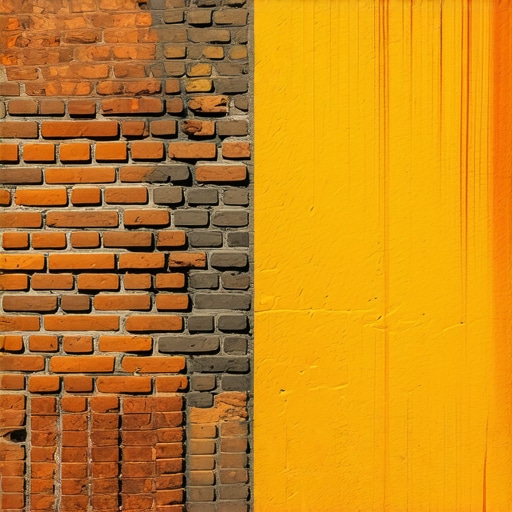
The homeowner thought it was just a hairline crack. But when I put my scope inside the cavity of that south-facing facade, I saw the structural steel was rusted to dust, and the brick themselves were shedding their color like a cheap suit. It wasn’t just a foundation issue; it was a systemic failure of the masonry’s ability to handle the relentless bombardment of solar radiation. As a third-generation mason, I’ve seen what the sun does to a building when it’s been stripped of its natural defense. People talk about brick like it’s an eternal material, but without the right chemistry, it’s just baked mud waiting to return to the earth. In the blistering heat of the South, where the thermal expansion cycle hits the soldier course harder than a sledgehammer, the lack of UV protection isn’t just an aesthetic problem—it’s the first step toward a total forensic collapse.
The Molecular War: Why Bricks Bleach and Brittle
When we talk about sun fading, we’re actually talking about photodegradation. The clay bricks we fire in kilns at 2,000 degrees Fahrenheit get their color from metal oxides—iron, manganese, chrome. These are stable, but the modular masonry construction used in modern commercial builds often relies on surface-applied pigments or synthetic additives to achieve those deep, trendy blacks and grays. When a high-energy UV photon slams into a carbon-based pigment molecule, it breaks the chemical bonds. This is why your vibrant charcoal brick looks like a dusty chalkboard after five years of Texas sun. But the damage goes deeper than the surface ‘tooth’ of the stone. UV radiation, combined with the infrared heat, causes the brick to expand. In a long run of masonry, this thermal movement puts immense stress on structural brick ties replacement needs. If the brick loses its integrity due to surface degradation, the moisture starts to penetrate deeper, reaching those ties and turning them into rust-streaked liabilities.
“Water penetration is the single greatest threat to masonry durability, and the degradation of surface integrity through UV exposure is a primary catalyst for such ingress.” – BIA Technical Note 7
The Chemistry of Defense: UV-Resistant Stains vs. Lick-and-Stick Sealants
I have a visceral hatred for cheap, film-forming sealants. These are the ‘handyman specials’ that create a plastic skin over the brick. They look great for six months, then they start to milky, peel, and trap moisture. When you trap moisture behind a non-breathable sealant in a high-UV environment, you create a pressure cooker. The water turns to vapor, can’t escape, and pops the face off the brick in a process we call spalling. Brickwork sealants application must be done with penetrating silane-siloxane or specialized UV-resistant mineral stains. These don’t sit on top; they migrate into the pores. They use inorganic mineral pigments that are ‘light-fast,’ meaning the UV photons don’t have enough energy to break their molecular bonds. When we perform brick column repair, we aren’t just ‘buttering’ the joints with new mud; we are often looking to restore the chemical resistance of the unit itself. A proper UV stain acts as a sacrificial layer that maintains the ‘breathability’ of the wall, allowing water vapor to exit while reflecting the harshest parts of the light spectrum.
Forensic Inspections: From Drones to Parapets
In my years of masonry repair services, I’ve learned that the worst damage is usually where nobody looks. That’s why drone chimney inspections have become a staple of my toolkit. From the ground, a chimney looks fine. From a drone’s eye view, you can see the commercial parapet wall repair needs that the sun has hidden. The horizontal surfaces of a parapet or chimney cap take the most direct solar hit. They ‘burn’ the mortar. When mortar ‘burns,’ it loses its hydration too quickly during the curing process, or it simply powders away after years of UV-induced thermal cycling. You’ll see honeycombing in the mortar joints that looks like a hornet’s nest. If you don’t catch this early, you’re looking at a full rebuild.
“The selection of masonry units and mortar types must account for the specific climatic stressors, including solar radiation and moisture cycles, to ensure a 100-year service life.” – ASTM C270 Standards
The Critical Role of Drainage and Maintenance
You might wonder what retaining wall weep hole cleaning has to do with sun fading. It’s all about the salts. When a wall can’t breathe or drain, moisture migrates to the surface. This moisture carries dissolved salts (efflorescence). When the sun hits that wall, it evaporates the water instantly, leaving the salt crystals to grow inside the pores of the brick. This ‘sub-florescence’ is like a slow-motion explosion. It weakens the brick’s structure, making it even more susceptible to UV degradation. Whether you’re dealing with mortarless masonry systems or traditional lime-based work, the management of moisture and light is a singular battle. I’ve spent my life looking at foundation failures that started with something as simple as a faded, porous brick allowing moisture to bypass the flashing. If you want your masonry to last three generations like my family’s work, you don’t ignore the sun. You treat the brick with the same respect you’d treat your own skin—protection is not an option; it’s a structural necessity. Stop hiring the guys who just want to ‘slick’ the joints and disappear. Get a forensic analysis, understand the chemistry of your specific clay units, and apply a UV-resistant mineral stain that actually bonds with the substrate rather than just sitting on it like a cheap coat of paint. That is how you stop the rot before it starts.