
The Autopsy of a ‘Sealed’ Disaster
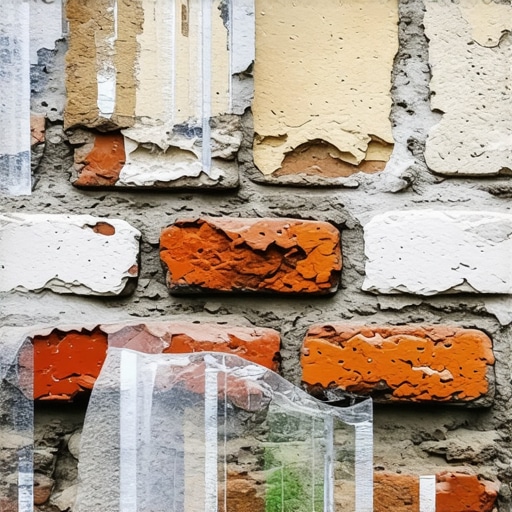
The homeowner thought it was just a hairline crack near the lintel of his 1920s Tudor. But when I put my scope inside that cavity, I didn’t see structural integrity; I saw the structural steel was rusted to dust, and the back-bed of the brick was a slurry of red mud. This is the reality of forensic masonry. Someone had sprayed a cheap, film-forming acrylic ‘sealer’ over the facade five years prior. They thought they were protecting it. Instead, they had built a coffin for the building’s skeleton. In the world of historic brickwork repointing and restoration, the wrong chemical is worse than no chemical at all.
The Chemistry of the Pore: Why Brick Breathes
To understand why masonry waterproofing solutions are often misunderstood, you have to look at the microscopic landscape of a clay brick. Brick is not a solid mass; it is a network of interconnected capillaries. These pores operate on the principle of suction. When rain hits a wall, the brick drinks. In a healthy system, that water evaporates back out as vapor. But when you introduce a ‘lick-and-stick’ mentality—using modern coatings that create a plastic film—you kill the vapor permeability. You trap the moisture behind the surface. This leads to spalling, where the face of the brick literally explodes because the water behind it has nowhere to go during a freeze-thaw cycle. Water expands 9% when it turns to ice, and that pressure will shred even the hardest historic brick salvage you can find.
“Water penetration is the single greatest threat to masonry durability.” – BIA Technical Note 7
Silanes and Siloxanes: The Molecular Guard
This is where hydrophobic sealants come in. These aren’t the thick, glossy ‘mud’ you buy at a big-box store. We are talking about Silanes and Siloxanes. These molecules are small enough to penetrate deep into the substrate, sometimes up to 3/8 of an inch, chemically bonding to the silica in the brick and mortar. They don’t fill the pores; they line them. They change the surface tension of the internal pore structure. Think of it like a Gore-Tex jacket for your house. Liquid water (large molecules) cannot enter, but water vapor (tiny molecules) can still escape. This is the ‘invisible shield’ that prevents masonry water damage repair from becoming a recurring line item in your budget. If you are dealing with a chimney flue liner installation, ensuring the exterior masonry is treated with a breathable hydrophobic is critical to prevent the acidic condensation from the flue from being trapped in the chimney breast.
The Critical Failure of Brick Veneer
In modern builds, brick veneer detachment repair is a growing epidemic. Often, it’s not the brick that fails, but the wall ties. When moisture penetrates the veneer and cannot escape—either because of blocked weep holes or poor masonry waterproofing solutions—it creates a humid micro-environment in the air gap. The steel ties rust, lose their ‘tooth’ in the mortar, and suddenly your facade is bowing out like a sail. Proper treatment with a siloxane-based water repellent reduces the sheer volume of water entering the cavity, taking the hydrostatic load off the drainage system and preserving those internal connectors. We often see this on soldier course details over windows where masonry birdsmouth cuts weren’t properly flashed, allowing a direct path for water to bypass the brick’s natural defenses.
The Physics of the Restoration Process
Before you ever touch a slicker or a hawk to butter a joint, you have to address the substrate health. If the wall is already saturated, sealing it is malpractice. You first need to ensure the historic brickwork repointing is done with a lime-based mortar that is softer than the brick itself. This is the sacrificial principle: you want the mortar to weather, not the brick. Once the mud has cured, then and only then do you apply the hydrophobic shield. We also look for masonry staining which often indicates deep-seated moisture or efflorescence—salt deposits pushed to the surface by evaporating water. Using a hydrophobic sealant stops the ‘wicking’ of these salts, preventing the white crust that ruins the aesthetic of a masonry rescue after disaster.
“The use of improper sealants can lead to irreversible damage of historic masonry units by trapping moisture and salts within the pore structure.” – ASTM C67 / Standard Test Methods for Sampling and Testing Brick
Retaining Walls and Geogrids: A Different Beast
I’ve seen $100,000 projects fail because someone ignored retaining wall geogrid installation and drainage, thinking a ‘waterproof’ coating on the face would save them. It won’t. Hydrostatic pressure from the soil side will push through the block, causing honeycombing and eventual collapse. In these cases, masonry waterproofing solutions must be applied to the retaining side—the ‘blind side’—often using a dimpled drainage board and a heavy-duty membrane. The front face can then be treated with a hydrophobic silane to prevent surface staining and salt damage, but never as the primary defense against the weight of the earth.
The Master Mason’s Verdict
Don’t fall for the ‘wet look’ hype. If a contractor tells you they want to ‘seal’ your 100-year-old brick with something that smells like a nail salon, show them the door. You want a penetrant, not a coating. You want a chemical bond that respects the physics of the material. Whether you are doing a masonry birdsmouth cut on a custom header or salvaging 19th-century clay, the goal is longevity. A proper hydrophobic treatment is the difference between a wall that lasts another century and one that ends up as a pile of red dust in a decade. It’s about science, not just aesthetics. Do it once, do it right, or don’t do it at all.