
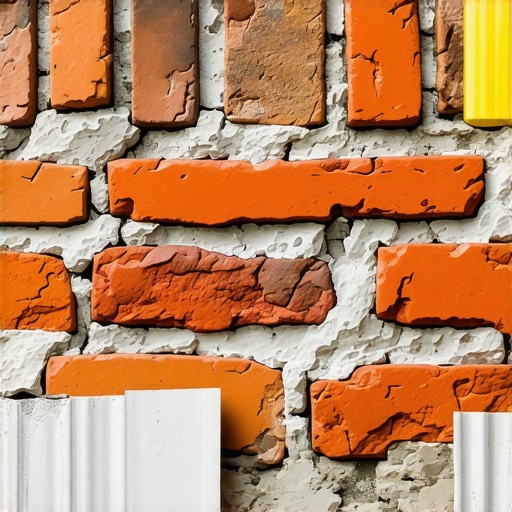
The Ghost in the Wall: Why Most DIY Mortar Joints Fail
I remember sliding my high-resolution borescope into a quarter-inch fissure on a 1920s bungalow. The homeowner thought he just had a cosmetic issue, a little ‘aesthetic’ gap in his brickwork. But as the camera fed back images of the inner wythe, the truth was laid bare: the structural steel lintel was nothing but a jagged shelf of oxidized flakes, rusted to dust because a previous ‘handyman’ had used a hard Portland-based mortar for a quick patch. That rigid, non-breathable mud had trapped moisture against the steel, turning a simple repointing job into a full-scale structural masonry inspection and emergency restoration. This is the reality of masonry. It is not just stacking blocks; it is a complex dance of hydraulic pressure, thermal expansion, and chemistry.
The Physics of the ‘Mud’: Why Suction Matters
When you are staring at a bucket of mortar, most DIYers see a sticky paste. I see a hydration engine. The secret to achieving those perfectly even, razor-sharp mortar joints isn’t just a steady hand or a fancy slicker; it is understanding the ‘suction’ of the brick. Every brick is a thirsty, porous sponge. If you slap wet mud onto a dry, high-absorption brick, the brick will instantly suck the water out of the mortar. This ‘burns’ the joint, preventing the chemical crystals from interlocking. You end up with a joint that looks okay on the surface but has no ‘tooth’—it won’t bond, and it will crumble within three seasons. To get it right, you have to find the ‘equilibrium moisture content.’ Professional brick wall restoration requires pre-wetting the masonry units so they don’t rob the mortar of its lifeblood before it can set.
“Water penetration is the single greatest threat to masonry durability. Proper mortar selection and joint compaction are the primary defenses against moisture ingress.” — BIA Technical Note 7
The Sacrificial Lamb: Mortar Hardness vs. Brick Longevity
The biggest mistake in the ‘lick-and-stick’ era of modern construction is the obsession with strength. People think a harder mortar is a better mortar. Wrong. In historic restoration, the mortar must be the sacrificial element. It is meant to be softer than the brick. Why? Because buildings move. They breathe. They expand when the sun hits them and contract when the frost bites. If your mortar is harder than your brick—which happens when you use modern Type S cement on old, handmade bricks—the stress of thermal expansion won’t crack the mortar joint. It will crush the face of the brick itself. This is called spalling, and once it starts, your facade is on a one-way trip to the landfill. When I provide a tuckpointing cost estimation, a huge chunk of that price is the lab work to match the lime-to-sand ratio of the original 100-year-old mud.
Micro-Zooming into the Joint: The Mechanics of the Strike
To achieve even joints, you need to master the ‘slicker.’ After you ‘butter’ the brick and set it, you don’t touch the joint immediately. You wait for it to become ‘thumbprint hard.’ If you strike it too wet, you pull the ‘cream’ to the surface, causing a smear that ruins the texture. If you strike it too dry, you won’t get proper compaction. Compaction is everything. By pressing the mortar firmly into the joint with a jointer tool, you are collapsing the air pockets and creating a weather-tight seal. This is especially critical in commercial parapet wall repair, where the masonry is exposed to the elements on three sides. Without that dense, compacted face, water will migrate into the core of the wall, leading to catastrophic freeze-thaw cycles.
Beyond the Brick: Weep Holes and Drainage
You can have the most beautiful, even joints in the world, but if you don’t respect the water, the wall will fail. I’ve seen $100,000 retaining walls bow and crack because the ‘mason’ didn’t understand retaining wall weep hole cleaning or placement. Water builds up behind a wall—this is hydrostatic pressure. It is a slow-motion car crash. Every masonry system needs an exit strategy for moisture. This involves clear weep holes and, in some cases, birdsmouth cuts—precise, notched cuts in the brick to allow for complex geometric transitions without creating a dam for water. If your weep holes are clogged with mortar droppings (a sign of a sloppy ‘mud-dauber’ mason), the wall will eventually push itself over.
“The use of mortar in masonry construction is to provide a uniform bedding for the units and to seal the spaces between them against the elements.” — ASTM C270 Standards
The Art of the Finish: Staining and Metallic Elements
Sometimes, even after a perfect repair, the new mortar doesn’t match the weathered patina of the original wall. This is where masonry staining comes into play. We aren’t talking about paint—never paint a brick, it’s a death sentence for the masonry’s breathability. Staining uses a mineral-based pigment that chemically bonds with the stone, allowing the pore structure to remain open. For more modern architectural designs, we even see metallic masonry finishes being used to highlight soldier courses or decorative lintels, but these require a level of surface preparation that would make a weekend warrior’s head spin.
The Reality of Maintenance: Chimneys and Driveways
The most vulnerable point of any home is the chimney crown. It sits up there, baking in the sun and soaking in the rain. A chimney crown repair isn’t just about slapping some cement on top; it’s about creating a ‘wash’—a slope that sheds water away from the masonry. Similarly, brick paver driveway repair requires a deep understanding of compaction physics. If your base isn’t 98% compacted crushed stone, those pavers will shift and create a ‘wavy’ mess the first time a heavy SUV rolls over them. It all comes back to the same principle: Masonry is a game of inches and percentages. You either do it once with the right chemistry, or you do it twice with a sledgehammer.