
The Forensic Scene: The Skeleton in the Wall
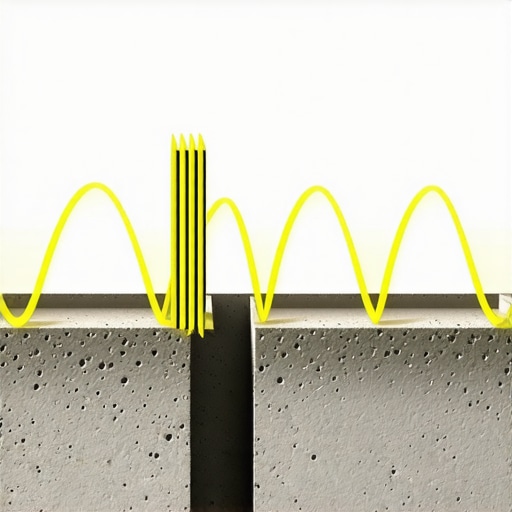
I remember a structural masonry inspection I conducted on a mid-rise commercial block situated less than fifty yards from a heavy freight rail line. The owner was baffled. Every five years, they’d hire a crew to repoint the brick infill panel repair zones, and every five years, the mortar would turn to a fine, floury dust and spill out onto the sidewalk. When I got my borescope into the cavity, it wasn’t a settlement issue. The steel was fine, and the brick wasn’t spalling. But when the 4:15 express rattled by, I felt it in my boot heels—a high-frequency harmonic vibration that was literally pulverizing the crystalline structure of the standard Type S mortar. The mud had no ‘give.’ It was too stiff, too brittle, and the constant micro-shaking was shattering the bond at the molecular level. This is where the industry fails; they treat every wall like a static monument, forgetting that the earth is constantly humming.
The Physics of the ‘Shatter Zone’
To understand why fiber-reinforced mortars are superior, you have to look at the Interfacial Transition Zone (ITZ). In a standard mix of Portland, lime, and sand, the ITZ is the weakest link. It is the microscopic space where the cement paste meets the aggregate. Under the stress of vibration—whether from a subway, heavy machinery, or seismic activity—micro-cracks form in this zone. Without reinforcement, these cracks propagate. They find each other, join up, and suddenly you have a massive failure. Fiber-reinforced mud changes the game by introducing thousands of microscopic tensile ‘bridges’ across these potential canyons. When we talk about brick veneer installation in high-traffic urban corridors, skipping fibers is a recipe for a masonry rescue after disaster. The fibers, usually alkaline-resistant glass or polypropylene, absorb the kinetic energy of the vibration. Instead of the energy shattering the brittle matrix, it gets dissipated along the length of the fiber.
“The addition of discrete fibers to cementitious matrices can significantly improve the toughness, impact resistance, and tensile strength of the resulting composite.” – ASTM C1116 Standard Specification for Fiber-Reinforced Concrete
Micro-Zooming into the Hydration Matrix
When you ‘butter’ a brick with fiber-reinforced mud, you’re not just applying an adhesive; you’re applying a complex composite. During the hydration process, as the calcium silicate hydrate (CSH) crystals begin to grow and interlock, they wrap around these fibers. This creates a mechanical bond that far exceeds the chemical bond of standard mortar. In foundation underpinning projects, where the structure is being stabilized against shifting soils or vibrating bedrock, this extra ‘tooth’ is mandatory. If you’re using a standard mix, the vibration from the hydraulic jacks alone can compromise the green mortar before it even reaches its initial set. I’ve seen mortarless masonry systems used in some seismic zones specifically to avoid this brittle failure, but for traditional aesthetics and structural load-bearing, a fiber-infused mud is the only way to go.
The Chimney: A Lever for Vibration
Nowhere is the vibration issue more evident than in chimney repair services. Think of a chimney as a giant vertical lever stuck on top of a house. When wind hits it, or when the house vibrates from street traffic, the chimney amplifies that movement. A rigid, brittle mortar will fail at the roofline almost every time. This leads to the need for chimney cap replacement and chimney damper repair because the entire stack begins to shift. When I’m called for a historic brick salvage job on an old smokehouse or a 19th-century chimney, I have to be careful. You can’t just slap modern high-strength fiber mud on soft, handmade bricks. You have to find a lime-based, fiber-reinforced compromise that respects the sacrificial nature of the mortar while providing the ‘bend-but-don’t-break’ quality required for survival.
“Water penetration is the single greatest threat to masonry durability, often exacerbated by the microscopic fractures caused by cyclic loading and environmental vibrations.” – BIA Technical Note 7
The ‘Butter’ and the ‘Hawk’: Practical Application
Laying this stuff is different. You can’t just whip it up like the cheap bag-mix a ‘handyman special’ contractor uses. You need to ensure the fibers are dispersed without ‘clumping.’ If you see ‘nesting’—that’s a trade term for a ball of fibers that didn’t mix—you’ve got a weak spot. You want a creamy consistency that hangs on the hawk but spreads like warm butter. When you’re striking the joint with your slicker, you’re actually compressing those fibers into the face of the joint, creating a skin that is incredibly resistant to the freeze-thaw cycles that follow the initial vibration damage. In the North, where water expands 9% upon freezing, those micro-cracks from vibrations are the entry point for the ‘ice wedge.’ Fiber-reinforced mortars seal those doors shut.
The Verdict on Longevity
If you’re doing brick veneer installation on a new build, or if you’re deep into a structural masonry inspection on a failing façade, look at the vibration profile. Is there a highway nearby? A train track? A stamping plant? If so, traditional mud is a ticking time bomb. The ‘wicking’ action of a vibrating wall will pull moisture into the cracks, and the wall will fail from the inside out. Using fiber-reinforced products is about more than just strength; it’s about ductility. It’s about giving a rigid masonry mass the ability to breathe and move without losing its structural integrity. Don’t be the guy who has to do the job twice because he saved fifty cents a bag on the mud. Do it once, do it right, and let the city shake all it wants.