
The Forensic Scene: A Ghost in the Wall
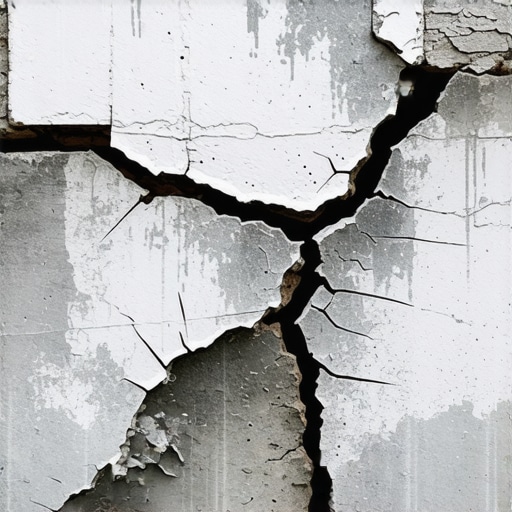
The homeowner thought it was just a hairline crack, a minor blemish on a multimillion-dollar facade. But when I put my scope inside the cavity of that brick column, I didn’t see structural integrity; I saw a graveyard. The structural steel was rusted to dust, and the back side of the brick was turning into a mushy, orange silt. They had paid a ‘handyman’ to slather a high-gloss silicone sealer over the entire surface the previous autumn, thinking they were ‘winterizing’ the home. By April, the wall looked like it had a terminal case of leprosy. The faces of the bricks were popping off in jagged shards, a process we call spalling, and a thick, white crust of efflorescence had bled through the sealer like a saltwater ghost. This wasn’t a failure of the material; it was a failure of physics. When you trap moisture inside a masonry unit that needs to breathe, you aren’t protecting it—you’re suffocating it.
The Chemistry of the Barrier Trap
To understand why your masonry waterproofing failed, you have to stop thinking of brick as a solid, inert block. It’s a sponge. Under a microscope, a fired clay brick is a network of interconnected capillaries. These pores facilitate ‘vapor drive,’ the movement of moisture from the warm interior of a wall to the cooler exterior. When you apply a non-breathable ‘lick-and-stick’ sealer, you create a barrier with a zero-perm rating. In a North American climate, where the freeze-thaw cycle is a brutal reality, this is a death sentence. Water enters the wall through the stone coping installation or a minor ‘cracked brick wall repair’ that wasn’t properly addressed. It migrates toward the surface, hits that plastic-like sealer, and stops. Then the temperature drops. Water expands by 9% when it turns to ice. That internal hydraulic pressure is greater than the tensile strength of the clay, and the brick face simply explodes.
“Water penetration is the single greatest threat to masonry durability. Proper design and maintenance of drainage systems are more effective than surface coatings.” – BIA Technical Note 7
The Physics of Efflorescence and Salt Crystallization
If you see a white, powdery substance after a ‘brick wall restoration,’ you’re looking at efflorescence. This isn’t just an aesthetic issue; it’s a forensic marker of moisture mismanagement. Inside the mortar and the brick are water-soluble salts—sodium, potassium, and calcium. When water moves through the wall, it dissolves these salts. As the water reaches the surface and evaporates, the salts stay behind. However, if you’ve ‘waterproofed’ the wall, the evaporation happens behind the surface of the brick. This is called sub-florescence. The salt crystals grow inside the pores, creating ‘cryptoflorescence’ pressure that can reach thousands of pounds per square inch. This is often why ‘brick efflorescence removal’ fails; if you don’t fix the source of the water—usually a failing ‘stone coping installation’ or a ‘retaining wall block replacement’ with poor drainage—the salts will just keep pumping to the surface until the masonry disintegrates.
The Breathability Dilemma: Tuckpointing vs. Repointing
Many contractors use these terms interchangeably, but they are different beasts. Repointing is the process of removing crumbling mortar joint repair and replacing it with new mud. Tuckpointing is a decorative technique using two contrasting colors of mortar to create an illusion of perfectly thin joints. The failure usually happens in the choice of ‘mud.’ For historic brickwork repointing, you cannot use modern Type S or Type M Portland cement. It’s too hard. In an old wall, the mortar must be the ‘sacrificial lamb.’ It needs to be softer than the brick so that thermal expansion and moisture movement stress the joints, not the units. Using ‘sustainable tuckpointing mortars’ based on lime putty or NHL (Natural Hydraulic Lime) ensures that the wall can ‘inhale’ and ‘exhale.’ A wall built with soft lime mortar will last 200 years; a wall patched with modern concrete will crack in five.
“Mortar should be weaker than the masonry units so that any cracks will occur in the mortar joints where they can be easily repaired.” – ASTM C270 Standards
The Anatomy of the Fix: Beyond the Band-Aid
When I’m called for a ‘cracked brick wall repair,’ I start at the top. Most ‘waterproofing’ failures start at the roofline. If the stone coping installation lacks a proper drip edge or a functional flashing membrane underneath, gravity will pull gallons of water into the wall cavity every time it rains. No amount of ‘brick column repair’ or sealer can stop that volume of water. We now use BIM masonry projects to model how water flows over a structure, identifying high-saturation zones before we ever pick up a hawk and trowel. If you’re dealing with a ‘retaining wall block replacement,’ the issue is almost always hydrostatic pressure. If you don’t have a foot of clean gravel and a perforated drain pipe behind that wall, the weight of the water-logged soil will tip that wall over regardless of how much ‘waterproofing’ you spray on the front.
The Master’s Method: Working the Mud
To do it right, you have to respect the ‘suction’ of the brick. Before I ‘butter’ a joint, I check the Initial Rate of Absorption. If the brick is too thirsty, it will suck the moisture out of the mortar before it can properly hydrate, leading to a ‘cold joint’ or ‘honeycombing’—a brittle, porous mess. We pre-wet the wall to satisfy the brick’s hunger. Then, we use a ‘slicker’ or a jointer tool to strike the joint, compacting the mud against the brick edges to create a mechanical bond. This is craftsmanship, not chemistry. For a ‘brick wall restoration’ to survive the next thirty winters, you need a professional who understands that the best ‘waterproofing’ is a well-designed drainage system and a mortar joint that knows how to let go of its water. If you try to seal a wall against the laws of thermodynamics, the wall will always win, and your wallet will always lose.