
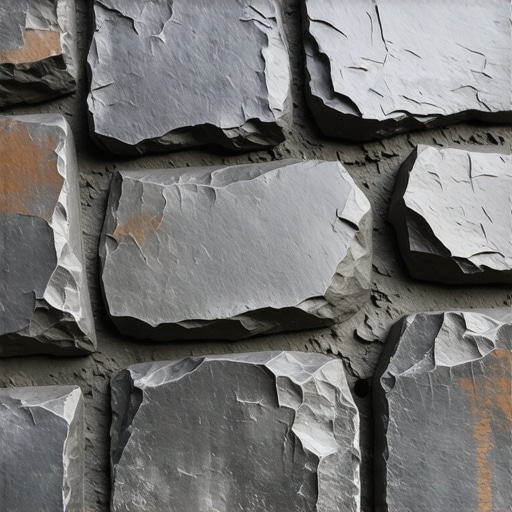
The Forensic Scene: When Modern Aesthetics Meet Old World Porosity
I remember a job site on the coast where the homeowner wanted a ‘platinum’ finish on a 1920s fieldstone foundation. She’d hired a guy who claimed he could just spray it with high-end automotive metallic. By the time I arrived with my borescope, the stones were literally weeping. When I inserted the scope into a tiny fissure near the corner, I didn’t just see moisture; I saw the structural steel lintels rusted to a state of orange dust, expanding with enough force to heave a three-ton stone section. The ‘modern’ paint had created a vapor barrier that trapped gallons of groundwater within the wall’s core. This wasn’t just an aesthetic failure; it was a slow-motion demolition. Before we even talk about the ‘metallic look,’ we have to talk about the physics of the stone itself. Stone is not a solid, inert block; it is a breathing, capillary-rich sponge that moves, sweats, and reacts to its environment.
The Physics of the ‘Tooth’: Why Standard Paint Fails
Old stone—whether it’s limestone, sandstone, or granite—has what we call ‘tooth.’ This is the micro-texture that allows a coating to grab hold. However, most modern acrylic paints are film-formers. They sit on the surface like a plastic sheet. In the world of masonry, this is a death sentence. Masonry operates on the principle of vapor permeability. Water enters the stone through ground moisture or atmospheric humidity. It must be allowed to exit as vapor. When you slap a non-breathable metallic paint over old stone, you are essentially shrink-wrapping a wet sponge. The pressure of the trapped vapor will eventually exceed the bond strength of the paint, leading to ‘spalling’—where the face of the stone literally pops off, taking the paint with it.
“Water penetration is the single greatest threat to masonry durability, and the use of non-breathable coatings can lead to catastrophic freeze-thaw damage.” — Brick Industry Association (BIA) Technical Note 7
To achieve a metallic look that lasts, we have to look at mineral-based stains or metallic glazes that bond chemically, not just mechanically. We’re talking about potassium silicate-based systems. These don’t sit on top; they undergo a process called silicification, where the coating actually becomes part of the stone’s crystalline structure. This maintains the ‘breathability’ while giving you that shimmering, architectural finish you’re after.
The Structural Foundation: Repointing and Reinforcement
You can’t ‘butter’ a metallic finish onto a wall that’s crumbling from the inside out. Before the first drop of pigment touches the stone, a full forensic assessment is mandatory. This often starts with AI masonry assessment, using thermal imaging to find where the moisture is hiding. If the mortar joints are soft enough that you can pick them out with a screwdriver, you need structural repointing. This isn’t just cosmetic; it’s about restoring the compressive strength of the wall. We use tuckpointing machine services for the deep grinds, but the ‘mud’—the mortar—must be carefully selected. If the stone is pre-1940, we steer clear of high-Portland cement mixes. We need a ‘sacrificial’ mortar, something like a Type N or even a Type O lime-putty mix. The mortar must be softer than the stone so that the inevitable stresses of thermal expansion move through the joints, not the stone faces themselves.
Micro-Zooming into the Chemistry: The Hydration and Carbonation Cycle
When we perform retaining wall reinforcement or emergency masonry repair, we are playing with the chemistry of calcium hydroxide. Traditional lime mortar hardens through carbonation—it literally absorbs carbon dioxide from the air over decades to turn back into limestone. If you seal this process too early with a heavy metallic coating, you stop the carbonation dead. The ‘mud’ stays soft, the wall loses its ‘ring,’ and eventually, the whole structure starts to ‘lean’ or ‘belly.’ For modern metallic finishes, we use mica-based pigments suspended in a silicate binder. These mica flakes reflect light at different angles, creating that deep, lustrous metallic sheen without creating a vapor-tight seal. It allows the carbonation of the underlying mortar to continue while the stone ‘breathes’ its latent moisture back into the atmosphere.
Precision Cuts and Architectural Detail
Sometimes, achieving a modern look requires more than just a color change; it requires geometry. We often use sustainable block cutting to create thin stone veneers for accents or to replace ‘shaled’ stones that are beyond saving. When fitting these around windows or corners, we use masonry birdsmouth cuts—a V-shaped notch that allows two stones to meet at a sharp, clean 90-degree angle without a bulky, ugly joint. This is where the ‘slicker’ comes into play. A slicker is a specialized jointer tool used to compress the mortar joint, making it dense and water-resistant. In a metallic-look project, the joints can be ‘struck’ deeply to create shadow lines that emphasize the metallic shimmer of the stone faces.
“Mortar shall be specified by property or proportion, but in no case shall a mortar be used that is harder than the masonry units it binds.” — ASTM C270 Standard Specification
The Roof-Down Approach: Chimneys and Crowns
I’ve seen too many people spend $20,000 on a stone facade only to have it ruined by a $500 chimney problem. Chimney leak detection is the first step in any exterior masonry project. If your chimney crown repair is neglected, water will run down the internal cavity of the wall, saturating the stone from the back. No matter how high-tech your metallic finish is, it will fail if the wall is being fed water from the top like a fountain. We ensure the crown is cast with a proper drip edge and that any patio stone realignment at the base of the wall is pitched away from the foundation to prevent ‘hydrostatic pressure’—the weight of water-logged soil pushing against your masonry.
The Trade Secrets: Buttering, Hawks, and Cold Joints
Working with metallic-infused mineral stains requires the touch of a master. You don’t just ‘paint’ it; you ‘butter’ the stone using a hawk (a square metal board to hold your material) and a fine-bristled brush or a specialized sponge. You have to watch out for ‘cold joints’—where one section of the coating dries before you can blend it into the next. In the sun, this stuff ‘flashes’ or dries in seconds. If it flashes, you get a visible line that ruins the metallic effect. We often have to work in the ‘shady side’ of the building or use retarders to slow down the set time. It’s a game of speed and precision, ensuring the suction of the dry stone doesn’t pull the moisture out of the stain too quickly, leaving the pigment ‘charred’ or dusty on the surface.
Conclusion: The Longevity of the Look
A modern metallic look on old stone is achievable, but it’s not a weekend DIY project with a can of spray paint. It requires a deep understanding of the ‘Old World’ materials and the ‘New World’ chemistry. By prioritizing structural integrity—through retaining wall reinforcement and structural repointing—and using vapor-permeable mineral stains, you can create a facade that doesn’t just look like a million bucks today, but remains standing for the next three generations. Don’t let a ‘handyman special’ turn your historic stone into a peeling, structural nightmare. Respect the stone, respect the moisture, and use the right mud for the job.