
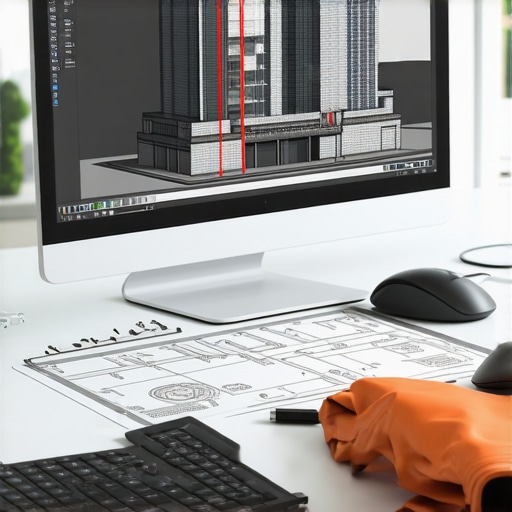
The homeowner thought it was just a hairline crack, a minor cosmetic annoyance near the third-story window. But when I put my scope inside the cavity, the truth was ugly: the structural steel angle was rusted to dust. For twenty years, water had been pooling on a lintel that had no end dams and no weep holes. It was a forensic scene of slow-motion destruction. This is what happens when masonry design is left to chance or, worse, to a contractor who thinks ‘flashing’ is just a suggestion. In my forty years of buttering joints and striking ’em clean, I’ve seen the same story play out from historic cathedrals to modern condos. But the industry is changing. We’re moving from the autopsy phase of masonry damage assessment to the preventative phase of Building Information Modeling (BIM).
The Invisible Physics of the Cavity Wall
To understand why BIM is a savior, you have to understand the grit and the moisture. A brick wall isn’t a waterproof barrier; it’s a reservoir. When the rain lashes against a soldier course or hits the retaining wall installation at the base of a building, the brick drinks that water through capillary action. The moisture travels through the ‘tooth’ of the unit, eventually hitting the air space behind it. This is where the physics of the ‘cold joint’ and thermal bridging come into play. If that water doesn’t have a clear exit path via flashing and weeps, it stays inside. In the North, it freezes, expands by 9%, and pops the face off your brick—a process we call spalling. In the South, it turns the interior of your wall into a humid swamp that rots the studs and grows mold.
“Water penetration is the single greatest threat to masonry durability.” – BIA Technical Note 7
BIM software allows us to model these moisture paths before we ever mix a batch of mud. It identifies ‘clashes’ where the flashing is interrupted by floor slabs or structural steel, ensuring the drainage plane is continuous from the retaining wall capstone replacement at the top to the foundation at the bottom.
Sustainable Tuckpointing Mortars and the Breathability Myth
One of the biggest mistakes the ‘handyman specials’ make is using high-strength Portland cement on old, soft bricks. I’ve spent half my career on commercial tuckpointing jobs where I’m grinding out hard, gray mortar that has crushed the surrounding brick because it couldn’t breathe. We need sustainable tuckpointing mortars—Type O or Type K lime-based mixes—that are softer than the masonry unit itself. This is the sacrificial principle. BIM helps us document these material specifications across massive facades. When we’re planning brick column repair or a full chimney rebuild services, the software ensures that the thermal expansion coefficients of the mortar and the brick are compatible. If you put a rigid mortar in a wall that needs to move, the wall will find its own relief, usually in the form of a jagged vertical crack that looks like a lightning bolt.
The Precision of Masonry Birdsmouth Cuts
When you’re dealing with complex geometries—like a masonry birdsmouth cut where a brick must be notched to fit around a steel corner—the margin for error is razor-thin. If the cut is too tight, you create a point of concentrated stress. If it’s too loose, you’re relying on a giant glob of mud to bridge the gap. BIM allows for digital fabrication of these units. We can see the 3D ‘nesting’ of the bricks, ensuring that the brick column repair doesn’t just look good on the surface but is structurally sound to its core. This level of detail extends to brick paver driveway repair as well. Most guys just dump sand and hope for the best, but a real master knows it’s all about the compaction physics and the base layers. BIM can model the sub-surface drainage to ensure that a driveway doesn’t become a ‘wavy’ mess after the first spring thaw.
Drones and the High-Altitude Forensic Scan
We’re now using drone chimney inspections to feed data directly into these BIM models. Instead of me climbing a sixty-foot ladder to see if the flue liner is cracked, a drone captures high-definition thermography. This reveals the ‘honeycombing’ inside the concrete or the saturated areas of the masonry where flashing has failed.
“The use of BIM in masonry promotes a collaborative environment where errors are mitigated long before construction.” – ASTM C270 Standards Commentary
When we catch these flashing errors in the design phase, we aren’t just saving money; we’re saving the building. Whether it’s a retaining wall installation or a high-rise restoration, the goal is the same: keep the water out, and let the wall breathe. Don’t let a ‘lick-and-stick’ contractor tell you a little caulk will fix a flashing error. It won’t. You need the right mud, the right slicker, and a digital plan that understands the soul of the stone. Doing it once is cheaper than doing it twice, and in this trade, your reputation is only as good as your last joint.