
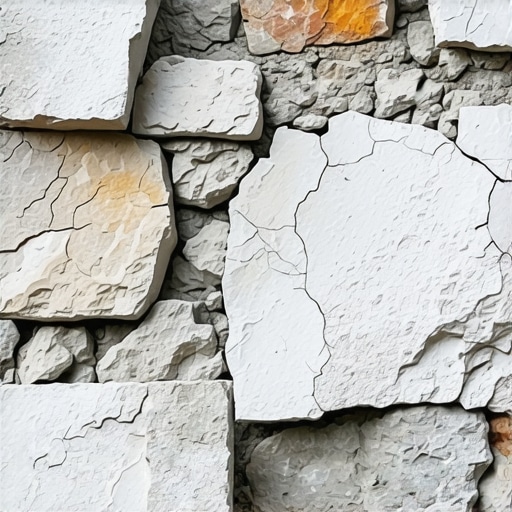
Is Your Stone Veneer Falling Off? Here is Why
I’ve spent forty years smelling the damp, earthy scent of failing foundations and the metallic tang of rusted wall ties. I am a third-generation mason, and I’ve watched the industry trade craftsmanship for speed. The result? A plague of ‘lick-and-stick’ stone veneer that’s currently peeling off houses like a bad sunburn. Most people think it’s a cosmetic issue. They see a single stone hit the lawn and think they can just ‘butter’ it back on. They’re wrong. That stone is a warning sign of a systemic failure in the building’s envelope. I recently stood at a forensic scene where a homeowner thought they just had a hairline crack in their exterior. When I put my digital scope into the cavity, I didn’t find a dry wall. I found that the structural steel lintels were rusted to dust, and the OSB sheathing had the consistency of wet oatmeal. The stone wasn’t just falling; the house was shedding its skin because it couldn’t breathe.
The Physics of the ‘Lick-and-Stick’ Catastrophe
Modern stone veneer is often installed by guys who should be laying tile in a bathroom, not building a weatherproof barrier. The ‘lick-and-stick’ method involves slapping a layer of mortar—the ‘mud’—onto a piece of cast concrete and pressing it against a scratch coat. If you don’t understand the suction of the stone and the substrate, you’re doomed. When a dry stone hits wet mud, it sucks the moisture out of the interface before the hydration process can complete. This creates a cold joint. Instead of a chemical bond, you have a mechanical friction fit that’s waiting for the first hard freeze to fail.
“Water penetration is the single greatest threat to masonry durability, leading to efflorescence, spalling, and structural degradation.” – BIA Technical Note 7
In northern climates, the physics are brutal. Water gets trapped behind the stone because someone forgot the weep screed or the drainage plane. When that water freezes, it expands by 9%. That expansion exerts thousands of pounds of pressure per square inch, popping the stone right off the wall. This is why brick spalling prevention starts with moisture management, not just a bucket of sealer.
The Micro-Science of Mortar and Hydration
You can’t talk about masonry without talking about the chemistry of the mud. When we mix Type N or Type S mortar on the hawk, we’re managing a delicate balance of Portland cement, lime, and sand. The lime is what gives the mortar its ‘tooth’ and autogenous healing properties. If your contractor is using a high-cement mix on a stone veneer, it’s too brittle. It won’t move with the house. Every building breathes and shifts. If the mortar is harder than the stone or the substrate, the stress has nowhere to go but the interface, leading to a total bond failure. We offer mortar matching services that look at the microscopic aggregate of the original material because putting a modern, high-strength mortar on a historic or soft stone is a death sentence for the wall. The new mud will crush the old stone every time it undergoes a thermal cycle.
The Anatomy of Failure: Caps, Crowns, and Chimneys
Often, the stone veneer isn’t the problem; it’s the retaining wall capstone replacement that was ignored five years ago. Water enters from the top. If your capstone doesn’t have a proper drip edge or if the joints have opened up, gravity does the rest. It pulls that water down behind the veneer. This leads to masonry water damage repair jobs that cost ten times what a simple maintenance check would have. The same goes for the roofline. A failing chimney crown repair is often the silent killer of the stone veneer on the fireplace chase. Water enters at the crown, saturates the masonry core, and then migrates outward. In the winter, this leads to brick spalling prevention issues where the face of the brick or stone literally shatters off. If you’re seeing white powder—efflorescence—on your stones, that’s the wall’s way of screaming that it’s full of water. Those are salts being pushed to the surface as the moisture evaporates.
Modern Solutions and the AI Masonry Assessment
In this era, we’re seeing a shift. We use AI masonry assessment tools to map thermal anomalies in a facade, identifying where moisture is trapped before the stone actually falls. This isn’t just about ‘fixing a wall’; it’s about masonry rescue after disaster. Whether it’s a flood or a decade of neglect, the recovery process involves more than just aesthetics. For those looking at modern aesthetics, the metallic brick colors application is popular, but these coatings require specialized sustainable tuckpointing mortars to ensure that the vapor permeability of the wall isn’t compromised. If you seal a wall with a non-breathable coating, you’ve essentially wrapped your house in plastic wrap. The moisture will find a way out, and it will take your stone veneer with it.
“The architect should ensure that the mortar is of a softer composition than the units it joins, allowing for movement and the sacrificial evaporation of salts.” – Vitruvius, De Architectura
The Fix: More Than Just Buttering the Back
If you find a stone on your lawn, don’t just grab a tube of construction adhesive. You need a full masonry damage assessment. We look for the source. Is it a lack of flashing? Is it a blocked weep hole? A real mason doesn’t just fix the symptom; we fix the hydrology. When we perform retaining wall capstone replacement, we ensure there is a 1/2-inch overhang with a reglet or drip notch to break the surface tension of the water. When we do stone veneer, we use a rainscreen system—a plastic mesh that creates a 1/8-inch gap behind the stone. This allows any water that gets in to drain out the bottom. It’s the difference between a wall that lasts ten years and one that lasts a century. Don’t be fooled by the ‘handyman special.’ If they aren’t talking about flashing, drainage planes, and the PSI of the mud, they aren’t masons; they’re just part-time artists with a trowel. Do it once, do it right, or you’ll be paying me to tear it all down and start over in five years.