
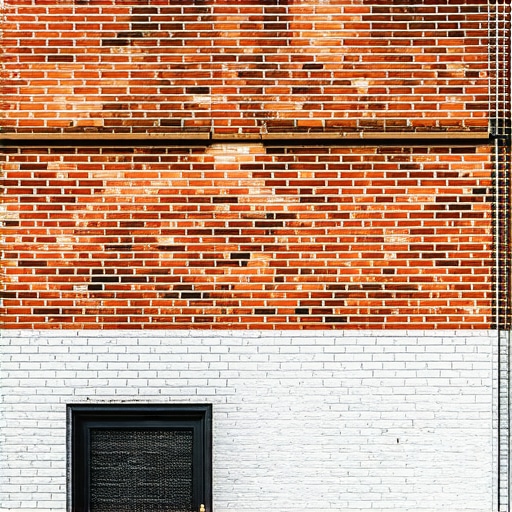
The Forensic Scene: When a Hairline Crack Becomes a Structural Grave
The facility manager at the downtown textile warehouse told me it was just a hairline crack. He pointed to a jagged line snaking through the soldier course above the loading dock. He wanted a quick patch, a smear of some hardware-store caulk to hide the blemish before the board meeting. I didn’t reach for my trowel; I reached for my borescope. When I slid that lens into the void, I didn’t see solid masonry. I saw a cavern of rusted-to-dust steel lintels and crumbling concrete masonry unit restoration needs that had been ignored for decades. The mortar hadn’t just fallen out; it had become a highway for moisture, turning the building’s skeleton into a pile of orange flakes. That crack wasn’t a cosmetic issue; it was the building’s last gasp before a localized collapse. In the world of commercial tuckpointing, there is no such thing as ‘just a crack.’ There is only the evidence of a structural shift in progress. To understand why full repointing services are the only thing standing between your asset and the wrecking ball, we have to look past the surface and into the very chemistry of the wall.
1. The Sacrificial Principle: Historic Mortar Analysis and the Physics of Compression
Most modern contractors treat a building like a monolithic block of stone, but a commercial brick wall is a living, breathing machine. The fundamental law of masonry restoration, specifically when we perform historic mortar analysis, is the Sacrificial Principle. In a high-traffic commercial structure built pre-1940, the bricks are often softer than the stones used today. The mortar’s job isn’t just to stick them together; it’s to be the ‘weakest link.’ It must be softer than the brick it surrounds. When the earth shifts or the sun beats down, the wall moves. If the mortar is soft (high lime content), it absorbs that movement. If some ‘handyman’ comes in and slaps Type S Portland cement—which is hard as a diamond—into a soft brick wall, the brick has nowhere to go. When the wall expands, the brick crushes itself against the hard cement. This is how you get spalling, where the face of a hundred-year-old brick simply pops off and falls to the sidewalk.
“Water penetration is the single greatest threat to masonry durability.” – BIA Technical Note 7
When we perform tuckpointing brick walls, we are essentially recalibrating the building’s suspension system. We grind out the old, failing mud to a depth of at least 3/4 of an inch—sometimes more if the ‘honeycombing’ is deep—to ensure we have a clean ‘tooth’ for the new material. We don’t just ‘butter’ the edges. We pack the joints tight using a slicker or a jointer tool to ensure there are no air pockets. This mechanical bond ensures that the load-bearing capacity of the wall remains uniform. In stone facade restoration, this is even more critical. Large stones carry immense weight; if the bedding mortar fails, the point-loading on the stone edges will cause them to shear, leading to a catastrophic structural shift that self-leveling masonry lifts can barely correct after the fact.
2. Managing the Salt Bomb: Brick Efflorescence Removal and Hydrostatic Pressure
If you see a white, powdery crust on your commercial building, don’t assume it’s just ‘old age.’ That is efflorescence, and it is the visual warning sign of a chemical war happening inside your masonry. It occurs when water migrates through the brick, dissolves internal salts, and carries them to the surface. As the water evaporates, the salt stays behind. But here is the micro-zoom: the real damage is sub-florescence. This is when the salt crystals grow inside the pores of the brick. The pressure exerted by these growing crystals can exceed the tensile strength of the masonry, literally exploding the brick from the inside out. Brick efflorescence removal isn’t just about aesthetics; it’s about stopping the ‘salt bomb’ from detonating your facade.
Proper tuckpointing stops this cycle by sealing the entry points. When mortar joints are cracked or recessed, they act as funnels for rainwater. Through capillary action, the wall sucks up that moisture like a sponge. In a commercial setting, where walls are often hundreds of feet long, this hydrostatic pressure can build up behind the concrete masonry unit restoration site, pushing the outer wythe of brick away from the structural backup. We use full repointing services to create a watertight envelope that still allows vapor to escape. This ‘breathability’ is the secret. You want liquid water to stay out, but you need water vapor to move through the wall. If you seal a wall with an impermeable ‘lick-and-stick’ coating, you trap that moisture, and the next freeze-thaw cycle will tear the retaining wall block replacement or facade apart. The water expands by 9% when it turns to ice, and that force is enough to heave a multi-ton wall several inches out of plumb.
3. The Engineering of Stability: Self-Leveling Lifts and Load Distribution
Commercial structures often suffer from uneven settlement, especially in urban environments with varying soil densities. This is where self-leveling masonry lifts and proper joint geometry come into play. When we restore a stone facade or a concrete masonry unit, we aren’t just looking at the mortar; we are looking at the ‘bed.’ If the original mortar has washed out, the bricks begin to settle into the voids. This creates ‘stair-step’ cracking, a classic sign of structural shifting. By utilizing tuckpointing, we are effectively ‘shimming’ the building back into its intended load-bearing state. We use a hawk to hold our fresh mud, and we carefully work it into the voids to ensure every square inch of the brick is supported. This prevents the weight of the building from concentrating on small points, which is what causes the ‘crushing’ effect in lower-level masonry.
“Mortar shall be specified as a type, such as Type N or Type O, to ensure the compressive strength does not exceed the strength of the masonry units themselves.” – ASTM C270 Standards
For those looking for a modern aesthetic, we even integrate metallic brick colors application during the finishing stages of a tuckpointing project. This isn’t just paint. These are mineral-based pigments that chemically bond with the mortar, providing a metallic sheen that reflects UV rays and reduces thermal expansion. By keeping the wall cooler, we reduce the ‘creep’ and movement that leads to future cracking. Whether it’s a retaining wall block replacement or a high-rise restoration, the goal is the same: monolithic stability through flexible joints. You do it once, and you do it right, or you do it twice and pay the price in structural steel repairs. A mason’s job is to respect the gravity that is constantly trying to pull the building down. With the right mud and a skilled hand on the slicker, we win that fight every time.