5 Brick Infill Panel Repair Signs You’re Missing in 2026
The Forensic Scene: The Silence of Rusted Steel
The homeowner called me out because they thought they had a simple ‘hairline crack’ in the mortar. It was a classic mid-rise brick infill panel, the kind of building that’s supposed to last two centuries but was struggling after forty years. When I put my digital scope into the weep hole, the reality was grimmer than a cold January morning in a damp cellar. The structural steel shelf angle, hidden behind the brick skin, was rusted to a fine, reddish dust. This wasn’t just a cosmetic issue; it was a ticking clock. The rust had expanded—a phenomenon we call ‘rust jacking’—and was literally pushing the brickwork off the skeleton of the building. This is the world of forensic masonry, where we don’t look at the surface; we look at the physics of decay. By 2026, many of these aging infill panels are reaching a critical failure point that most ‘handyman’ contractors simply aren’t equipped to diagnose.
“Water penetration is the single greatest threat to masonry durability, leading to the corrosion of anchored components and the eventual loss of structural integrity.” – BIA Technical Note 7
1. The Subsurface Separation: Brick Veneer Detachment
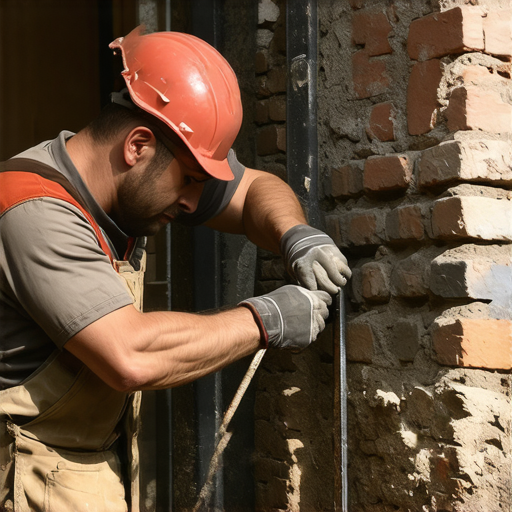
When we talk about brick veneer detachment repair, we are dealing with a failure of the mechanical ties. Over time, the anchors that pin your brick skin to the backup wall—be it CMU or steel—can corrode or snap due to lateral wind loads and thermal movement. If you notice a slight ‘bulge’ in the wall when looking down the facade, you aren’t seeing things; you’re seeing a wall that is preparing to shed its skin. In 2026, we are seeing an uptick in these failures because the original galvanized ties have reached their end-of-life cycle. We fix this by utilizing self-leveling masonry lifts and stainless steel helical ties that bite into the substrate, providing the ‘tooth’ needed to keep that wall vertical. It is a precise surgical strike, not a ‘lick-and-stick’ patch job. If you ignore a bulging wall, the next step is a masonry rescue after disaster, which is significantly more expensive than a proactive anchor replacement.
2. The Ghost of Portland Cement: Spalling and Mortar Mismatch
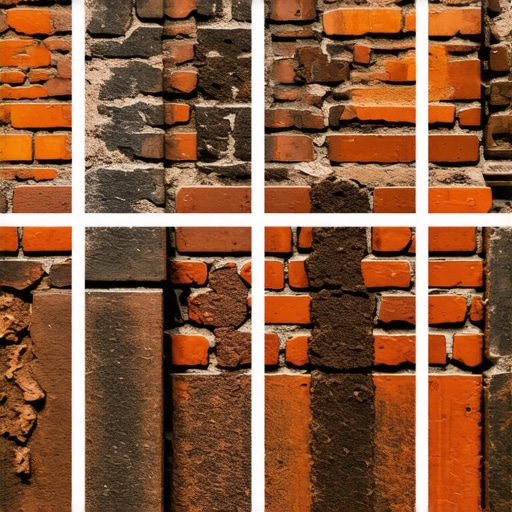
I see it every day: a beautiful 1920s building ruined because someone used modern Type S mortar on soft, historic brick. Historic brick salvage is a dying art, and when you put hard cement against soft clay, the brick loses every time. In the winter, moisture gets trapped behind that hard mortar. When it freezes, it expands by 9%, and because the mortar is harder than the brick, the face of the brick pops off. This is ‘spalling.’ To fix this, you need professional mortar matching services. We analyze the original ‘mud’ to determine the ratio of lime to sand. We use mortar repointing services that prioritize the ‘sacrificial’ nature of the joint. The mortar must be softer than the brick. I’ve spent hours with a slicker tool, meticulously striking joints to ensure the suction of the brick is respected. If your current mason doesn’t know the difference between carbonation and hydration, tell them to get off the scaffold.
3. The Corroding Lintel: Hidden Hydrostatic Pressure
Infill panels rely heavily on steel lintels over windows and doors. When chimney sweep and repair professionals or general masons ignore the flashing above these lintels, water sits on the steel. In 2026, the tech for chimney damper repair and structural masonry has evolved, but the physics of water remains the same. If you see a horizontal crack right at the top of a window or a soldier course that looks slightly skewed, you have a lintel failure. The steel is ‘exfoliating,’ growing in thickness as it oxidizes. This creates immense upward pressure, cracking the bricks above. We solve this by removing the courses of brick, treating or replacing the steel, and installing high-performance membrane flashing. Without proper drainage, you’re just ‘buttering’ over a cancer that will return within two seasons.
“Repointing is the process of removing deteriorated mortar from the joints of a masonry wall and replacing it with new mortar. Properly done, it restores the visual and physical integrity of the masonry.” – ASTM C67/C67M Standard
4. The Porous Foundation: Spalled Concrete Steps Repair
It’s not just the walls; the infill panel system is only as good as its base. Spalled concrete steps repair is often the first sign that the building’s moisture management is failing. If your steps are crumbling, it’s likely because of de-icing salts and the freeze-thaw cycle. But it also tells me the soil is holding too much water. We use re-pointing services for the masonry base, but for the concrete, we have to look at air-entrainment chemistry. If the concrete wasn’t mixed with microscopic air bubbles to allow for that 9% water expansion, it’s going to turn to gravel. We don’t just slap some patch on it; we grind it down to sound aggregate and rebuild the profile, ensuring we don’t create a cold joint where the new material meets the old. It’s about the bond, the ‘hawk’ and the ‘mud’ working in unison.
5. The Chimney Breach: More Than Just a Dirty Flue
Finally, the most overlooked sign of infill failure is at the highest point: the chimney. A failing chimney sweep and repair job often misses the structural signs of a leaning stack. If the flue tiles are cracked, or if you need chimney damper repair, you likely have moisture issues at the crown. A chimney is a vertical pier exposed to the elements on all four sides; it is the ‘canary in the coal mine.’ If the mortar joints are ‘honeycombing’—looking like a beehive where the binder has washed away—the entire stack is at risk. We use historic brick salvage to match the original aesthetic while upgrading the internal venting systems to modern 2026 standards. Don’t let a ‘handyman’ tell you a bucket of tar on the crown is a fix. That’s a death sentence for masonry. You need a craftsman who knows how to mix the mud so it rings when the trowel hits it.