4 Pro Facade Cleaning Tactics for 2026 Masonry
The Ghost in the Wall: Why Facade Maintenance is Forensic Science
My mentor, a man who could feel the moisture content of a wall just by leaning his back against it, once told me: “If the mortar is harder than the brick, you’re not building a wall; you’re building a bomb.” He was right. I’ve spent thirty years watching $10 million commercial buildings slowly commit suicide because some ‘expert’ used a high-pressure power washer and a bag of cheap Type S Portland cement on a 1920s facade. That’s not maintenance; it’s a death sentence. To understand commercial masonry facade maintenance, you have to stop looking at the brick and start looking at the microscopic pores where the real war is fought.
1. The AI Masonry Assessment: Predicting Failure Before the Spall
By 2026, the days of just squinting at a wall from a cherry picker are over. AI masonry assessment is changing how we handle commercial masonry maintenance. We are now using thermal imaging and acoustic sensors to map the ‘void fraction’ behind the face. When we talk about the ‘tooth’ of the stone, we’re talking about the mechanical bond between the substrate and the unit. If that bond fails due to moisture ingress, the wall becomes a series of loose teeth ready to fall out. Modern AI allows us to identify ‘cold joints’—places where the mud was allowed to skin over before the next course was laid—long before the foundation shows signs of settlement. We’re looking for the chemical signature of efflorescence before the white salt even hits the surface.
“Water penetration is the single greatest threat to masonry durability.” – BIA Technical Note 7
2. Structural Repointing and the Sacrificial Principle
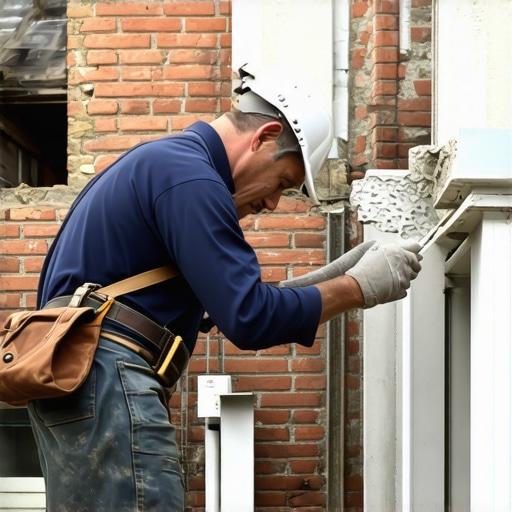
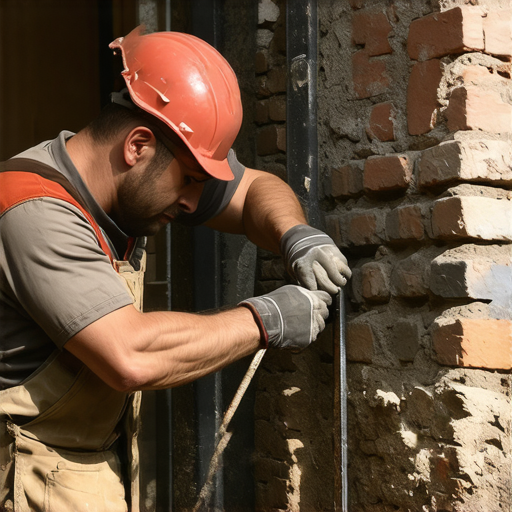
When it comes to structural repointing or commercial tuckpointing, most modern contractors fail because they don’t understand the chemistry of carbonation. Historic bricks are often soft-fired; they breathe. If you butter those joints with a hard, dense Portland-based mud, the water gets trapped. In a freeze-thaw environment, that water expands by 9%, and because it can’t escape through the hard mortar, it blows the face right off the brick. That’s spalling. In 2026, we are returning to historic brick salvage techniques, using hydraulic lime mortars that are softer than the brick itself. This is the ‘Sacrificial Principle’: the mortar is meant to be the part that fails and erodes over fifty years, protecting the irreplaceable brick. We use a slicker to compress the joint, forcing the lime to carbonate from the outside in, creating a weather-tight seal that still allows the building to ‘exhale’ vapor.
3. Sustainable Block Cutting and the Geometry of Drainage
The rise of sustainable block cutting isn’t just about the environment; it’s about precision. When we’re performing stone veneer repair on high-end commercial properties, the fit must be exact to prevent hydrostatic pressure from building up behind the stone. Unlike the old-school ‘lick-and-stick’ methods that lead to honeycombing in the mortar bed, modern tactics involve creating a clear drainage plane. If you don’t give the water a way out, it will find one, usually by rotting your steel lintels or chimney sweep and repair zones. We are now integrating AI masonry assessment to calculate the exact expansion coefficient of the wall, ensuring that control joints are placed where the thermal expansion—especially in hot climates where walls ‘flash set’—won’t cause vertical cracking.
“The use of mortar with a high cement content can lead to the accelerated deterioration of historic masonry units.” – ASTM C270 Standards
4. Pro Facade Cleaning: Beyond the Power Washer
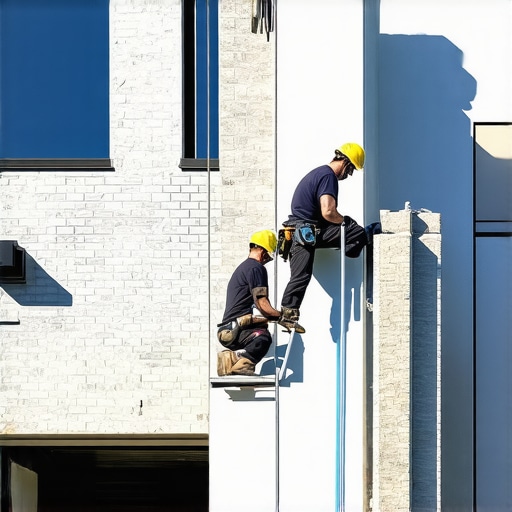
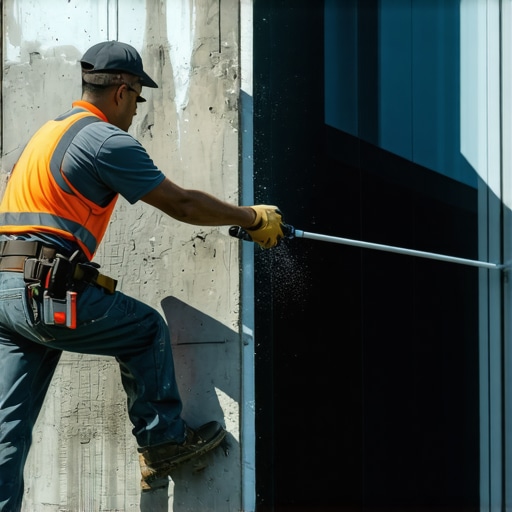
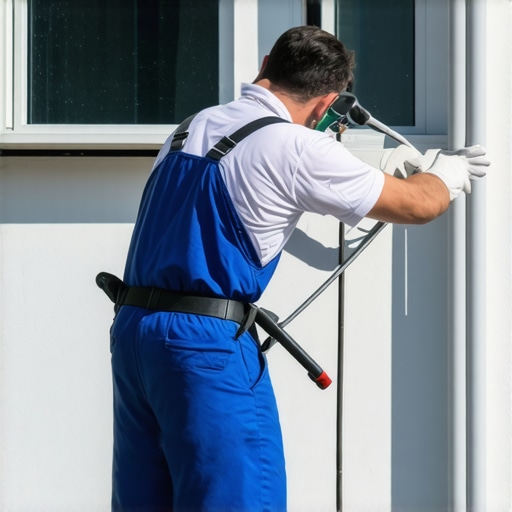
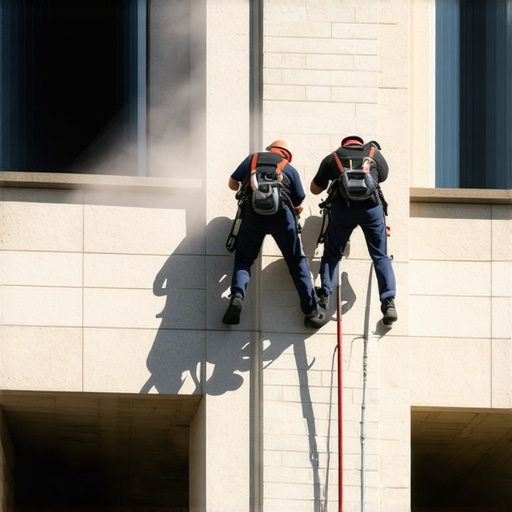
If I see a contractor approach a historic building with a 4000 PSI pressure washer, I’ll chase them off the job site myself. You’re not cleaning the building; you’re sandblasting the protective ‘fire skin’ off the brick. Once that skin is gone, the brick becomes a sponge. Commercial masonry facade maintenance in 2026 relies on low-pressure chemical mists and ‘peelable’ latex masks that pull the carbon and pollutants out of the pores without mechanical trauma. This is especially critical for chimney sweep and repair, where the brick is already weakened by acidic flue gases. We use a hawk and trowel to apply specialized poultices to draw out deep-seated salts. It’s slow work, and it’s expensive, but it’s the only way to ensure the building survives another century. Whether it’s a soldier course over a window or a massive foundation wall, the physics remains the same: respect the suction, manage the water, and never use a mud that’s tougher than the stone it’s holding.