
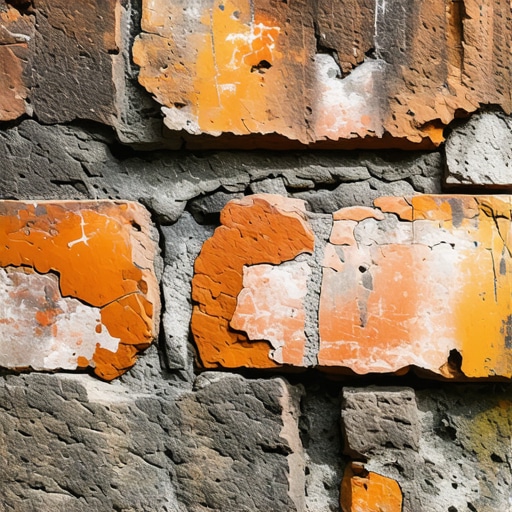
The Forensic Scene: The Silent Bomb Behind the Soldier Course
The homeowner stood on the porch of a 1920s Tudor, pointing at a hairline horizontal crack running along the header bricks above her front window. She thought it was just a bit of settlement, a minor cosmetic nuisance. But when I pulled my borescope from the truck and slipped it into a gap where the mortar had gone soft, I saw the truth. Behind those bricks, the structural steel lintel—the hidden bone holding up the masonry skin—wasn’t just rusted; it had delaminated into thick, brittle wafers of iron oxide. It looked like a stack of burnt potato chips, and it was expanding with enough hydraulic force to lift the entire facade of the house. This wasn’t a settlement issue; it was a slow-motion explosion. I’ve seen this story a thousand times. People ignore the warning signs until the masonry birdsmouth cuts start to buckle and the brickwork above the window starts to ‘smile’ or arch upward. By then, you aren’t just looking at a repointing job; you are looking at a structural surgical extraction.
“Corrosion of embedded steel can generate pressures exceeding 5,000 psi, which is more than enough to cause cracking and displacement of the surrounding masonry.” – BIA Technical Note 18A
The Physics of Oxide Jacking: When Steel Grows 10x Larger
To understand why a horizontal crack above a window is a red flag, you have to understand the chemistry of rust, or what we call ‘oxide jacking.’ When the steel lintel—that horizontal L-shaped bracket over an opening—is exposed to moisture, it undergoes a chemical transformation. Most people think of rust as a surface stain. It’s much more violent than that. As iron converts to iron oxide, the volume of the material increases between six and ten times its original thickness. This expansion is relentless. Because the brickwork above the lintel is heavy and confined, the expanding rust has nowhere to go. It exerts massive upward pressure on the soldier course. The result? The mortar joints fail first, leading to crumbling mortar joint repair needs, and eventually, the bricks themselves will crack or the entire wall section will shift outward. This is often exacerbated in older homes where historic mortar analysis reveals a high lime content; while lime is ‘self-healing’ and flexible, it is also highly porous, allowing moisture to reach the steel if the flashing above the lintel has failed or was never installed in the first place.
The Anatomy of a Failed Opening
In the old days, we didn’t just slap a piece of angle iron in and walk away. A proper mason understands the ‘tooth’ of the material. When we see horizontal cracking, we are looking at the failure of the moisture management system. Water gets in—often through hairline cracks in the joints or through porous stone sealers that have reached the end of their life—and it sits on that steel. If there are no weep holes, or if the retaining wall weep hole cleaning has been neglected in similar structural contexts, that water has no exit strategy. It sits there, soaking into the steel, beginning the oxidation cycle. In many restoration projects, I find that the original masons used specific masonry birdsmouth cuts to fit the brick snugly against the lintel. While beautiful, if that steel isn’t primed or if modern flashings aren’t used during a repair, you’re just resetting the clock on the next failure. We often have to source historic brick salvage to match the density and ‘suction’ of the original wall when we pull these sections apart, because modern ‘hard’ bricks won’t play nice with the soft lime-based mud used in the early 20th century.
“Flashing and weep holes are essential to the performance of any masonry wall system, particularly at points of structural interruption such as lintels and shelf angles.” – ASTM C1780 Standards
The Restoration Reality: Repairing the Damage Properly
If you see horizontal cracks, don’t just ‘butter’ over them with some cheap hardware store caulk. That’s a handyman special that will trap more moisture and accelerate the rot. The right way to fix this is a multi-step forensic process. First, we have to stabilize the masonry above the opening. Then, we carefully remove the affected bricks—often a soldier course or a few rows of running bond. We strip out the old, rusted steel and replace it with hot-dipped galvanized lintels or stainless steel if we’re near the coast. This is where the choice of mortar becomes critical. You cannot use a high-strength Portland cement on a historic home. It’s too hard; it won’t allow the wall to breathe or expand. We use historic mortar analysis to match the aggregate and the binder. Sometimes we use fiber-reinforced mortars for the hidden backup wythe to provide extra tensile strength, but for the visible face, we stick to flush pointing services that match the original aesthetic. This ensures that the ‘sacrificial’ nature of the mortar remains intact—meaning the mortar will fail before the brick does if the wall ever moves again.
Beyond the Lintel: Maintaining the Masonry Envelope
The problem of moisture doesn’t stop at the windows. To prevent these catastrophic failures, you have to look at the whole building skin. This includes stone veneer repair where ‘lick-and-stick’ stones have allowed water to penetrate the sheathing, and the application of porous stone sealers on natural ledgestone to keep the ‘suction’ in check without trapping vapor. I’ve seen metallic brick colors application fail because the coating didn’t allow the brick to ‘breathe,’ leading to spalling when the trapped water froze. If you have a retaining wall, you need to be religious about retaining wall weep hole cleaning. If those holes clog with silt and debris, hydrostatic pressure builds up behind the wall, leading to the same kind of ‘bowing’ and horizontal cracking we see in failing lintels. It’s all about the ‘mud’ and the movement. A wall is a living thing; it expands in the summer heat and shrinks in the winter frost. If you don’t give it the room to move with proper control joints and the right mortar, it will make its own room by cracking. Whether you are dealing with historic brick salvage or brand new builds, the physics of water and steel don’t change. Do it once, do it right, and keep the water out of the bones of the building. Anything else is just a temporary patch on a permanent problem.