
The Forensic Scene: What Lies Behind the Bow
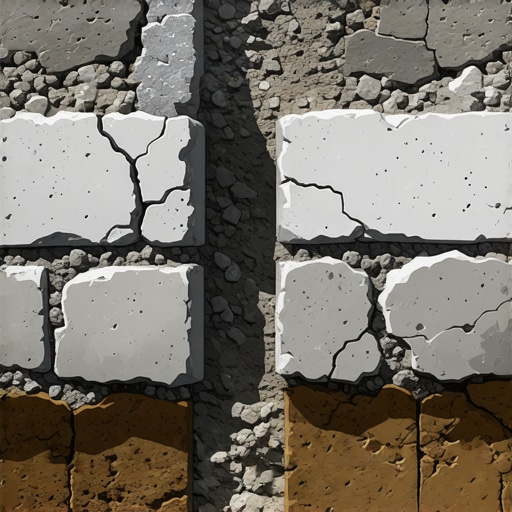
The homeowner called me out because of what she described as a ‘minor lean’ in her backyard terrace. From twenty feet away, it looked like a standard case of settling. But when I pulled out the borescope and threaded it through a hairline fracture near the base, the reality was grim. Behind that face brick, the structural steel was nothing but a memory of rust, and the ‘mud’ used as backfill was a saturated slurry of anaerobic silt. The homeowner thought it was just a cosmetic issue. But when I put my scope inside, I saw the structural steel was rusted to dust, and the entire mass of the earth was being held back by nothing more than the friction of failing mortar joints. This wasn’t a masonry failure; it was a hydraulic failure.
As a third-generation mason, I’ve seen this horror story play out from the frost-heaved hills of the Northeast to the expansive clays of the South. Whether you are looking for retaining wall installation or trying to save a 1920s perimeter wall, you have to understand one thing: Water is the house always wins. If you don’t give it a path out, it will make its own path, usually right through your investment.
“Water penetration is the single greatest threat to masonry durability.” – BIA Technical Note 7
The Physics of Hydrostatic Pressure: Micro-Zooming into the Soil
To understand why a garden wall fails, we have to look at the physics of the soil. When soil is dry, the particles have a certain ‘angle of repose’—they naturally want to stack. But introduce water, and everything changes. Water weighs approximately 62.4 pounds per cubic foot. When soil becomes saturated, it’s no longer a solid mass; it acts like a heavy fluid. This is hydrostatic pressure. On a ten-foot wall, that pressure can exert thousands of pounds of lateral force against the back of the masonry. If your foundation isn’t pinned or if your drainage isn’t clear, the wall will bow, then crack, then collapse.
In northern climates, we deal with the added nightmare of the freeze-thaw cycle. When that trapped water freezes, it expands by 9%. This expansion doesn’t just push the wall; it enters the microscopic pores of the brick. Through capillary action, the ‘tooth’ of the brick—the tiny valleys and peaks that allow mortar to grab hold—becomes a battlefield. If the mortar is too hard (like modern Portland cement used on old bricks), the expanding ice has nowhere to go. It exerts internal pressure that exceeds the tensile strength of the clay, and that’s when you see ‘spalling’—where the face of the brick literally pops off in a shower of red dust. This is why a professional masonry damage assessment is the first step before any repair.
The Anatomy of Proper Drainage
A wall is only as good as what’s behind it. When I’m supervising a retaining wall installation, the masonry is the last thing I worry about. I’m looking at the ‘clear stone’—the 3/4-inch washed gravel that should form a vertical chimney at least 12 inches wide behind the wall. This gravel provides the path of least resistance for water to drop straight down to the perforated ‘weeping’ tile at the base. Without a filter fabric to separate this stone from the native soil, the stone becomes ‘clogged’ with fines. This is called siltation. Once the gravel is choked with silt, the drainage system is dead, and the wall starts to ‘sweat’ minerals, a process known as efflorescence.
For those dealing with historic structures, brick arch restoration requires even more finesse. Arches are compression-based. If the soil behind an arch-supported garden wall becomes heavy with water, it shifts the load path. The ‘keystone’ isn’t just a decoration; it’s the point of ultimate compression. If the drainage fails, the abutments shift, the arch loses its ‘ring,’ and the whole structure becomes a pile of rubble. We often look at mortarless masonry systems for modern garden applications precisely because they allow the wall to ‘breathe’ and weep naturally through the joints without the risk of hydraulic buildup.
The Art and Science of Pointing
Many handymen will tell you to just ‘slap some cement’ in the cracks. That’s a death sentence for a wall. We distinguish between flush pointing services and tuck pointing services for a reason. In a flush joint, the ‘mud’ is finished even with the brick face. It’s functional but can lead to water ponding on the top edge of the brick if not struck correctly with a ‘slicker’ or jointer tool. Tuck pointing services, especially when using a tuckpointing machine services for efficiency on large runs, involves a two-tone process that creates an optical illusion of perfectly thin joints, but more importantly, it provides a sacrificial layer of soft lime mortar. This lime is crucial. It’s ‘self-healing.’ As micro-cracks form from thermal expansion, the lime carbonizes and fills the gap. If you use a hard, waterproof mortar on a garden wall, you’re just trapping the water inside the brick, leading to ‘honeycombing’ of the internal structure.
“Mortar should always be weaker than the masonry units it binds, ensuring that stresses are relieved through the mortar rather than the brick.” – ASTM C270 Standards
The Chimney Connection and Green Integration
Don’t think your garden wall is isolated. Often, these walls are tied into larger structures or foundations. We often perform chimney leak detection on outdoor fireplaces and find that the source of the water isn’t the crown, but the ‘wicking’ action of the garden wall it’s attached to. Water travels horizontally through the bed joints if the flashing is compromised. Furthermore, with the rise of green roofing masonry integration, we are seeing more ‘living walls.’ These are beautiful but dangerous if not engineered. You are essentially putting a wet sponge against a masonry surface. This requires specialized waterproof membranes and ‘cold joints’—specific breaks in the pour—to ensure that the moisture from the plants doesn’t migrate into the structural masonry and cause rot.
The Cold Truth: Do It Once or Do It Twice
When I see a wall ‘smiling’—that’s mason-speak for a sagging horizontal crack—I know the homeowner is in for a rough time. You can’t just ‘butter’ the joints and hope for the best. You have to address the ‘mud’ behind the brick. If you’re building or repairing, don’t let a contractor skip the ‘hawk’ and ‘trowel’ work for a quick fix. Real masonry is about managing the ‘suction’ of the brick. If the brick is too dry, it sucks the hydration out of the mortar before it can chemically bond. This creates a ‘cold joint’ that has no structural integrity. Every brick must be ‘buttered’ with the right consistency of mud to ensure that the bond is chemical, not just mechanical.
The bottom line? A garden wall is a dam that is supposed to look pretty. If you treat it like a decoration and ignore the geotechnical reality of the soil and water behind it, you aren’t building a wall; you’re building a liability. Always start with a masonry damage assessment from someone who knows the difference between a cosmetic crack and a structural failure. Your wallet, and your backyard, will thank you.