
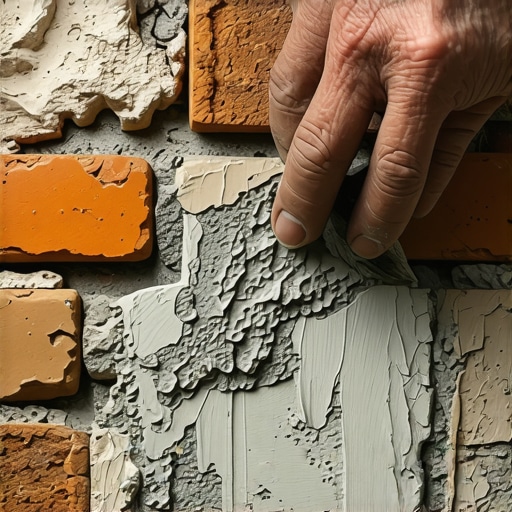
The Ghost of the Mason’s Mistakes
I remember my Uncle Elias standing before a Federal-style rowhouse, squinting through a jeweler’s loupe at a handful of crumbled dust he’d scraped from a bed joint. Most people see a wall; he saw a geological record. He took a pinch of the debris, rubbed it between his thumb and forefinger, and sighed. ‘The boy who did this used Type S on a hand-pressed brick,’ he muttered. ‘He didn’t just fix it; he signed its death warrant.’ He was right. Within three winters, those soft, orange-hued bricks were spalling, their faces popping off like scabs because the mortar was harder than the clay. That is the tragedy of modern masonry: a total loss of the sacrificial principle.
The Chemistry of the Sacrificial Joint
In the world of structural repointing and masonry water damage repair, the mortar is the lungs of the building. It has to breathe. Modern Portland cement is a closed-cell monster. It is dense, rigid, and waterproof. While that sounds like a benefit, it is a curse for historic structures built before 1940. Traditional lime mortar is porous. It allows moisture to travel through the joint and evaporate into the air. When you shove high-strength cement into those joints, the water gets trapped. In a freeze-thaw climate, that water expands by 9%, and since the cement won’t budge, the pressure is redirected into the brick. The brick, being the softer element, shatters. This is why tuck pointing services are not just about aesthetics; they are about matching the modulus of elasticity of the original binder.
“The use of high-strength Portland cement in historic masonry is the most frequent cause of irreparable damage to the units themselves.” – NPS Preservation Brief 2
Micro-Zooming: The Sieve and the Shade
Achieving a perfect match isn’t just about grabbing a bag of ‘buff’ or ‘grey’ from the local supply house. We have to look at the aggregate. I’ve spent hours performing sieve analyses, separating the fines from the coarse sand to find the exact ‘tooth’ of the original mix. If the original mason used river sand with rounded edges, and I use sharp, crushed limestone, the suction of the brick will react differently to the mud. The sand provides the skeleton; the lime provides the flesh. To ignore this is to invite honeycombing within the wall, where voids form behind the surface, creating reservoirs for ice to build up. This is particularly critical in failing retaining wall repair, where hydrostatic pressure is already fighting to push the structure over. If the retaining wall capstone replacement isn’t handled with a mortar that matches the thermal expansion of the wall below, the cap will simply shear off within two seasons.
The Physics of the Strike
When we get the mix right—usually a Type O or a custom lime-putty blend for true restoration—the application is an art of timing. We don’t just butter the brick and walk away. We wait for the mortar to become ‘thumbprint hard.’ Only then do we use the slicker to tool the joint. This compacts the mud against the ‘shoulders’ of the brick, ensuring a weather-tight seal. If you strike it too wet, you pull the lime to the surface, creating a ‘smear’ that ruins the breathability. If you strike it too dry, you get a cold joint where the new material never truly marries to the old. This precision is what separates a 20-year fix from a 100-year restoration. We see the same failures in outdoor fireplace rebuild projects, where the heat cycles cause rapid expansion. If the mortar is too stiff, the soldier course above the firebox will buckle and drop bricks into the hearth.
“Mortar should always be weaker than the masonry units it binds to ensure that any movement or stress is absorbed by the mortar, which is easier to replace than the masonry units.” – ASTM C270 Standard Specification
The Modern Sins: Stone Veneer and Concrete Flatwork
I have a particular disdain for the stone veneer over brick trend. It is the ‘lipstick on a pig’ of the masonry world. Contractors take a perfectly functional, breathing brick wall and slap a non-breathable ‘lick-and-stick’ stone over it with high-modulus thin-set. It’s a recipe for rot. The moisture that used to escape through the brick is now trapped against the original facade. I’ve been called to scenes of brick veneer detachment repair where the entire outer skin of a house has peeled off like bark from a dead tree because of this exact mistake. The same logic applies to concrete flatwork services. If you are pouring a patio against an old foundation, you cannot use a standard ‘high-early’ mix without a proper expansion joint. The concrete will expand in the July sun and crack your foundation wall like an eggshell. It’s all about managing the energy and the water.
The Forensic Reality of Chimneys
Nowhere is mortar matching more vital than in chimney rebuild services. A chimney is the most exposed part of your home, taking a beating from wind, rain, and the internal thermal shock of a 700-degree flue. When I perform a forensic inspection on a leaning stack, the culprit is almost always a ‘handyman’ who used a standard hardware-store bag of mix to ‘patch’ the crown. That patch, being too hard, didn’t move with the masonry. It cracked, let water in, and now the interior common bricks have turned to mush. We call this ‘melting,’ and it’s a structural nightmare that requires a full teardown. To avoid this, we match the aggregate, we match the binder, and we ensure the hawk and trowel are used to create a wash that sheds water without trapping vapor.
Preserving Value Over Cutting Corners
Real masonry isn’t about the fastest way to get a check. It’s about the physics of the trowel and the chemistry of the lime. When you see a wall where the mortar has been ‘smeared’ over the edges, or where the color looks like a neon stripe against a weathered face, you aren’t just looking at poor aesthetics—you are looking at a ticking time bomb. A proper restoration respects the original builder. It acknowledges that the building has survived 80 years because of its flexibility. If you take away that flexibility with modern, rigid materials, you are destroying the property value you think you’re ‘elevating.’ Do it once, do it right, and let the wall breathe. Anything less is just a Band-Aid on a gunshot wound.