
The White Ghost on the Facade: More Than a Cosmetic Nuisance
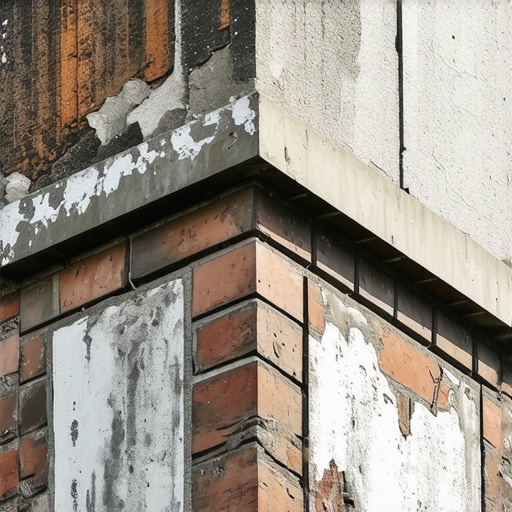
When you walk past a historic brick building and see that white, powdery crust creeping across the surface like a slow-moving fungal infection, most people see a cleaning bill. I see a crime scene. As a third-generation mason, that white powder—efflorescence—is a neon sign screaming that the water management system inside the wall has suffered a catastrophic failure. It is rarely the fault of the brick itself; it is almost always the fault of the invisible barriers we call flashing. If the flashing isn’t installed with precision, the wall becomes a reservoir rather than a shield.
The Forensic Scene: The Hidden Decay
I remember a forensic scene at a 1920s courthouse where the homeowner thought it was just a hairline crack and some ‘salty buildup.’ But when I put my scope inside the cavity, I saw the structural steel was rusted to dust. The culprit? The original lead flashing had been breached during a previous, botched facade cleaning and repair. Water had been sitting against the steel for decades because the weep holes were plugged with ‘mud’ (excess mortar) from a lazy tuckpointing job. This wasn’t just a stain; it was a slow-motion structural collapse hidden behind a veil of salt. The chemistry of masonry is relentless. When liquid water moves through the pores of a brick—pores that act like a labyrinth of microscopic glass tubes—it dissolves soluble salts like sodium sulfate or potassium carbonate. As that water reaches the exterior face and evaporates into the air, it leaves the salt behind. This is the physics of ‘wicking.’ If you see this pattern localized around windows or at the base of a wall, your flashing is failing to direct that water out.
“Water penetration is the single greatest threat to masonry durability.” – BIA Technical Note 7
The Anatomy of a Flashing Failure
In a properly constructed wall, we use thru-wall flashing—a thin layer of impermeable material, ideally copper or high-grade stainless steel—to intercept water and guide it to the exterior via weep holes. But modern ‘lick-and-stick’ installers often skip the ‘end dams.’ An end dam is a simple upturned fold at the end of a flashing run. Without it, water just runs off the side of the flashing and pours into the insulation or onto the interior backup wall. This is where fire-rated masonry installation becomes critical; if the moisture compromises the fire-stopping materials within the cavity, the entire safety rating of the structure is void. We see this often in masonry rescue after disaster scenarios where high-pressure winds have pushed water into voids that were never designed to be wet. The result is spalled concrete steps repair being needed not because of the traffic, but because the salt-laden water migrated down from the failing facade and crystallized inside the concrete, blowing the face off through sub-florescence.
The Physics of the Freeze-Thaw and Sustainable Solutions
In our northern climates, the enemy is the 9% expansion of water when it turns to ice. If the flashing is poor and the wall is saturated, that water freezes and pops the ‘face’ of the brick right off. This is why sustainable tuckpointing mortars are mandatory for restoration. Using a hard, modern Portland cement on old, soft bricks is a death sentence. The mortar must be the ‘sacrificial lamb’—it must be softer and more permeable than the brick so that moisture evaporates through the joints, not the masonry units. When we perform stone balustrade restoration, we often find that the internal pins are rusting because the joints were filled with a non-breathable sealant rather than a proper lime-based mud. The moisture gets trapped, the pins expand, and the stone cracks. We advocate for sustainable block cutting techniques that minimize micro-fissures, ensuring the units themselves aren’t pre-damaged before they even hit the wall.
“Mortar should be weaker than the masonry units so that any cracks occur in the mortar joints, where they can be easily and economically repaired.” – ASTM C270 Standards
Fixing the Source, Not the Symptom
Don’t just reach for a power washer. Masonry cleaning without fixing the flashing is like mopping a floor while the pipe is still leaking. You might get the salt off today, but the ‘tooth’ of the stone is already being compromised. You need to verify the integrity of the masonry joint sand repair in your horizontal surfaces and check that the flashing is actually ‘shingled’ correctly. If the upper layer of flashing isn’t tucked behind the building wrap or the backup wall, it’s just a funnel. When we ‘butter’ a brick for a soldier course over a window, we have to be certain the lintel flashing extends at least an inch past the opening. This is masonry 101, yet I see it ignored on multi-million dollar jobs every week. Do it once, or do it twice—the physics of water doesn’t care about your budget. Only by respecting the ‘suction’ of the materials and the necessity of drainage can we preserve these structures for another century.