
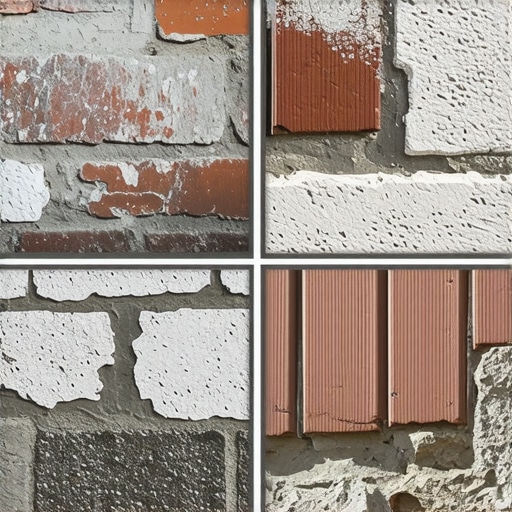
The Ghost in the Wall: A Forensic Awakening
I was standing in the basement of a sprawling, million-dollar estate in a high-moisture coastal zone when I saw it. To the uninitiated home buyer, it looked like a bit of harmless white fuzz on the brickwork. The homeowner thought it was just a hairline crack and some ‘dusting.’ But when I put my scope inside the cavity through a clogged weep hole, I saw the truth: the structural steel lintels were rusted to dust, and the wall ties had snapped like brittle twigs. That white powder, known as efflorescence, wasn’t just a cosmetic blemish; it was the forensic evidence of a slow-motion structural homicide. In thirty years of laying mud and scraping joints, I’ve learned that the wall always tells a story, and salt is usually the first chapter of a tragedy.
The Chemistry of Destruction: Micro-Zooming into Salt Migration
Efflorescence is the migration of a salt to the surface of a porous material, where it forms a coat. This isn’t just ‘dirt.’ It is a precise chemical reaction requiring three components: water-soluble salts, moisture to dissolve those salts, and a path for that moisture to travel to the surface where evaporation occurs. When you see those white crystals, you are looking at the ‘wicking’ effect in action. The masonry unit acts as a giant sponge, pulling mineral-laden water through its capillaries. As the water hits the air and evaporates, it leaves the minerals behind. But the real danger lies just beneath the surface in a process called cryptoflorescence. This is where the salt crystals grow inside the pores of the brick or stone. The pressure generated by these growing crystals can exceed 2,000 PSI, which is more than enough to shatter the face of a high-quality brick or cause concrete masonry unit restoration to become an immediate necessity.
“Efflorescence is the migration of a salt to the surface of a porous material, where it forms a coat. It is not in itself a harmful condition, but it is an indication of the presence of moisture which can lead to other problems.” – BIA Technical Note 23
The Physics of the Failure: Why New Homes Are Vulnerable
Modern construction often relies on what I call ‘lick-and-stick’ masonry—thin veneers applied with hard Portland cement over wooden frames. These systems lack the breathability of the sustainable masonry materials used a century ago. When moisture gets trapped behind a modern veneer, it has nowhere to go but through the face of the stone. This is why full repointing services are increasingly common on homes less than a decade old. If the mortar is too hard (high-performance mortar mixes with too much Portland), it won’t allow the moisture to escape through the joints. Instead, the moisture is forced through the bricks themselves, blowing out the faces in a process known as spalling. A master mason knows the ‘sacrificial principle’: the mortar must be softer and more permeable than the brick so that the mortar, not the brick, takes the brunt of the salt and moisture damage.
The Retaining Wall Warning: Drainage or Disaster
If you are walking a property and see white staining on a landscape wall, you aren’t just looking at a ‘wet wall.’ You are looking at a retaining wall drainage upgrade waiting to happen. Most contractors throw up blocks, backfill with whatever dirt is lying around, and call it a day. Without a proper gravel ‘chimney’ and perforated pipe, hydrostatic pressure builds up. The water is forced through the block, carrying calcium hydroxide with it. Over time, this leaches the strength right out of the concrete. Eventually, you’ll be looking at retaining wall block replacement because the internal structure of the blocks has been honeycombed by leaching. I’ve seen 50-foot runs of wall lean and buckle because the homeowner ignored the ‘white fuzz’ for three seasons.
The Chimney and the Heat Shield: Internal Moisture Sources
Efflorescence on a chimney is a different beast entirely. It often signals that combustion gases are condensing inside the flue. When these acidic gases mix with moisture, they eat the mortar from the inside out. This is where chimney heat shield installation becomes critical. A heat shield or a proper liner prevents that moisture from ever reaching the masonry shell. If you ignore it, the salts will eventually cause the chimney crown to crack, leading to a total brick wall restoration project that could cost five figures. I always check the ‘suction’ of a chimney brick; if it’s pulling in water like a thirsty dog, that chimney is on its way to a cold joint failure.
The Hardscape Reality: Why Pavers Sink
Buyers often overlook the white haze on a new patio, thinking the rain will wash it away. But in the world of brick paver driveway repair, efflorescence is a sign of poor base preparation. If the base isn’t draining, the pavers are sitting in a bath of mineral-rich water. This water wicks up, dries, and leaves the salt. If the contractor didn’t use a ‘slicker’ to properly finish the joints or used the wrong polymeric sand, the entire driveway will eventually heave. Sometimes, we can save these surfaces with self-leveling masonry lifts if the sub-base is still salvageable, but usually, it’s a sign of ‘gypsy’ work where the base was skipped to save on labor.
“Water penetration is the single greatest threat to masonry durability. The control of water is the most important factor in the design and construction of any masonry wall.” – ASTM Standards for Masonry
The Master’s Verdict: How to Protect Your Investment
If you’re a buyer and you see efflorescence, don’t just walk away—but don’t buy without a forensic inspection. Look for high-performance mortar mixes that are vapor-permeable. Ask if the restoration used lime-based sustainable masonry materials. A wall that can’t breathe is a wall that will eventually die. I’ve spent my life ‘buttering’ bricks and ‘striking’ joints to ensure that the water has a way out. Masonry is the art of managing water, not just stacking stones. When you see the white salt, remember: it’s the wall’s way of screaming for help. Don’t let a ‘handyman special’ mask a structural failure with a coat of paint. Paint on a damp brick wall is like a plastic bag over a drowning man; it only hastens the end. Trust the grit, trust the mud, and listen to what the salts are telling you.