
You’ve seen it a thousand times: a beautiful, weathered 1920s bungalow or a stately Georgian brick home marred by bright, neon-white stripes of fresh mortar zig-zagging across the facade like a surgical scar. To the homeowner, it was a weekend project to fix a few cracks. To a third-generation mason like me, it’s a crime scene. I remember watching my mentor, a man who had more limestone dust in his lungs than oxygen, take a magnifying glass to a handful of sand. He didn’t just look at the color; he looked at the shape of the grains. If the sand wasn’t sub-angular enough to provide the ‘bite’ he needed, he’d send the whole truck back. He used to say, ‘The mud is the soul of the wall; treat it like dirt, and the wall will treat you like a stranger.’ This deep-seated respect for the chemistry of the bond is why DIY attempts almost always fail, resulting in a patch job that screams for attention for all the wrong reasons.
The Narrative of the Forensic Scene
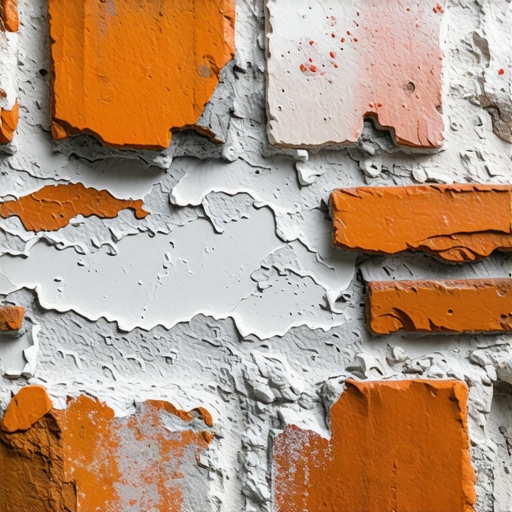
I was recently called to a forensic scene at a pre-war estate where the homeowner thought they’d saved a few thousand dollars by doing their own re-pointing services. From the sidewalk, it looked like a child had used a frosting bag on the joints. But when I put my scope inside a weep hole, I saw the real tragedy: the structural steel was rusted to dust because the new, dense mortar had trapped moisture against the frame. This is the ‘lick-and-stick’ mentality that destroys heritage. They didn’t understand that a wall needs to breathe, and by using a high-strength, off-the-shelf bag mix from a big-box store, they had effectively turned their porous brick wall into a plastic bag. The bricks were already starting to exhibit ‘face-popping’ or spalling, a direct result of the mortar being harder than the brick itself. [image_placeholder]
The Physics of the Sacrificial Principle
To understand why matching matters, you have to understand the ‘Sacrificial Principle.’ In historic masonry, the mortar is designed to be the weakest link. It is the sacrificial element that bears the brunt of thermal expansion and moisture migration. If the mortar is softer than the brick, the stress of the building’s movement is relieved in the joint. If you use a modern, high-performance mortar mix that is too rich in Portland cement on old, soft-fired bricks, the brick becomes the weakest link. When the wall expands in the summer heat or freezes in the winter, the mortar stays rigid while the brick face shatters. This is the primary cause of brick spalling. The mortar must be a conduit for moisture, not a dam.
“Water penetration is the single greatest threat to masonry durability, and the use of mortars with high water-retention and lower compressive strength is often necessary for historic preservation.” – BIA Technical Note 7
The Chemistry of the ‘Mud’: Why Color is Only Skin Deep
When most people think of mortar matching, they think of color. But professional mortar repointing services know that color is a function of three variables: the sand, the binder, and the pigment. DIYers often grab a bag of gray Type S and hope for the best. True matching requires a sieve analysis of the original sand. Was it river sand with rounded edges? Was it crushed limestone? The mineralogy of the sand dictates the ‘tooth’ of the mortar. When you apply the ‘mud’ to the hawk and start to butter the joints, the suction of the dry brick pulls the moisture out of the mix. If the sand gradation is wrong, the mortar won’t hydrate evenly, leading to a ‘flash set’ that leaves the joint brittle and chalky.
Then there is the carbonation process. Historic sustainable tuckpointing mortars based on lime don’t ‘cure’ like concrete; they carbonate. They absorb CO2 from the air over decades, slowly turning back into stone. This process allows for ‘self-healing’ of micro-cracks. Modern Portland-based mixes don’t do this. When they crack, they stay cracked, allowing water to penetrate and reach the chimney damper or the structural lintels in a commercial parapet wall repair. Matching the binder—the ratio of lime to cement—is more critical than matching the shade of tan.
The Micro-Zoom: Sand Gradation and Mineral Oxidation
Let’s micro-zoom into a single joint. A proper match involves looking at the oxidation of the minerals within the sand. Over eighty years, the iron in the sand will oxidize, giving the mortar a slight orange or buff tint. If you use fresh, kiln-dried white silica sand, the wall will never look right. This is where masonry staining comes into play for forensic repairs, but it’s a bandage for a deeper problem. We look for ‘fines’—the tiny dust particles in the sand—that fill the voids between larger grains. Without the right percentage of fines, the mortar is too porous, leading to excessive water absorption. We often recommend porous stone sealers for new work, but applying them over a bad mortar match only highlights the unevenness of the texture.
The Mechanical Bond vs. The Chemical Bond
When you’re performing an outdoor fireplace rebuild or a commercial parapet wall repair, you’re looking for two types of bonds. The mechanical bond is created when the mortar is squeezed into the pores of the brick. The chemical bond happens during the hydration of the cementitious materials. A ‘cold joint’ occurs when new mortar is applied to old mortar without proper preparation. We use a slicker tool to pack the mortar deep into the joint, ensuring the air is driven out and the bond is tight. A DIYer usually just ‘shmears’ the mortar on the surface, which leads to ‘honeycombing’—a porous, air-filled mess that fails after three freeze-thaw cycles.
“Mortar should be designed to be weaker than the masonry units so that any cracks will occur in the mortar joints where they can be easily repaired.” – ASTM C270 Standard Specification for Mortar
The Tragedy of Modern Materials in Old Walls
The rise of ‘lick-and-stick’ stone veneer has ruined the average person’s understanding of masonry. They think it’s all about the glue. But in a structural brick wall, the mortar is a gasket. In regions with heavy freeze-thaw cycles, the expansion of water (which grows by 9% when it turns to ice) will find the path of least resistance. If your re-pointing services used a hard, non-breathable mix, that path is straight through the face of your brick. This is why we insist on sustainable tuckpointing mortars that mimic the original chemical makeup of the building. We aren’t just matching a look; we are matching a modulus of elasticity.
The Professional Process: Beyond the Trowel
When we take on a project, the process is clinical. We grind out the old joints to a depth of at least twice the width of the joint, often using hand tools to avoid damaging the arris of the brick. We then wash the joints to ensure the ‘suction’ of the brick doesn’t rob the new mud of its hydration water too quickly. We mix our high-performance mortar mixes in small batches to ensure consistency. We use a hawk and a slicker to drive the material home, then we wait. We wait for the ‘thumbprint hard’ stage before striking the joint to match the original profile—be it a grapevine, a weathered, or a struck joint. This attention to detail is why professional work disappears into the wall, while DIY work stands out like a neon sign.
Conclusion: The Cost of a Bad Match
A bad mortar match is more than an eyesore; it’s a financial liability. It devalues the property and sets the stage for expensive structural failures. Whether you are looking at brick spalling prevention or a full-scale chimney damper repair, the materials must be compatible. Don’t be fooled by the ‘all-purpose’ bags at the hardware store. Every building has a unique DNA, and a master mason is the only one who knows how to read it. If you want your home to stand for another century, stop thinking about patches and start thinking about preservation.