
The Lie of the Liquid Band-Aid
I’ve spent forty years smelling the damp, earthy scent of hydration and the sharp, metallic tang of an angle grinder cutting through century-old clay. In that time, I’ve seen homeowners spend thousands on ‘miracle’ sealants—those clear, plastic-looking buckets of acrylic or silicone they pick up at a big-box store—thinking they are armor-plating their home against the elements. It’s a farce. Most of those sealants are nothing more than a death sentence for your masonry. When I walk onto a job site and see that tell-tale plastic sheen on a 1920s bungalow, I know exactly what I’m going to find: a brick face that’s about to give up the ghost.
The Forensic Scene: A Ghost in the Wall
I remember a call-out in a region where the frost bites deep into the soil. The homeowner thought it was just a hairline crack, a little ‘character’ in the facade. But when I put my digital scope inside a weep hole, the reality was grim. The structural steel lintel behind the soldier course was rusted to a pile of red dust. Because they’d slapped a heavy, non-breathable sealant over the exterior, the moisture that naturally migrated from the warm interior of the house was trapped. It couldn’t evaporate. Instead, it sat against the steel and the back of the brick, turning the wall into a slow-motion pressure cooker. The ‘protection’ they bought had actually accelerated the rot by 200%.
The Micro-Physics of the Freeze-Thaw Cycle
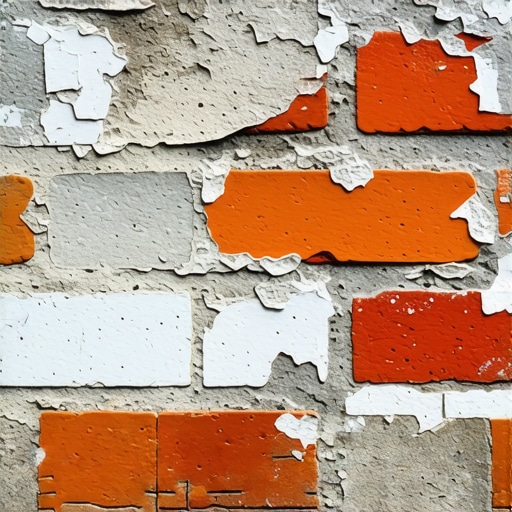
To understand why a cheap sealant fails, you have to micro-zoom into the pore structure of a brick. A brick isn’t a solid block; it’s a series of interconnected capillaries. In cold climates, the enemy is the 9% expansion of water. When liquid water enters these pores and freezes, it exerts incredible internal pressure. If the brick is allowed to ‘breathe,’ that vapor can escape. However, when you apply a film-forming sealant, you create a vapor barrier. The moisture gets trapped just behind the surface. When it freezes, the force shears the face of the brick right off. We call this spalling. You aren’t just losing a little color; you are losing the vitrified ‘skin’ that protects the soft, inner core of the unit.
“Water penetration is the single greatest threat to masonry durability. The primary defense against water penetration is the use of proper materials and detailing that facilitate drainage and allow for vapor transmission.” – BIA Technical Note 7
The Physics of Mortar and the ‘Sacrificial’ Principle
Proper brickwork pointing styles aren’t just about looks. Whether it’s a flush pointing service or a weathered joint, the mortar’s job is to be the sacrificial lamb. In historic cracked brick wall repair, you never use modern Portland cement on old, soft bricks. You need a lime-based ‘mud’ that is softer than the brick itself. If the wall moves or moisture enters, the mortar should crack or erode first, saving the brick. When you ‘butter’ a joint with a hard, synthetic sealant or a high-strength mortar, you reverse that relationship. The brick becomes the weakest link, and that’s when the faces start popping like popcorn.
Chimneys: The Ground Zero of Spalling
If you want to see the failure of cheap fixes, look at the chimney. Chimney repair services often focus on the chimney crown repair, and for good reason. The crown is the umbrella of your chimney. If it’s cracked or made of thin, ‘slicker’-smoothed mortar instead of a proper concrete overhanging slab, water will pour into the masonry core. Slapping a sealant on the bricks below a leaking crown is like putting a band-aid on a gunshot wound while the bullet is still inside. You’re just trapping the water that’s already pouring in from the top. Proper masonry cleaning and a breathable, silane-siloxane water repellent (not a sealant) are the only way to manage this without destroying the stack.
Retaining Walls and Geotechnical Realities
Spalling isn’t the only structural failure I see being ‘sealed’ away. I’ve looked at many a leaning wall where the owner thought a coat of paint would stop the movement. Retaining wall batter correction is about physics, not aesthetics. If a wall is leaning, it’s usually because of hydrostatic pressure or lack of retaining wall geogrid installation. Water builds up behind the wall, and if there’s no drainage, it pushes with thousands of pounds of force. A ‘metallic masonry finish’ or a cheap sealant won’t stop that wall from toppling. You need to address the ‘toe’ of the wall and the soil compaction physics.
“The selection of mortar should be based on the properties of the masonry units. A mortar that is too strong can cause distress in the masonry units under thermal or moisture expansion.” – ASTM C270 Standards
The Mirage of Self-Healing Concrete Foundations
Modern marketing loves to talk about self-healing concrete foundations. While there is fascinating chemistry involving bacteria that produce calcite to seal micro-cracks, it is not a replacement for old-school craftsmanship. I’ve seen honeycombing in new pours where the ‘mud’ wasn’t vibrated properly, leaving air pockets that no ‘self-healing’ miracle can fix. If you have a foundation crack, you need to know if it’s settlement or heaving. A cold joint from a bad pour is a structural flaw, not a cosmetic one. You can’t just ‘butter’ over it with epoxy and hope for the best.
Conclusion: The Professional’s Verdict
If you want to stop spalling, stop looking for a ‘magic’ coating. You need to fix the source of the water. This means checking your gutters, ensuring your chimney crown repair is done with a proper drip edge, and using breathable water repellents that allow vapor to escape while keeping liquid out. Real masonry isn’t about sealing things up tight; it’s about managing the flow of moisture and energy through a building. Do it right once, or you’ll be paying me to tear it all down and start over in five years. There are no shortcuts in the world of stone and clay.