
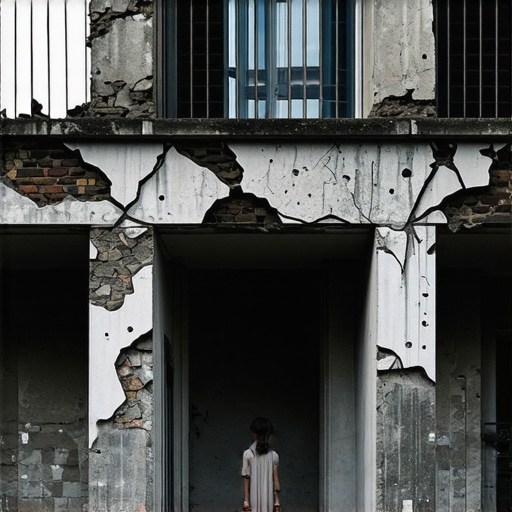
The Anatomy of a Dying Foundation
I remember my mentor, a man who had more limestone dust in his lungs than oxygen, taking me to a bank built in the 1880s. He didn’t look at the grand pillars or the ornate cornice. He walked straight to the water table course, knelt in the mud, and ran his thumb over a patch of white, fuzzy growth. ‘Listen to the stone,’ he told me. ‘It is screaming.’ That fuzzy stuff wasn’t just salt; it was efflorescence, a sign that the very minerals holding the stone together were being leached out by hydrostatic pressure. When the crystalline structure of a foundation begins to dissolve from the inside out, a simple patch is like putting a band-aid on a gunshot wound. You aren’t just looking at a crack; you are looking at a systemic failure of the building’s skeleton.
The Physics of the Stair-Step: More Than a Cosmetic Flaw
In the world of forensic masonry, we don’t just see lines; we see vectors of force. A stair-step crack following the mortar joints is the classic signature of differential settlement. This happens when one part of the footing sits on stable soil while the other is perched on expansive clay or a pocket of uncompacted fill. As the earth moves, the masonry is forced to shear. If you see these cracks widening at the top, the building is rotating.
“Water penetration is the single greatest threat to masonry durability, often leading to the eventual compromise of structural integrity if not addressed at the source.” – BIA Technical Note 7
This isn’t something you fix with a tube of caulk from a big-box store. When the gap exceeds a quarter-inch, the mechanical bond of the original mortar is gone. You are no longer looking at foundation crack repair; you are looking at a requirement for helical piers or deep-tissue structural intervention.
The Freeze-Thaw War: Why Your Brick is Popping
For those of us working in the frost belt, the enemy is the 9% expansion of water. When water enters the pores of a low-fired brick or a porous mortar joint and freezes, it exerts thousands of pounds of pressure per square inch. This leads to spalling, where the face of the brick literally pops off. If your chimney rebuild services professional tells you they can just ‘skim coat’ it, fire them on the spot. Skim coating traps moisture behind a dense layer of cement, accelerating the rot. True freeze-thaw damage restoration requires a deep understanding of the ‘breathability’ of the material. Modern Portland cement is often too hard for historic bricks. You need a sacrificial mortar—something with a high lime content that allows moisture to escape through the joint rather than the masonry unit itself.
The ‘Mud’ and the ‘Hawk’: The Art of Structural Repointing
When we talk about structural repointing, we aren’t just talking about making it look pretty. We are talking about restoring the compressive strength of the wall. You start by grinding out the old, failing ‘mud’ to a depth of at least twice the width of the joint. If you see honeycombing—those voids where the aggregate didn’t settle right during the original pour—you’ve got a ‘cold joint’ problem that goes deeper than the surface. Using a hawk to hold your mortar and a slicker to pack it in, you ‘butter’ the joints in thin lifts. This prevents the mortar from ‘burning’ or drying too fast, which leads to shrinkage cracks.
“Mortar should always be weaker than the masonry units it binds, ensuring that stresses are relieved through the mortar joints rather than the units themselves.” – ASTM C270 Standard Specification
Advanced Tech: From Robotic Repair to Self-Healing Concrete
We are entering a new era where robotic masonry repair can map the internal voids of a wall using ground-penetrating radar before a single stone is moved. We are even seeing the rise of self-healing concrete foundations, which utilize calcite-precipitating bacteria to fill hairline fractures as they form. But even with this tech, the basics of masonry cleaning and maintenance remain. If you ignore the retaining wall reinforcement or fail to clear your weep holes, the best concrete in the world will eventually succumb to the weight of the earth. Modular masonry construction has its place, but it lacks the soul and the longevity of a hand-laid soldier course or a properly tuckpointing-finished facade.
When the Verdict is Death: Signs to Walk Away
If you see a horizontal crack in a basement wall that is bowing inward, the wall has lost its battle with the soil outside. This is a total structural collapse in slow motion. Unless you are prepared to excavate the entire perimeter and install steel I-beams, it’s time to walk away. Likewise, if the tuckpointing has been done with hard mortar on soft brick, the ‘faces’ are likely gone, and the cost of replacing individual units will exceed the value of the home. This isn’t just about ‘lick-and-stick’ aesthetics; it’s about the fundamental physics of shelter. Do it once, do it right, or don’t do it at all.