
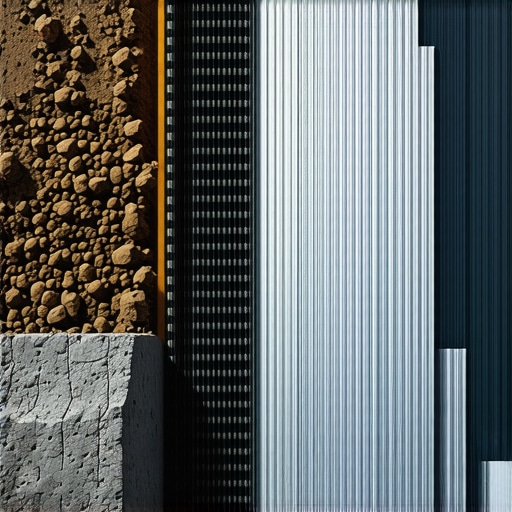
The Silent Creep: A Forensic Look at Retaining Wall Failure
I once walked onto a job site where a monolithic stone wall, supposedly built to last a century, was leaning at a precarious fifteen-degree angle toward a swimming pool. The homeowner was terrified, and they had every right to be. The original builder had focused on the face—the ‘pretty’ part—but had completely ignored the invisible forces screaming behind the stone. He didn’t understand the physics of soil, and he certainly didn’t understand why a gravity wall has limits. That wall didn’t just need a facelift; it needed a total structural intervention. It was a classic case of hydrostatic pressure winning a fight against a contractor who thought ‘heavy’ was the same thing as ‘stable.’ This is where we talk about the difference between a wall that stands and a wall that fails.
“Water penetration is the single greatest threat to masonry durability.” – BIA Technical Note 7
When you see a wall start to bow, you aren’t just looking at a masonry problem; you’re looking at a geotechnical catastrophe in slow motion. In the trade, we call it ‘the lean.’ It starts with a hairline crack that most people ignore. Then the soldier course at the top starts to look a little wavy. By the time you notice the patio stone realignment issues occurring ten feet back from the edge, the soil behind the wall has already begun its inevitable march downward and outward. To understand the fix, you have to understand the ‘Active Pressure’ of the earth. Soil isn’t just dirt; it’s a living, shifting mass that expands when wet and contracts when dry. If you’re in a northern climate, that expansion is compounded by the freeze-thaw cycle, where water trapped in the soil pores expands by 9% in volume, exerting thousands of pounds of pressure per square foot against your masonry. Without a drainage solution and internal reinforcement, no amount of ‘mud’ or heavy stone will hold it back forever.
Micro-Zooming into Geogrid Physics: The Invisible Skeleton
This is where the geogrid enters the narrative. A geogrid isn’t just a plastic mesh; it is a high-tenacity polyester or polypropylene structure designed to provide tensile strength to the soil mass. Imagine trying to pull a handful of hair—it’s easy to pull a few strands. But try to pull a braided rope. The geogrid acts as that braid. It creates a ‘reinforced soil zone’ behind the wall. When we perform a masonry damage assessment on a failing retaining wall repair job, the first thing we look for is whether the original builder used any tie-backs or grid. Often, they didn’t. They just stacked blocks and hoped for the best.
The science of the geogrid relies on ‘interlock.’ When we lay the grid down on a compacted layer of aggregate, the individual stones lock into the apertures (the holes) of the grid. This creates a composite material. The soil gains the tensile strength of the polymer, and the polymer gains the compressive weight of the soil. When the earth tries to push the wall face out, it has to drag the entire reinforced soil mass with it. It’s no longer just the weight of the block holding back the hill; it’s the weight of the hill holding itself back. This is the ‘Cure’ I often talk about. We aren’t just putting a Band-Aid on the crack; we are re-engineering the hillside.
The Forensic Process of Retaining Wall Block Replacement
When we get into retaining wall block replacement, we aren’t just swapping out ugly stones. We are excavating the ‘failure plane.’ This is the wedge of soil that is actively sliding. We dig back, often one to one and a half times the height of the wall, to find stable, undisturbed earth. Then we begin the process of ‘The Base.’ I’ve seen too many ‘handyman specials’ where the base is a couple of inches of sand. That’s a recipe for a wavy wall within two seasons. A real master mason knows the base is the most critical part of the brick wall restoration or hardscape project. We’re talking six to twelve inches of 3/4-inch minus crushed stone, compacted until it rings when you hit it with a tamper.
As we stack the blocks, we ‘butter’ the joints if it’s a mortared system, but for most modern segmental walls, it’s a dry-stack system with mechanical pins. Every two courses, we lay the geogrid. We pull it taut—this is vital. If there’s slack in the grid, the wall has to move to pick up the tension. If the wall moves, you’ve already failed. We want that grid ‘singing’ tight before we dump the next lift of gravel on top. We also use fiber-reinforced mortars for the capping stones to ensure they don’t pop off during the winter. These mortars contain micro-strands of glass or polymer that prevent shrinkage cracks and provide a ‘tooth’ that standard Type S mortar just can’t match.
“The design and construction of segmental retaining walls must account for the internal stability of the reinforced soil mass, including the connection strength between the geogrid and the wall units.” – ASTM D6638
Historic Brickwork Repointing and the Breathability Myth
While geogrids are the king of modern hardscapes, I often see people trying to apply modern ‘lick-and-stick’ logic to historic brickwork repointing. If you have an old brick retaining wall from the 1920s that is leaning, you can’t just slap a geogrid behind it without considering the full repointing services needed for the face. Historic bricks are soft—they were fired at lower temperatures than modern ‘clinker’ bricks. If you use a high-strength Portland cement to fix a crack in an old wall, the cement will be harder than the brick. When the wall shifts or the temperature changes, the cement won’t budge, but the brick face will shatter. We call this ‘spalling,’ and it’s a death sentence for a historic facade.
For brick wall restoration, we use a ‘sacrificial’ mortar—usually a lime-based Type O or even a pure lime putty. The mortar is designed to be the weakest link. If there is stress, the mortar cracks, not the brick. Cracks in mortar are easy to fix with a slicker and a fresh batch of ‘mud.’ A shattered 100-year-old brick is a tragedy that’s hard to replace. When we do a masonry damage assessment, we use a hammer to ‘sound’ the bricks. If it ‘thuds’ instead of ‘rings,’ we know the internal structure is compromised by moisture. This is why 3D printed masonry repairs are becoming a niche interest—recreating custom-shaped historic blocks that are no longer manufactured. But for most of us, it’s about traditional full repointing services: grinding out the old, decayed joints to a depth of twice the width of the joint, and then hand-packing the new lime mortar in ‘lifts’ to ensure no voids are left behind.
The Hardscape Truth: Do It Once or Do It Twice
If you’re seeing patio stone realignment issues or your wall is looking like it’s had one too many drinks at the local tavern, don’t listen to the guy who says he can ‘just push it back and add some concrete.’ Concrete is brittle. Soil is dynamic. You need a system that breathes and moves but stays anchored. The geogrid is that anchor. It turns a pile of stones into a unified structural engine. Whether you are dealing with brick veneer installation on a garden wall or a massive structural retaining wall block replacement, the physics remains the same: manage the water, reinforce the soil, and respect the material science. Anything less is just a ‘handyman special’ waiting to become a pile of rubble. I’ve spent three generations watching the earth try to tear down what we build. The only way to win is to out-think the dirt. Use the grid. Pack the aggregate. And for heaven’s sake, give the water a place to go.