
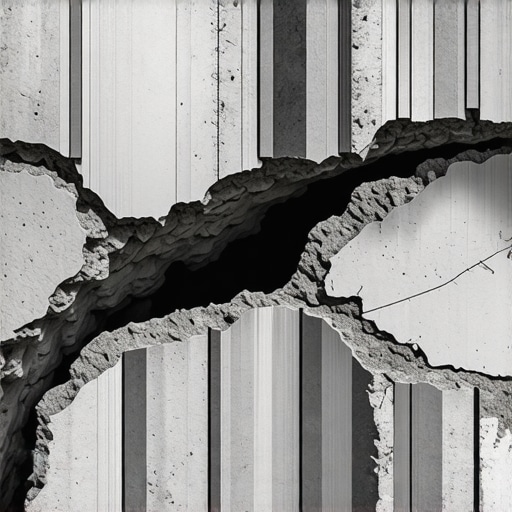
The Smell of a Failing Foundation
I walked into a basement last Tuesday in an old neighborhood built on heavy, expansive clay. The air had that heavy, metallic tang—the smell of damp earth meeting oxidized reinforcement. The homeowner pointed to a thin, horizontal line running along the third course of blocks. She thought it was just a hairline crack, something a weekend warrior with a caulk gun could fix. But when I pulled out my digital inclinometer and my borescope, the reality was much grittier. I saw that the structural steel inside those cores was rusted to dust, and the wall was bowing inward by nearly two inches. This wasn’t just a cosmetic flaw; it was a slow-motion collapse. In situations like this, the ‘handyman specials’ of the world reach for a tube of cheap epoxy, but as a third-generation mason, I know that physics doesn’t care about your budget. This is where we talk about the chemistry of carbon fiber and the structural masonry inspection that saves homes from the bulldozer.
The Physics of the Bow: Why Walls Fail
In the North, we deal with the brutal freeze-thaw cycle. When the ground saturates, water expands 9% upon freezing. This creates massive hydrostatic pressure against your foundation. If you have poor drainage or a cracked retaining wall capstone replacement that was ignored, that water sits against the masonry. For a standard 8-inch CMU (Concrete Masonry Unit) wall, the pressure can exceed the tensile strength of the mortar joints almost instantly. Unlike brickwork pointing styles which are often about shedding water or aesthetics, foundation stabilization is about resisting lateral force. When a wall cracks horizontally, it’s usually ‘hinging’—the middle is pushing in because the top and bottom are pinned by the floor joists and the footing.
“Water penetration is the single greatest threat to masonry durability, leading to cycles of expansion that exceed the material’s elastic limit.” – BIA Technical Note 7
Micro-Zoom: The Chemistry of Carbon Fiber
Carbon fiber isn’t just ‘strong tape.’ It is a polymer reinforced with extremely thin, high-tensile fibers—mostly carbon atoms bonded in a crystal alignment. When we talk about the ‘Young’s Modulus’ of these straps, we are looking at a material that is ten times stronger than steel in tension. But the magic isn’t just in the strap; it’s in the ‘mud’ we use to bond it. We use a two-part structural epoxy that penetrates the ‘tooth’ of the concrete. During the hydration and curing process, the resin molecules lock into the pores of the masonry. This creates a shear-transfer mechanism. If that wall tries to bow further, the carbon fiber takes the load. It doesn’t stretch. It doesn’t creep. It simply refuses to move. However, you can’t just ‘lick-and-stick’ these onto a dirty wall. You have to grind the surface to expose the aggregate, ensuring there is no honeycombing or laitance that would cause a bond failure.
Carbon Fiber vs. Helical Piers: Choosing Your Weapon
I see too many people get talked into a foundation helical pier installation when they don’t need it, or worse, they get carbon fiber when the footing is actually sinking. If your wall is bowing, carbon fiber is the king. If your house is sinking into the earth, you need piers. It’s the difference between bracing a wall and lifting a mountain. I’ve seen chimney structural repair jobs where the weight of the masonry was pulling away from the house because the ‘pro’ used the wrong mortar. You need to understand the substrate. If you’re working on a historic home with soft bricks, you can’t use modern, high-strength Portland cement. You need sustainable tuckpointing mortars—Type O or Type K—that are softer than the brick itself. The ‘Sacrificial Principle’ dictates that the mortar must fail before the brick does. If you put a rigid carbon fiber strap on a wall that is crumbling from ‘soft’ masonry, you’ll just pull the face of the brick off.
The Critical Role of Moisture Management
You can spend $20,000 on carbon fiber straps, but if you don’t fix the chimney flashing repair or the gutter downspouts, you’re just putting a Band-Aid on a bullet wound. Moisture is the catalyst for almost every structural failure I inspect. When water gets behind a brick paver driveway repair or a retaining wall, it creates a ‘pore pressure’ that can shift tons of earth. This is why drainage is more important than the masonry itself.
“Structural reinforcement systems must be evaluated based on their ability to resist tensile forces where the substrate has failed, particularly in high-moisture environments.” – ASTM D3039 Standard Test Method
I always tell my clients: ‘Control the water, or the water will control your bank account.’ Whether you are looking for tuckpointing tools for DIY to fix a few weathered joints or you’re facing a cracked brick wall repair that looks structural, start with the soil and the slope. Are the ‘Soldier Courses’ over your windows sagging? That’s not a crack problem; that’s a rusted lintel problem. Is your brickwork pointing styles matching the original ‘grapevine’ or ‘weathered’ joint? If not, you’re trapping water.
Conclusion: The Forensic Verdict
In my forty years of ‘buttering’ bricks and swinging a hammer, I’ve learned that there are no shortcuts in the dirt. Carbon fiber is a revolutionary tool for stabilizing bowing walls, but it requires a master’s touch to prep the surface and calculate the load. Don’t trust a salesman who doesn’t know the difference between a cold joint and a settlement crack. Do it once, do it right, and respect the physics of the stone. If your wall is ‘ringing’ like a bell when you tap it, you’re in good shape. If it sounds like a dull thud, give me a call. We’ve got work to do.