
The Sound of a Dying Wall
My old mentor, a man who had more grit in his fingernails than a bag of masonry sand, used to make me stand in silence before we started any brick wall restoration. He’d take his hammer and lightly tap the face of a hundred-year-old clay brick. ‘Listen for the ring,’ he’d say. If the brick gave off a sharp, metallic ping, it was healthy. But if it sounded like a dull thud—like hitting a loaf of wet bread—it was already dead inside. He knew that the ‘skin’ of the brick had separated from the heart, and it was only a matter of one or two more winters before that face ended up in a pile of red dust on the sidewalk. Most people call this spalling. In the trade, we call it a tragedy of physics that could have been avoided.
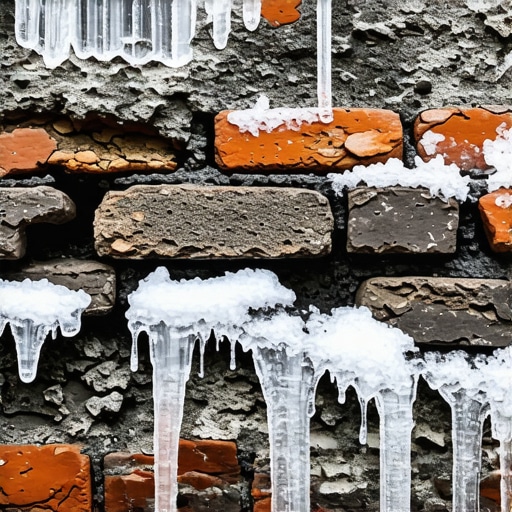
When you see the face of a brick flake off, you aren’t looking at a ‘old age’ problem. You are looking at a moisture management failure. In the North, where the freeze-thaw cycle is a brutal annual ritual, masonry doesn’t just sit there; it breathes. Or at least, it’s supposed to. The moment you stop a wall from breathing—whether through the wrong re-pointing services, cheap porous stone sealers, or a lack of stone coping installation—you’ve signed its death warrant. The physics are simple but devastating: water expands by roughly 9% when it turns to ice. When that water is trapped inside the microscopic pores of a clay brick, that 9% expansion generates internal pressures exceeding 30,000 PSI. No amount of kiln-firing can hold that back.
“Water penetration is the single greatest threat to masonry durability.” – BIA Technical Note 7
The Chemistry of the ‘Lick-and-Stick’ Disaster
We see it constantly with modern stone veneer repair. People want that ‘old world’ look on a budget, so they hire a handyman who slaps thin stone onto a wall with high-strength Portland cement. This is what I call the ‘lick-and-stick’ method, and it’s a forensic nightmare. Unlike a traditional structural wythe where the mud and the brick work in harmony, these veneers often trap moisture behind the stone. Because modern Portland mortar is incredibly dense and non-porous, any water that gets behind the veneer through a hairline crack or a poorly sealed window frame stays there. When the freeze hits, the water can’t escape through the dense mud. It pushes outward, popping the stone right off the wall or, worse, honeycombing the substrate until the whole system fails. True brick wall restoration requires understanding the ‘Perm Rating’ of your materials. If your mortar is harder than your brick, the brick will always be the one to break. It’s the sacrificial principle of masonry: the mortar joints should be the lungs of the building, not the cage.
The Anatomy of a Chimney Failure
A chimney is the most exposed part of any structure. It’s a vertical radiator that takes a beating from 360 degrees of weather. Chimney structural repair usually starts at the top, and I’m not talking about a quick chimney sweep and repair. I’m talking about the masonry crown and the stone coping installation. If the top of that chimney isn’t shed-roofed to throw water away from the flues, the water runs down the face of the brick. In a heavy freeze, that water enters the header course and the soldier course at the top. Because these bricks are standing vertically, their ‘pore tubes’ are often oriented in a way that sucks water straight into the core. When I perform a forensic inspection, I often find that the homeowner has used a ‘waterproof’ sealer that isn’t breathable. This creates a ‘vapor bridge’ where liquid water can get in, but vapor cannot get out. The result? The entire outer inch of the chimney face flakes off in sheets.
“The mortar should be weaker than the masonry units so that any cracks will occur in the mortar joints where they can be easily repaired.” – ASTM C270 Guidelines
Historic Tuckpointing vs. Modern Butchery
There is a massive difference between historic tuckpointing and just ‘grinding and pointing.’ When we deal with pre-1940s structures, we are dealing with lime-based mortars. These mortars are soft. They are flexible. Most importantly, they are highly capillary-active. They pull water out of the brick and allow it to evaporate at the joint. If a ‘pro’ comes in with a high-speed grinder and packs those joints with Type S Portland cement, they’ve just created a dam. The next time it rains and freezes, the water is trapped in the soft, historic brick. The brick, being softer than the new mud, gives up. It spalls. It flakes. It dies. Forensic restoration means mixing the mud on a hawk to match the original lime content, ensuring the suction of the brick is respected before you even think about buttering a joint. You have to wet the bricks first—if they’re too dry, they’ll suck the hydration right out of your mortar, leading to a flash set and a cold joint that will leak within a year.
The Ground Truth: Patios and Foundations
It’s not just walls. Brick patio restoration and patio stone realignment often fail because people ignore the base. They see a wavy patio and think they can just shove some more sand in the cracks. But if the sub-base isn’t draining, that patio is sitting in a bathtub of water. When the ground heaves during a freeze, it doesn’t just move the stones; it grinds them against each other. Without proper compaction and a gravel base that allows for capillary break, your patio stone realignment is just a temporary fix. You need to understand the hydrostatic pressure pushing up from the soil. The same goes for stone coping installation around pools or retaining walls. If you don’t provide weep holes for the water to escape, the freeze will heave those stones until they’re dangerous tripping hazards. Do it once, do it right, or you’ll be paying me to come out and tell you why it’s all on the ground in five years.
Final Forensic Checklist
If you see flaking, stop. Don’t just slap a sealer on it. Check your drainage. Check your mortar hardness. Is there a stone coping installation that has failed? Is your chimney structural repair long overdue? Masonry is a game of patience and respect for the materials. When you treat a wall like a living thing that needs to breathe, it will last for centuries. If you treat it like a ‘lick-and-stick’ project, the freeze-thaw cycle will win every single time. It’s not magic; it’s masonry. Keep your mud wet, your joints soft, and your drainage clear, and the ‘ring’ of the brick will stay true for another three generations.