The Forensic Scene: When the Face Lies to You
The client called me out to an 1890s industrial loft conversion because a single soldier course of brick looked slightly ‘damp’ after a light rain. To the untrained eye, it was a cosmetic nuisance. To a man who has spent forty years chasing leaks through brick wall restoration projects, it was a siren song of structural failure. I pulled out my thermal imager and a fiber-optic scope. When I drilled a pilot hole into the mortar joint and fed that lens in, I didn’t see solid masonry. I saw a cavern. The inner wythe of the wall had literally turned to red dust. The structural steel lintels were so bloated with rust they were pushing the masonry outward—a phenomenon we call ‘rust jacking.’ The homeowner thought it was a tuckpointing weatherproofing issue; in reality, the building was trying to shed its skin like a snake. This is the reality of forensic masonry. You aren’t just looking at a wall; you are looking at a living, breathing, and often dying organism that is constantly at war with gravity and hydrology.
The Physics of the Sponge: Why Your Walls Drink
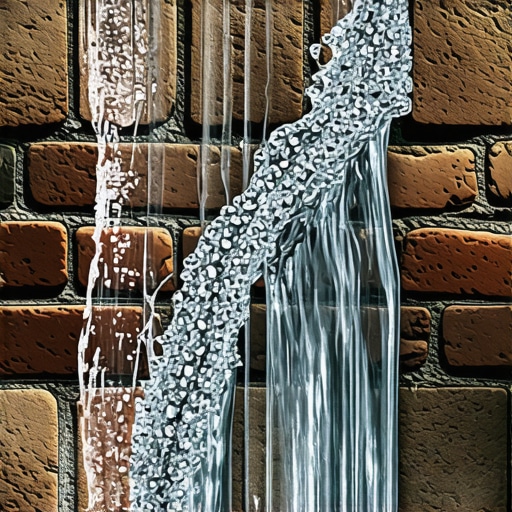
Most people think of a brick as a solid, impermeable rock. It isn’t. A fired clay brick is a dense sponge. Under a microscope, it’s a network of tiny capillaries. When rain hits that wall, it doesn’t just run off; it gets sucked in. This is called ‘pore suction.’ If your professional masonry restoration expert doesn’t understand the ‘initial rate of absorption’ (IRA) of your specific brick, they’ve already failed you.
“Water penetration is the single greatest threat to masonry durability. Moisture can enter masonry through a variety of paths, including capillary suction, wind-driven rain, and gravity.” – BIA Technical Note 7
When water enters, it has to go somewhere. In a properly built historic wall, it breathes back out. But when some handyman special slap-shades a coat of waterproof sealer or uses a modern, high-strength Portland cement on old, soft clay, they trap that moisture. The wall can’t breathe. The water gets stuck behind a hard crust of high-performance mortar mixes that are too dense for the application. Then the temperature drops. The water freezes and expands by 9%, and suddenly, the face of your expensive historic brick pops off in a process called spalling. You’ll see it all over the city—red scales on the sidewalk, the masonry’s way of screaming for help.
The Sacrificial Law of the Mud
In the world of brick wall restoration, there is one golden rule: the mortar must be the sacrificial lamb. It has to be softer and more permeable than the brick itself. We use Type N or Type O mortar for historic work, often mixed with lime putty to ensure flexibility. If the wall moves—and it will—you want the cracks to happen in the ‘mud,’ not the brick.
“Mortar is intended to be a sacrificial element of the masonry wall… it should be weaker than the masonry units so that stress-induced cracking occurs in the joints.” – ASTM C270 Standards
When I see a wall where the mortar is standing proud but the bricks are recessed and crumbling, I know exactly what happened: some ‘contractor’ used a Type S or M mix, essentially turning the joints into iron. The bricks, being the softest point, took the brunt of the thermal expansion and shattered. To fix this, we have to grind out those joints by hand—no deep-cutting saws that nick the edges—and butter the joints with a lime-rich mix that matches the original chemistry. It’s a slow, gritty process of tuckpointing weatherproofing that honors the original mason’s intent.
The Gravity of the Situation: Arches and Foundations
Water doesn’t just travel sideways; it travels down. And if it hits a brick arch restoration site that wasn’t flashed correctly, that arch becomes a funnel. I’ve seen brick arch restoration jobs where the ‘keystone’ was the only thing holding the facade up because the surrounding joints had turned to mush from a leaking gutter above. The hydrostatic pressure from saturated soil is even worse. It pushes against your basement walls until they begin to bow. This is when we move from simple aesthetics to foundation wall bowing repair and foundation underpinning. We aren’t just slicking joints anymore; we are installing helical piers and carbon fiber straps to keep the house from folding like a cardboard box in the rain. A failing retaining wall repair usually starts with a simple clogged weep hole. Water builds up behind the wall, the weight triples, and the ‘toe’ of the wall kicks out. Without a proper drainage system and foundation waterproofing, you’re just stacking stones for a future landslide.
The Art of the Clean and the Final Strike
You can’t just blast a historic wall with a pressure washer. That’s a facade cleaning sin. You’ll blow out the ‘fire-skin’ of the brick, exposing the soft inner core and accelerating decay. We use low-pressure mists and specific chemical peels that eat the carbon crust without ‘burning’ the clay. Once the wall is clean and the joints are raked, we apply the mud using a hawk and a slicker. We strike the joint to match the historical profile—whether it’s a ‘v-joint,’ a ‘grapevine,’ or a ‘weathered’ strike. This isn’t just for looks; the shape of that joint determines how water sheds off the wall. A poorly struck joint creates a shelf where water sits, waiting for the next freeze. When we do it right, the wall looks like a monolithic slab of craftsmanship, ready to stand another century. Don’t trust your heritage to a guy with a bag of premix and a plastic trowel. Masonry is a game of millimeters and chemistry. If you don’t respect the ‘tooth’ of the stone and the path of the water, the building will eventually remind you who’s boss.