
The Ghost in the Slab: Why Your Foundation is Living Tissue
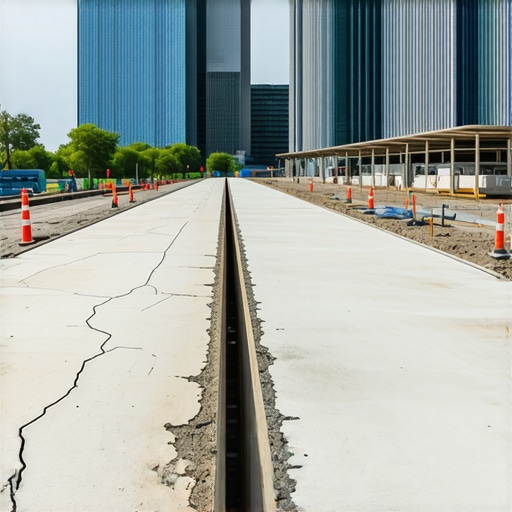
I’ve spent forty years smelling the metallic tang of oxidized rebar and the damp, chalky breath of failing lime. To the uninitiated, a foundation is a static block of gray matter, a dead weight holding up a house. But after three generations of my family buttering joints and scraping knuckles on New England fieldstone, I know better. A foundation is a slow-motion chemical reaction. When I recently walked onto a commercial job site where the owner thought they just had a ‘cosmetic’ hairline fracture, I didn’t reach for a bucket of patch. I pulled out the fiber-optic scope. I threaded that lens into the fissure, and what I saw was a horror show: the structural steel was nothing but a red, flakey ghost of itself, having rusted to dust inside the very concrete meant to protect it. This is the reality of traditional infrastructure—it is a race against the entropy of water. This is why we are finally turning toward the radical science of self-healing concrete and robotic masonry repair to save our built environment.
The Physics of the Freeze-Thaw War
In the northern latitudes, we don’t just build; we fortify. The enemy is the 9% expansion of water as it transitions from liquid to solid. When moisture enters the microscopic capillary pores of a standard concrete mix, it sits there like a ticking time bomb. When the temperature drops, that water expands, exerting internal pressures that exceed the tensile strength of the concrete. This leads to honeycombing and the dreaded phenomenon known as spalling. To ignore brick spalling prevention is to invite the slow disintegration of your facade. Modern commercial masonry facade maintenance now requires a deep understanding of air-entrainment—the process of creating billions of microscopic ‘safe rooms’ for water to expand into without blowing the face off the brick.
“Water penetration is the single greatest threat to masonry durability. Moisture is the primary agent of decay in most building materials, particularly in the masonry wall assembly.” – BIA Technical Note 7
When the ‘mud’ (our trade slang for mortar) is too hard—specifically when some weekend warrior uses high-strength Portland cement on a historic soft-brick structure—the wall cannot breathe. The brick becomes the weakest link, and the freeze-thaw cycle pops the face right off. We call this a ‘sacrificial failure,’ but it’s a failure that could have been avoided with a proper lime-based Type O or Type N mortar that respects the suction of the masonry unit.
The Biological Solution: How Concrete Heals Itself
We are entering an era where the foundation can fix itself. Self-healing concrete utilizes extremophilic bacteria, like Bacillus pseudofirmus, which are mixed into the wet mud in a dormant state. These bacteria are encapsulated in tiny clay pellets along with a food source: calcium lactate. When a crack forms—and make no mistake, all concrete eventually cracks—water seeps in. This moisture awakens the bacteria. As they consume the calcium lactate, they produce calcite, a form of limestone that physically fills the crack from the inside out. This isn’t just ‘neat’ tech; it is the end of the cold joint vulnerability. We are moving from a passive defense to an active immune system for our skyscrapers and bridges.
The Forensic Reality of Brick Lintel Replacement
Often, the failure isn’t in the field of the wall but at the openings. I’ve stood on scaffolding looking at a brick lintel replacement job where the original steel was so bloated with ‘oxide jacking’ that it had lifted three courses of soldier course bricks above it. The pressure of rust can exceed 10,000 PSI—enough to snap solid stone. This is why stone coping installation is so critical; it’s the umbrella of the wall. Without that drip edge, water runs down the face, finds the lintel, and starts the clock on a $20,000 repair. When we perform robotic masonry repair today, we aren’t just slapping on a patch. We use automated systems to grind out mortar joints with surgical precision, ensuring the depth is exactly twice the width of the joint, providing the ‘tooth’ necessary for the new mortar to bond. This precision is vital for accurate tuckpointing cost estimation, as it removes the guesswork of human fatigue.
Hydrostatic Pressure and the Retaining Wall Fallacy
I’ve seen $100,000 backyards ruined because a contractor thought a retaining wall block replacement was just about stacking heavy stones. They ignored the physics of hydrostatic pressure. Water-saturated soil weighs significantly more than dry soil, and without proper drainage (weeps), that wall is just a dam waiting to burst. We now use sustainable block cutting techniques to create permeable systems that allow the earth to breathe while maintaining structural integrity.
“The selection of mortar should be based on the properties of the masonry units and the conditions of exposure. A mortar that is too strong can cause damage to the units it is supposed to protect.” – ASTM C270 Standard Specification
The Master Mason’s Final Word on Value
Whether you are dealing with historic brick salvage on a 19th-century brownstone or overseeing a massive commercial masonry facade maintenance contract, the rules of chemistry don’t change for anyone. You can’t cheat the ‘suction’ of a dry brick, and you certainly can’t ignore the thermal expansion of a 100-foot run of masonry. If you don’t install control joints, the wall will make its own, and it won’t be a straight line. I always tell my apprentices: you can butter the brick fast, or you can butter it right. The former keeps you busy with repairs; the latter keeps your name on the plaque of a building that will outlast your grandchildren. Infrastructure isn’t about the day it’s finished; it’s about how many freeze-thaw cycles it can survive before the first crack whispers a warning.