
The Anatomy of a Failing Facade
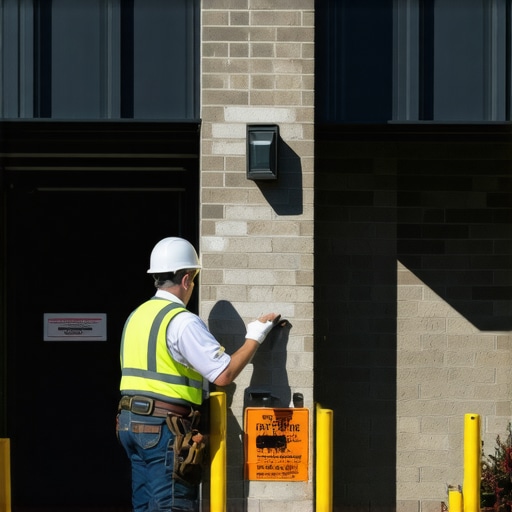
I was standing on a suspended scaffold fourteen stories up, staring at a section of a commercial brick facade that looked, for lack of a better word, pregnant. To the untrained eye of a property manager, it was a minor bulge—perhaps a few bricks out of alignment. But when I took my hammer and tapped the soldier course, the sound was hollow, a sickening ‘thud’ instead of the sharp ‘ping’ of high-fired clay. I knew exactly what was happening. Behind that veneer, the steel shelf angle—the very bone of the building—had oxidized. When steel rusts, it expands up to ten times its original thickness. This is the ‘Forensic Scene’ most managers ignore until the liability lawyers are at the door. We aren’t just talking about aesthetics; we are talking about thousands of pounds of masonry held up by nothing but hope and a prayer.
“Water penetration is the single greatest threat to masonry durability, leading to corrosion of embedded metals and the degradation of unit integrity.” – BIA Technical Note 7
The Physics of the Freeze-Thaw War
In our northern climate, the masonry doesn’t just sit there; it breathes, it moves, and it fights. The primary enemy is the freeze-thaw cycle. When water enters the pores of a brick or a stone facade, it waits. As the temperature drops below thirty-two degrees, that water undergoes a phase change, expanding by roughly nine percent. If your masonry waterproofing solutions are nonexistent or, worse, if some ‘handyman’ applied a non-breathable sealer, that pressure has nowhere to go. It blows the face right off the brick—a process we call spalling. I’ve seen stone facade restoration projects where the entire exterior was ‘honeycombing’ because the wrong mortar was used. You cannot put a hard, high-strength Portland cement (Type M) on a soft, historic stone. The mortar must be the sacrificial lamb; it must be softer than the stone itself, or the stone will be the one to crush under thermal expansion.
Retaining Wall Geogrid Installation and Soil Mechanics
Commercial properties often rely on modular retaining walls to manage grade changes in parking lots. I see these failing every spring. Usually, it’s because the original contractor treated them like a garden border. When you are stacking blocks five, ten, or fifteen feet high, you aren’t building a wall; you are building a dam for soil. Without retaining wall geogrid installation, you have no tensile strength. Geogrid acts like the ‘roots’ of the wall, reaching back into the reinforced soil mass to create a unified block of earth. If the retaining wall reinforcement is skipped, hydrostatic pressure—the weight of water trapped in the soil—will push that wall into the neighbor’s lot. Masonry rescue after disaster often involves excavating these failed systems and starting from the sub-base, ensuring the compaction is at ninety-five percent Proctor density before a single block is re-laid.
The Chimney: A Commercial Liability in the Clouds
Chimney structural repair is the most overlooked aspect of commercial maintenance. Because they are the highest point of the building, they take the full brunt of wind, rain, and thermal shock. I’ve seen chimneys where the mud was so far gone you could pull bricks out with your bare hands. The flue gases are acidic; they eat the mortar from the inside out while the weather eats it from the outside in. When we perform a forensic inspection, we look for masonry birdsmouth cuts at the crown. If the transition between the flue liner and the masonry cap isn’t handled with precision, water will travel straight down the interior of the structure, rotting the roof deck and the ceiling below.
“Mortar shall be specified by either proportion specifications or property specifications… Type N is generally recommended for most exterior masonry above grade.” – ASTM C270 Standard Specification for Mortar for Unit Masonry
Chemical Warfare: Brick Efflorescence Removal
That white, powdery ghost haunting your building’s walls isn’t just an eyesore. Brick efflorescence removal is about more than just a pressure washer—in fact, hitting it with high pressure often makes it worse. Efflorescence is the migration of soluble salts to the surface. It tells me that water is moving through the wall. If you don’t find the source of the water—be it a failed coping stone or a blocked weep hole—the salts will continue to crystallize. In some cases, you get sub-florescence, where the crystals grow just beneath the surface of the brick, causing internal pressure that shatters the unit from within. We use specialized acidic cleaners and deep-penetrating masonry waterproofing solutions to stabilize the chemistry of the wall.
Restoring the Centerpiece: Outdoor Masonry Fountain Restoration
Nothing says ‘neglect’ like a dry, crumbling fountain in a commercial plaza. Outdoor masonry fountain restoration is a different beast entirely because the masonry is constantly saturated. Here, we deal with leaching and calcium carbonate buildup. When we butter a stone for a fountain, we have to ensure one hundred percent coverage. Any void behind the stone becomes a reservoir for water to pool and freeze. I often see ‘lick-and-stick’ veneers failing on fountains because the installer didn’t understand the ‘tooth’ needed for a submerged bond. We use epoxy-modified thin-sets and crystalline waterproofing additives to ensure the structure remains watertight for decades, not just a season.
The Forensic Verdict: When to Act
If you see a stair-step crack following the mortar joints, the building is talking to you. It’s telling you about settlement. If you see a horizontal crack, it’s telling you about shear or hydrostatic pressure. A commercial property manager’s job isn’t to fix these things, but to recognize when the ‘Band-Aid’ of a quick tuckpointing job is useless against the ‘Cure’ of structural stabilization. Do not wait for a masonry rescue after disaster. Inspect the soldier courses, check the weep holes for blockages, and for heaven’s sake, make sure your modular retaining walls aren’t leaning. Masonry is the most durable building material on earth, but only if you respect the physics of the mud and the movement of the earth.