
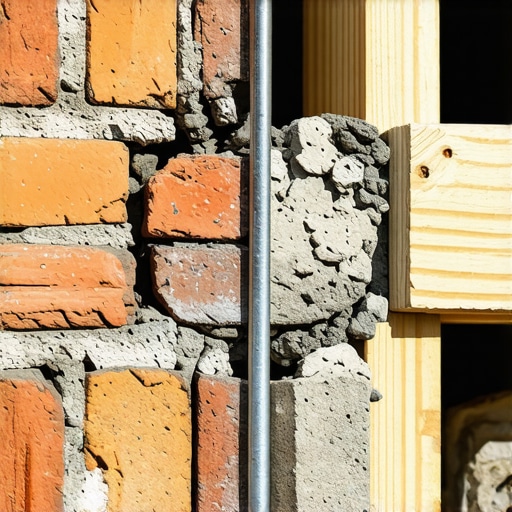
The Forensic Scene: When the Veneer Deserts the Frame
The homeowner thought it was just a hairline crack. But when I put my scope inside the cavity through a mortar joint, I saw the structural steel was rusted to dust. It is a scene I have witnessed on a thousand job sites: a brick veneer facade that has decided to divorce itself from the house. This is not just a cosmetic flaw; it is a structural masonry inspection nightmare that signals the total failure of the wall tie system. To the untrained eye, a 3/4-inch gap at the top of a wall looks like ‘settling.’ To a third-generation mason, it looks like several tons of clay and mortar waiting for the right gust of wind to come crashing down onto the driveway. When we talk about brick siding pulling away, we are talking about the loss of lateral stability. Your bricks are stacked vertically, supporting their own weight, but without the ‘umbilical cord’ of the wall tie connecting them to the wood or steel studs, they are a freestanding pile of gravity-defying risk.
“Water penetration is the single greatest threat to masonry durability, leading to the corrosion of concealed metal accessories and the subsequent loss of structural integrity.” – BIA Technical Note 7
In the cold North, the enemy is the relentless freeze-thaw cycle. We see this often in commercial masonry facade maintenance. Water enters through microscopic fissures in the mortar—cracks often caused by the use of modern, high-strength Portland cement on older, softer clay bricks. When that water hits the air cavity and freezes, it expands by 9%. If your wall ties are already compromised by oxidation, that expansion exerts outward pressure that ‘un-zips’ the wall from the frame. This is why historic brickwork repointing is not just about aesthetics; it is about using a sacrificial lime-based mud that allows the wall to breathe and prevents the internal pressure that snaps rusted ties. If you see ‘spalling,’ where the face of the brick pops off like a scab, you’re already in the late stages of a moisture war.
The Physics of the Failure: Why Ties Snap
Why do these anchors fail? In the old days, we used heavy-gauge galvanized straps. Now, I see ‘lick-and-stick’ contractors using thin corrugated ties that have the structural integrity of a soda can. When moisture dwells in the 1-inch air space behind the brick—a space that should be clear but is often choked with mortar droppings known as honeycombing—it creates a micro-climate of constant humidity. This humidity strips the zinc coating from the tie, and once the raw steel is exposed, the clock starts ticking. The resulting iron oxide (rust) occupies more volume than the original steel, which can actually lift the brick courses, a phenomenon we call ‘rust jacking.’ Before you jump into a tuck pointing services contract, you must determine if the substrate is still there. If the wood sheathing has turned to mulch because of poor flashing, there is nothing for a new anchor to bite into.
The Fix: Surgical Re-Anchoring Without Demolition
We don’t always have to tear the wall down. Modern engineering has given us the helical tie—a stainless steel screw that looks like a piece of DNA. The process is surgical. First, we perform a structural masonry inspection to map the stud locations. Then, we drill a pilot hole through the mortar joint—never the brick—and into the backup material. We use a specialized tool to drive the helical tie through the veneer and into the stud. The ‘tooth’ of the tie grips the wood, while the trailing end remains embedded in the masonry. We then use advanced masonry adhesives or high-strength cementitious grouts to lock the tie into the brick. This restores the lateral connection without the homeowner having to move out or spend $40,000 on a rebuild.
“The selection of anchors and ties must account for the anticipated movement of the masonry veneer relative to the structural backup to prevent buckling or catastrophic detachment.” – ASTM C1072
If the movement is localized around a chimney, you might also be looking at chimney interior parging issues. If the flue gases are leaking into the cavity, the acidic condensate will eat wall ties twice as fast as rain. In these cases, an outdoor fireplace rebuild or a total chimney teardown might be the only way to ensure the safety of the structure. Furthermore, we must check the base. If the brick ledge has sagged, we might need foundation slab jacking to level the footing before we can even think about re-anchoring the top of the wall. You can’t pin a wall that is still sinking.
The Professional Execution: Mud, Butter, and Slickers
Once the ties are in, the tuckpointing services begin. You don’t just slap some mud in the hole. You have to match the ‘suction’ of the existing wall. I’ve seen guys use a hawk and trowel to butter the joints with a Type S mortar that’s harder than the brick. That’s a death sentence for the wall. You want a commercial tuckpointing approach that uses a mix compatible with the original masonry’s compressive strength. We use a slicker to pack the joints tight, ensuring there are no cold joints where new mud meets old. This is critical for the long-term commercial masonry facade maintenance of the building. Even the integration of green roofing masonry integration requires a deep understanding of how extra weight and moisture retention will affect the lateral load on these new anchors.
Conclusion: The Mason’s Oath
At the end of the day, masonry is about managing water and gravity. If your brick is pulling away, it’s telling you a story about a failure of both. Don’t listen to the handyman who says a little caulk will fix it. Caulk is a band-aid on a gunshot wound. You need to restore the mechanical bond between the skin and the bones of the building. Do it once, do it right, and use stainless steel. Because as my old man used to say, ‘The sun and the rain never take a day off, and neither does gravity.’ Check your weep holes, clear your cavity, and ensure those ties are biting deep into the heart of the frame.