
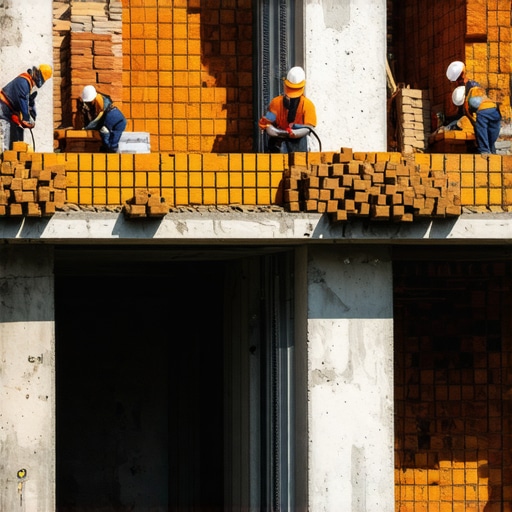
The Allure and the Ambush of the Salvaged Unit
There is a specific, heavy silence that follows the sound of a brick wall collapsing. I remember a job out on the coast where a developer tried to save thirty grand by using ‘antique’ bricks salvaged from a dismantled textile mill. They looked beautiful on the pallet—deep ochre, weathered edges, the kind of character you can’t buy at a modern yard. But three winters in, the faces of those bricks started popping off like scabs. By the fourth year, the ‘soldier course’ above the windows was bowing. They hadn’t accounted for the physics of the ‘fire-skin’ or the incompatible hardness of the modern mortar they used to butter those joints. My uncle, a man who had callouses thick enough to snuff a cigarette on, used to take a masonry hammer and strike a reclaimed brick before he’d let it near a trowel. If it didn’t give off a clear, high-pitched ‘ping’—if it sounded like a dull thud—he’d toss it into the rubble pile. That ‘thud’ meant the internal structure was compromised by a century of moisture or a poor original firing. Here is the reality of masonry repair services: you cannot fix a brick that has already decided to return to the earth.
“Water penetration is the single greatest threat to masonry durability, especially when dealing with salvaged units that have lost their original protective fire-skin.” – BIA Technical Note 7
The Physics of the ‘Fire-Skin’ and Spalling
To understand reclaimed brick, you have to understand the kiln. Back in the day, bricks weren’t fired with the digital precision we have now. The units closest to the heat became ‘clinkers’—over-fired, glass-like, and nearly waterproof. The ones further away were ‘salmons’—soft, under-fired, and prone to turning into mush if they got wet. When you reclaim a brick, you are often dealing with a unit that has already had its ‘fire-skin’ (the vitrified outer layer) worn down by decades of exposure. If you take that brick and put it into a new construction project in a freeze-thaw climate, you are inviting disaster. When water enters the porous body of the brick and freezes, it expands by approximately 9 percent. That pressure has to go somewhere. If the mortar is too hard, the pressure blows the face of the brick right off. This is why historic mortar analysis is not just a fancy line item—it is the difference between a wall that lasts another century and one that requires a complete teardown in five years.
The Initial Rate of Absorption (IRA) and the ‘Suction’ Trap
Before you start mixing your mud, you have to test the ‘suction’ of the reclaimed unit. In the trade, we call this the Initial Rate of Absorption. Reclaimed bricks are notoriously thirsty. If you slap a high-suction brick onto a standard bed of mortar, that brick will instantly suck the moisture out of the mix. This leads to a ‘flash set’ where the mortar doesn’t actually bond with the brick; it just sits there, a ‘cold joint’ waiting to fail. To prevent this, a master mason will ‘pre-wet’ the bricks. You aren’t soaking them—you’re just satisfying their thirst so they don’t steal the water the mortar needs for its own hydration process. This is particularly critical when using concrete pump masonry mixes for structural cores behind a reclaimed veneer. The chemistry of the bond is everything. If you don’t get the ‘tooth’ of the mortar to lock into the pores of the brick, you’re just stacking rocks.
The Sacrificial Lamb: Why Soft Mortar Saves Walls
The biggest mistake modern masons make with old bricks is using Type S or Type M mortar. These are high-strength, Portland-cement-heavy mixes. They are great for a skyscraper, but they are a death sentence for reclaimed brick. A wall is a living thing; it expands and contracts with the sun and the seasons. In a properly built wall, the mortar is the ‘sacrificial lamb.’ It should be softer than the brick. This way, when the wall moves, the mortar takes the stress and develops tiny, hair-line cracks that can be fixed later with tuckpointing weatherproofing. If the mortar is harder than the brick, the brick breaks. You can repoint a joint, but you can’t repoint a shattered brick. For most reclaimed work, we look at Type N or even a Type O lime-putty mix. This is where historic mortar analysis proves its worth, identifying the exact ratio of lime and sand to ensure the new mud breathes at the same rate as the old clay.
“Mortar should always be weaker than the masonry units it binds to ensure that any stress-induced cracking occurs in the joints, which are easier to repair than the units themselves.” – ASTM C270 Standards
Advanced Adhesives and Modular Modernity
Sometimes, the reclaimed look is desired but the structural requirements of modular retaining walls or heavy load-bearing sections demand modern intervention. In these cases, we might use advanced masonry adhesives to secure retaining wall capstone replacement units where traditional mortar can’t provide the shear strength needed. But even then, the aesthetics must match. You don’t want a slick, modern cap on a weathered, ‘lick-and-stick’ stone veneer wall. The transition needs to be handled with a slicker or a jointer tool to mimic the hand-tooled look of the 19th century. Even in concrete masonry unit restoration, where the core is modern block, the face requires that tactile, gritty finish that only comes from knowing how to ‘butter’ a joint properly without ‘honeycombing’ the bed.
The Chimney and the Retaining Wall: Points of Failure
If you’re using reclaimed bricks on a chimney, you’re playing with fire—literally. The constant thermal shock of a fireplace makes the choice of materials even more volatile. A chimney damper repair is useless if the masonry surrounding it is crumbling due to sulfate attack from old soot mixed with moisture. Similarly, when building modular retaining walls with reclaimed materials, drainage is the only law. Without a proper gravel backfill and weep holes, hydrostatic pressure will push that wall over faster than a deck of cards. I’ve seen it happen. A contractor ignores the ‘tooth’ of the soil and the need for compaction, and suddenly that beautiful reclaimed wall is just a pile of expensive trash. You do it once, or you do it twice. There is no middle ground in masonry. If you are going to use the materials of the past, you must respect the physics that allowed them to survive this long in the first place. Use a tuckpointing machine services for the bulk removal of old, failing joints, but always finish the ‘strike’ by hand to ensure that the water sheds away from the unit, preserving the history you’ve worked so hard to salvage.