
The Forensic Reality of the Failed Foundation
I stood inside a subterranean mechanical room of a mid-rise commercial building last November, listening to the walls. Most people think masonry is silent, but when you have thousand of tons of hydrostatic pressure pushing against a porous substrate, it groans. The property owner thought the white fuzzy crystals on the brick were just a cosmetic nuisance—what we call efflorescence. But when I took my hammer to the mortar joints, the ‘mud’ turned to wet sand. I put my structural scope into a 1/4-inch bore hole and saw the nightmare: the structural steel reinforcement was rusted to nearly half its original diameter. This wasn’t a maintenance issue; it was a total failure of the building’s exterior envelope. This is the reality of neglecting masonry waterproofing solutions. We weren’t just looking at a leak; we were looking at a slow-motion collapse. The original contractor had opted for a cheap spray-on damp-proofing rather than a true elastomeric membrane. In the world of forensic masonry, that’s like bringing a plastic umbrella to a hurricane.
The Physics of the Pore: Why Concrete is a Sponge
To understand why exterior waterproofing membranes are non-negotiable, you have to look at the chemistry of the material. Whether you are using standard concrete pump masonry mixes or historic brick salvage, you are dealing with a capillary network. Concrete and brick are not solid blocks; they are systems of interconnected voids. When water sits against a foundation, it doesn’t just wait for a crack. It travels through the material via capillary suction.
“Water penetration is the single greatest threat to masonry durability. Moisture ingress leads to the degradation of both the unit and the mortar through freeze-thaw cycling and chemical leaching.” – BIA Technical Note 7
This is especially true in regions where the soil stays saturated. The water molecules, driven by hydrostatic pressure, find their way into the microscopic ‘honeycombing’ of the pour. Once inside, the destruction begins. If you are in a freeze-thaw climate, that water expands by 9% when it turns to ice. This internal pressure is what causes spalling—the process where the face of the brick or stone literally pops off, leaving the soft interior exposed to the elements.
The Membrane Hierarchy: Bitumen vs. Crystalline
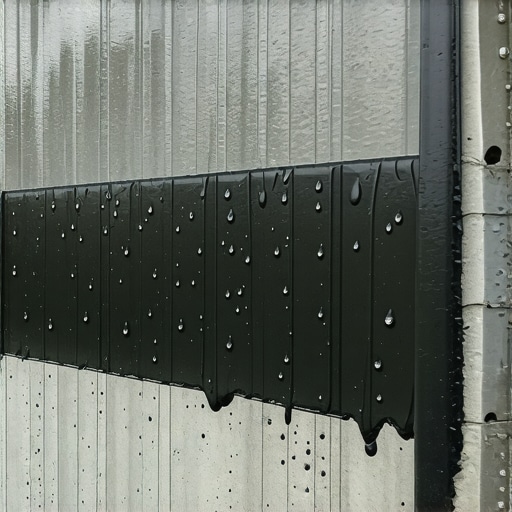
When I’m called for a foundation helical pier installation, it’s usually because water has softened the soil to the point of structural settlement. But the piers only stabilize the weight; they don’t stop the rot. For that, you need a high-performance membrane. There is a massive difference between ‘damp-proofing’—usually a thin asphaltic coating—and true ‘waterproofing.’ A real membrane must be able to bridge cracks. I prefer cold-applied, rubberized asphalt membranes that maintain a thickness of at least 60 mils. This creates a monolithic barrier that is flexible enough to move with the building. In commercial masonry facade maintenance, we often see failures where the membrane wasn’t ‘terminated’ properly at the grade line, allowing water to ‘bridge’ over the top and get behind the protection. You have to ‘butter’ the edges and use termination bars to ensure a permanent seal. Without this, you’re just throwing money into the dirt.
The Restoration of the Historic Envelope
Working on older structures requires a different set of rules. You can’t just slap a modern polymer on a 19th-century wall and call it a day. Historic brick salvage and stone balustrade restoration require breathability. If you trap moisture inside an old soft-fired brick with a non-breathable sealer, the brick will turn to dust within five winters. This is where full repointing services come into play. We have to grind out the failing, hard Portland-based mortars—which were likely a ‘handyman special’ repair from the 80s—and replace them with lime-based mortars. This is the ‘sacrificial principle’: the mortar must be softer and more permeable than the brick. For an accurate tuckpointing cost estimation, we have to factor in the labor of hand-striking the joints to match the original profile, ensuring that the ‘tooth’ of the new mortar bites deep into the masonry units. It’s a slow, gritty process, but it’s the only way to save a landmark.
Sustainable Block Cutting and Modern Methods
In modern high-end builds, we are seeing a shift toward sustainable block cutting. This involves using reclaimed stone or precisely engineered units that minimize waste. However, even the most sustainable stone is subject to the laws of physics. If you are building an outdoor fireplace rebuild, you have to manage the thermal expansion. I’ve seen $20,000 outdoor hearths crack right down the middle because the mason didn’t leave room for the firebox to grow. You need a clear separation between the refractory brick and the exterior stone veneer. This is where the ‘slicker’ comes in—finishing the joints so they shed water away from the core of the structure.
“The installer must ensure that all masonry surfaces are free of frost, dust, and standing water before application of any waterproofing agent to ensure chemical adhesion.” – ASTM D449 Standard
The Strategic Fix: Helical Piers and Structural Stability
When the forensic evidence points to deep-seated settlement, foundation helical pier installation is the only surgical solution. We drive these steel shafts into the load-bearing strata of the earth, far below the ‘muck’ of the surface soil. But here is the secret most contractors won’t tell you: if you don’t fix the drainage and the membrane while the house is excavated for the piers, you are only doing half the job. You have to manage the ‘suction’ of the soil. Expansive clays will grip a foundation wall and pull it as the seasons change. A proper waterproofing membrane acts as a ‘slip sheet,’ allowing the soil to move without taking the wall with it. This is critical for long-term commercial masonry facade maintenance. You want a system that is ‘set and forget,’ not a ‘band-aid’ that requires a call-back every three years.
The Master’s Verdict: Don’t Skimp on the Mud
At the end of the day, a building is only as good as its skin. Whether you are dealing with a stone balustrade restoration or a complex concrete pump masonry mixes application, the goal is the same: keep the water out. I’ve spent forty years on the hawk and trowel, and I’ve never seen a ‘cheap’ waterproofing job last more than five years. If you’re looking at a tuckpointing cost estimation and it seems too good to be true, it’s because the guy is using a ‘lick-and-stick’ method that won’t survive a single hard freeze. Do it right. Use the heavy-duty membranes, invest in the full repointing services, and ensure your outdoor fireplace rebuild is built to outlast you. Your property is a legacy; don’t let it wash away because you wanted to save a few bucks on the mud. Professional masonry waterproofing solutions are the difference between a structure that stands for a century and one that becomes a liability before the mortgage is paid off. Look for the ‘ring’ of a solid brick and the ‘grip’ of a well-mixed lime mortar. That’s where the truth lies.