
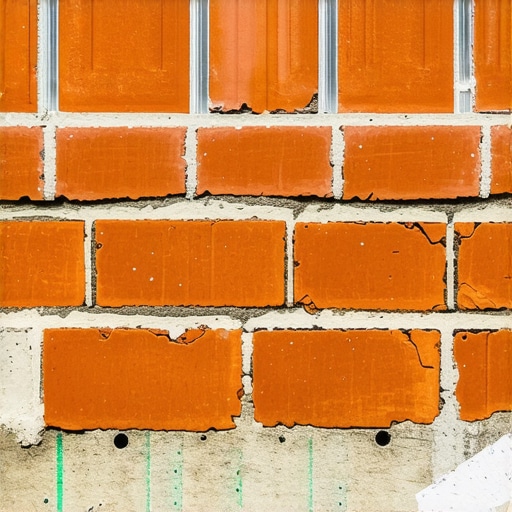
The Illusion of the Impermeable Wall
Most folks look at a brick wall and see a fortress. They see a solid, red-faced sentry standing against the wind and rain. But if you’ve spent thirty years with a hawk and trowel in your hands like I have, you see the truth: a brick wall is a sponge. It’s a porous, breathing organism that is constantly under attack by the laws of physics. In my three decades of forensic masonry inspections, I’ve seen $2 million homes rotting from the inside out because a builder treated brick veneer like it was a waterproof skin. It isn’t. Brick is a reservoir cladding. It absorbs water, holds it, and—if the guy laying the mud didn’t know his business—it dumps that water straight into your structural framing.
My uncle, a man who could butter a brick with a blindfold on, used to perform a ritual every morning on the job site. He would take a single brick from the cube and pour a tablespoon of water on its face. If that water vanished into the clay in under a minute, he’d scream for the apprentice to wet the whole pile. If it sat there like a bead on a waxed car, he’d adjust the lime in the mud. He understood the ‘suction’—the Initial Rate of Absorption (IRA). He knew that if the brick sucked the moisture out of the mortar too fast, the bond would ‘burn,’ leaving a microscopic gap for water to invade. That’s the difference between a craftsman and a handyman. One builds for a century; the other builds for the warranty period.
The Anatomy of the Air Cavity: The Critical One-Inch
In modular masonry construction, the most important part of the wall is the part you can’t see: the one-inch air space between the brick and the house wrap. This is the drainage plane. When rain hits a brick veneer, it travels through the unit via capillary action. Once it reaches the back of the brick, it should hit that air space and drop harmlessly down the back of the masonry to the flashing, where it exits through weep holes. But here’s where the ‘lick-and-stick’ mentality ruins a house. I’ve gone into ‘forensic scenes’ where I’ve cut open a wall only to find the air cavity choked with mortar droppings. We call these ‘mortar bridges.’ These bridges allow water to jump from the back of the brick onto the wooden sheathing. Once that happens, you’re not just looking at a masonry repair; you’re looking at structural rot.
“Water penetration is the single greatest threat to masonry durability.” – BIA Technical Note 7
To prevent this, we use mortar nets or pea gravel at the base, but the real trick is the ‘clean-out.’ A master mason knows how to strike the back of the brick as he’s laying it—a technique called ‘back-shaving’—to ensure no excess mud falls into the cavity. If you see a wall without weep holes every 24 inches at the base and above windows, you aren’t looking at a finished wall; you’re looking at a slow-motion disaster. Brick spalling prevention starts with this internal drainage. Without it, the water stays trapped, and in our northern climates, that water is a ticking time bomb.
The Physics of the Freeze-Thaw Cycle
In the North, we deal with the brutal reality of the freeze-thaw cycle. Water is one of the few substances on earth that expands when it freezes—by about 9%. When water gets trapped inside the pores of a brick or behind a hard, portland-heavy mortar joint, it has nowhere to go. It exerts thousands of pounds of pressure per square inch. Eventually, the face of the brick just gives up. It pops off. That’s ‘spalling.’ I’ve seen freeze-thaw damage restoration projects where the entire bottom three courses of a building had turned to red dust because the concrete flatwork services installed a driveway that pitched water toward the foundation rather than away from it.
The chemistry here is non-negotiable. If you use a modern, high-strength Type S mortar on a historic home, you are murdering that building. Old bricks are soft; they need to move. The mortar should always be the ‘sacrificial’ element. It must be softer than the brick so that the mortar cracks, not the masonry. This is why historic tuckpointing requires lime-based mortars (Type O or K). Using a slicker to compress a lime joint isn’t just about looks; it’s about densifying the surface to resist that 9% expansion pressure.
Structural Integrity and the Hidden Danger of Rust
We need to talk about structural brick ties replacement. A brick veneer is a non-load-bearing curtain. It’s held to the house by corrugated metal ties. In my forensic work, I often find that cheap, non-galvanized ties were used, or worse, they were spaced too far apart. When water penetrates the cavity due to poor flashing, these ties rust. A rusted tie expands to several times its original thickness—a process called ‘pack rust’—which can actually lift the masonry courses, creating horizontal cracks. AI masonry assessment tools are now helping us identify these anomalies by analyzing heat signatures and moisture pockets behind the facade, but usually, my eyes and a hammer are all I need to hear the ‘hollow’ sound of a failing tie system.
“The selection of mortar and the method of joint finishing are primary factors in the water permeance of masonry walls.” – ASTM C270 Standards
The Hardscape Connection: Patios and Retaining Walls
Water management doesn’t stop at the wall. I’ve seen modular retaining walls fail because the installer didn’t understand hydrostatic pressure. They didn’t use 3/4-inch crushed stone for backfill, or they forgot the filter fabric. The wall ends up ‘leaning’ because the soil behind it is heavy with water. The same goes for patio stone realignment. If your patio is sinking toward your brick veneer, you are feeding water into the most vulnerable part of your structure. Professional full repointing services are often just a Band-Aid if you don’t fix the grade and the concrete flatwork services that are dumping water at the base of the wall.
Doing It Once vs. Doing It Twice
If you see ‘honeycombing’ in a concrete foundation or a ‘cold joint’ where one pour ended and another began without proper bonding, you have an entry point for moisture. Preventing water damage in new brick veneer isn’t about the fancy sealer you spray on at the end—it’s about the physics of the assembly. It’s about the flashing, the weeps, the IRA of the brick, and the ‘tooth’ of the mortar. If you’re hiring a guy who doesn’t know the difference between tuckpointing and repointing, or who thinks a soldier course over a window doesn’t need a lintel and flashing, you’re paying for a future lawsuit. In this trade, you either do it right, or you do it twice. And the second time usually involves a crane and a massive bill. Keep your mud wet, your cavity clean, and your weeps open. That’s the only way to build a wall that outlives you.