
The Morning the Facade Fell: A Forensic Post-Mortem
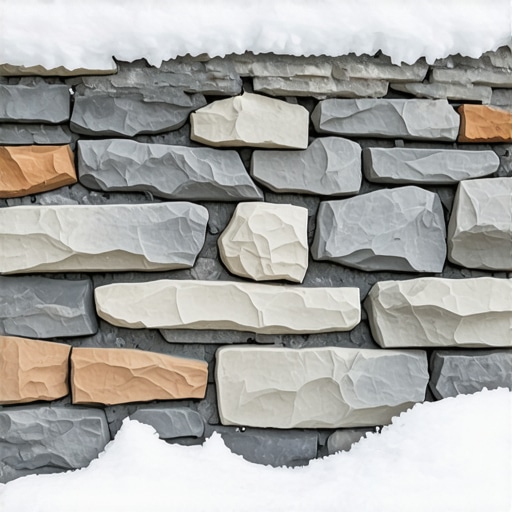
I stood looking at a $50,000 exterior facade that was literally shedding stones like a molting snake because the installer treated moisture like a suggestion rather than a law of physics. It was a crisp January morning in the North, the kind of cold that makes your joints ache, and there they were: twenty-pound slabs of ‘lick-and-stick’ stone veneer lying in the snow. When I picked one up, the back was as smooth as a baby’s breath. No ‘tooth,’ no suction, and no evidence that the mortar had ever truly shook hands with the substrate. This is the reality of modern masonry rescue after disaster—cleaning up the mess of contractors who think a bucket of premixed mastic and a prayer can withstand the brutal physics of the freeze-thaw cycle.
The Molecular War: Why 9% Matters
To understand why stone veneer pops off, you have to stop thinking of walls as solid objects and start thinking of them as sponges. Every piece of stone, every joint of mud, and every brick has a pore structure. When the sky opens up and dumps freezing rain, that moisture enters the masonry. Then, the temperature drops. Physics dictates that water expands by approximately 9% when it turns to ice. If that water is trapped in the tiny interface between the stone and the scratch coat, that 9% expansion acts like a hydraulic jack. It doesn’t matter how expensive your stone was; if there is no path for moisture to exit, the ice will win every single time.
“Water penetration is the single greatest threat to masonry durability. Moisture that becomes trapped within a wall system can lead to efflorescence, subflorescence, and the catastrophic failure of the bond between units.” – BIA Technical Note 7
In the North, we deal with dozens of these cycles every winter. The wall freezes at night, thaws in the afternoon sun, and freezes again. This ‘pumping’ action eventually shears the bond. If you are performing stone veneer over brick, the risk is doubled. You’re mounting a non-breathable layer over a material that was designed to breathe, often leading to internal rot that requires professional foundation wall bowing repair if the water migrates into the structural core.
The Sin of the ‘Lick-and-Stick’ Method
The industry calls it Adhered Masonry Veneer (AMV), but the hacks call it ‘lick-and-stick.’ They butter the back of the stone and slap it onto a flat surface. This is a death sentence in cold climates. Proper masonry requires a mechanical key. You need a weather-resistive barrier (WRB), followed by a heavy-duty 2.5 or 3.4-pound galvanized metal lath. When you apply your ‘mud’—the scratch coat—you must use a trowel to force that mortar through the lath so it curls behind the metal. That ‘curl’ is what holds the wall up when the chemistry of the bond fails. When I perform a forensic inspection, I often find ‘honeycombing’ behind the stone—voids where air and water sat, waiting for the first frost to wreak havoc.
Tuckpointing vs. Repointing: The Breathability Factor
People use these terms interchangeably, but they are worlds apart. For historic brickwork repointing, we are focused on the health of the wall. In a restoration context, the mortar must be the ‘sacrificial lamb.’ It needs to be softer than the brick. If you use a high-strength Portland cement on 100-year-old soft clay bricks, the bricks will crumble while the mortar stays perfect. This is why we use Type O or Type N lime-based mortars. Tuckpointing, on the other hand, is a cosmetic technique where we use two different colors of mortar to create an illusion of perfectly thin joints. Both require a deep understanding of the ‘suction’ of the masonry unit. If the brick is too dry, it steals the water from the mortar (a ‘burned’ joint), and the mix never hydrates, leading to masonry joint sand repair needs within just a few seasons.
The Engineering of Support: Balustrades and Flatwork
It isn’t just the walls. I’ve seen stone balustrade restoration projects fail because the internal steel ‘all-thread’ rusted. When steel rusts, it expands up to ten times its original volume. This ‘oxide jacking’ can shatter a stone pillar from the inside out. Similarly, concrete flatwork services often fail because of a lack of air-entrainment. In the North, your concrete needs tiny microscopic bubbles—thousands of them—to act as ‘expansion chambers’ for freezing water. Without them, the surface spalls and flakes away. This is the same principle we apply to retaining wall block replacement; if you don’t have 12 inches of clean gravel and a perforated drain pipe behind that wall, the hydrostatic pressure will bow the wall until it’s a pile of rubble.
“Mortar shall be specified by either proportion or property specifications… The choice of mortar should be based on the type of masonry unit and the environmental exposure.” – ASTM C270 Standard Specification for Mortar for Unit Masonry
Advanced Aesthetics: Metallic Brick Colors Application
Modern architecture is pushing us toward new frontiers, like metallic brick colors application. These bricks often have a manganese or metallic oxide glaze that creates a stunning, non-porous finish. While beautiful, they present a challenge for the mason. Because they don’t ‘suck’ water from the mortar, the mud stays wet longer, making the bricks ‘swim’ or slide on the wall. A master mason knows to adjust the mix—stiffening the mud and using a hawk and slicker to strike the joints at exactly the right moment of thumb-print hardness. If you strike too early, you smear the metallic finish; too late, and you leave a ‘cold joint’ where water will eventually find a home.
The Checklist for a Freeze-Proof Install
If you want your stone veneer to outlast your mortgage, you follow the rules. First, ensure your flashings are integrated. Water must be directed away from the top of the stone. Second, use a polymer-modified mortar that has a high ‘shear bond’ strength. This isn’t the cheap stuff from the big-box store; this is the high-performance mud that costs $30 a bag. Third, back-butter every single stone. You don’t just put a glob in the middle; you cover the entire back surface to ensure 100% coverage. Finally, respect the ‘Soldier Course’ and other structural patterns that ensure weight is distributed downward, not outward. Anything less, and you’re just building a puzzle that the first winter will solve for you. Do it once, or do it twice—the choice is always the homeowner’s, but the physics remain the same.