
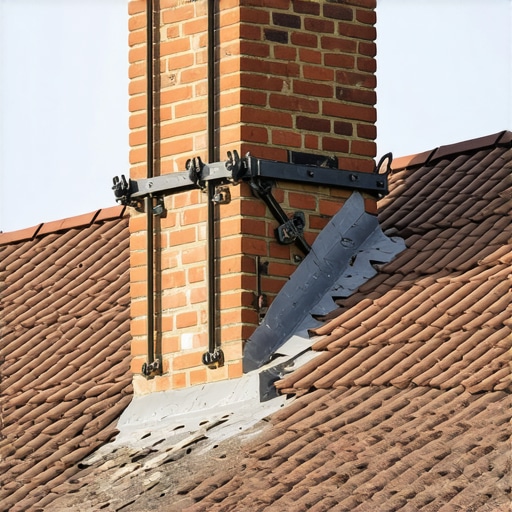
When a straight-line wind or a high-velocity gale hits a masonry stack, it does not just push; it creates a complex vortex of pressure differentials. To the untrained eye, a chimney is a solid pillar of strength, but to a forensic mason, it is a vertical cantilever subject to immense lateral loads. I recently walked a job site where the homeowner thought it was just a hairline crack near the roofline. But when I put my scope inside the cavity between the flue and the brick wythe, I saw that the internal structural ties were rusted to dust. The stack was essentially free-standing, held up by gravity and a prayer. If that wind had clocked ten miles per hour faster, those bricks would have been through the neighbor’s skylight.
The Physics of the Leaning Stack
Chimneys act like sails. In high-wind environments, the moment arm—the distance from the roof support to the top of the crown—multiplies the force exerted on the base. This is where professional masonry restoration becomes a matter of life and safety rather than just aesthetics. We look for the ‘hinge point,’ usually located just above the roofline flashing. If the mortar has begun crumbling mortar joint repair is not enough; you are looking at a structural failure. The physics of failure often starts with the chemistry of the mud. If a previous ‘handyman’ used a high-strength Portland cement on soft, pre-war bricks, he created a rigid monster. In the freeze-thaw cycles of the north, water expands 9% upon freezing. If it is trapped behind that hard cement, it has nowhere to go but out, popping the face off the brick in a process we call spalling. Brick spalling prevention starts with understanding the vapor permeability of the wall. You need the wall to breathe, or you are just building a ticking time bomb.
“The design of masonry chimneys must account for both vertical loads and lateral forces such as wind or seismic activity.” – BIA Technical Note 19
The Forensic Scene: Diagnosing the Movement
Before we even touch a slicker or a hawk, we analyze the crack patterns. A horizontal crack at the roofline suggests a shear failure from wind load. A stair-step crack usually points to a settlement issue, which might require foundation slab jacking if the chimney’s footing has been undermined by poor drainage. We see this often in ‘masonry rescue after disaster’ scenarios. The wind might have been the final blow, but the ground was the accomplice. When we stabilize these structures, we often look at brick quoin repair at the corners to restore the interlocking strength of the masonry. Quoins are not just decorative; they are the teeth of the structure. If they are loose, the whole ‘box’ of the chimney loses its torsional rigidity.
The Restoration Toolkit: Mud and Muscle
When we begin tuckpointing brick walls on a chimney that has seen wind damage, we don’t just ‘butter’ the edges. We grind out the joints to a depth of at least one inch to ensure the new mortar has enough ‘tooth’ to grab the old brick. We use fiber-reinforced mortars today because they offer superior tensile strength, which is critical for resisting future wind-load vibrations. These fibers act like microscopic rebar, holding the mortar matrix together even when the wind tries to flex the stack. We mix the mud to a consistency that allows for maximum suction. If the brick is too dry, it sucks the moisture out of the mortar too fast—a ‘flash set’—leaving you with a brittle, dusty joint that will fail by next winter. We often pre-wet the bricks to ensure the hydration process is slow and complete, allowing for the carbonation of lime to create a flexible, durable bond.
“Mortar joints should be tooled to a concave profile to maximize water shedding and compaction.” – ASTM C270 Standards
Advanced Stabilization and the Crown
The most critical component of the entire structure is the chimney crown repair. A cracked crown is an open door for water. Once moisture gets into the core of the masonry, the wind’s vibration creates a hydraulic hammer effect, driving that water deeper into the brickwork. We are now seeing a trend in green roofing masonry integration, where we have to manage the moisture levels of the roof deck while ensuring the chimney remains isolated and stable. If the crown is not overhanging with a proper drip edge, water will run down the face of the bricks, saturating the soldier course and leading to honeycombing of the internal mortar. We use high-polymer sealants and reinforced concrete for the wash, ensuring it can handle the thermal expansion of the flue liner without cracking the exterior shell. If you ignore the crown, you are just wasting money on the tuckpointing below.
The Verdict: Do It Once or Do It Twice
I have seen too many ‘lick-and-stick’ veneer jobs where the stone just falls off after a heavy storm because there was no mechanical bond. In forensic masonry, we don’t believe in shortcuts. Whether it is foundation slab jacking to level a leaning stack or the precision of professional masonry restoration, the goal is always the same: permanent stability. We look for the ‘ring’ of the brick. If you tap it and it sounds dull, it’s ‘dead’—saturated with water and structurally compromised. We replace those dead units, grind the joints, and strike them with a concave joint to shed water. It is a slow, gritty process, but it is the only way to ensure that the next time the wind howls, your chimney stays where it belongs. Don’t wait for the pile of rubble in the yard to realize your masonry needed a master’s touch.