
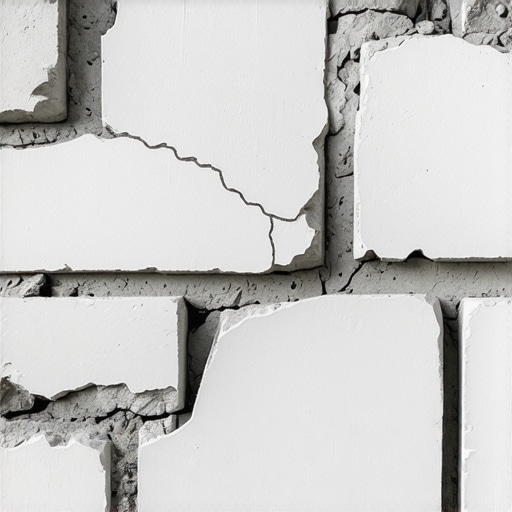
The Forensic Scene: What Lies Behind the Drywall
I was called out to a decommissioned textile mill in the industrial heart of the Northeast. The client was converting it into luxury lofts, and the building inspector had flagged a ‘minor’ settlement crack in a primary fire-rated partition. When I arrived, the contractor was ready to slap some epoxy in there and call it a day. But I’ve seen this movie before. I pulled out my fiber-optic scope and threaded it into a weep hole. What I saw wasn’t just a crack; it was a total systemic failure. The internal structural steel was rusted to a fine powder, and the supposedly ‘solid’ fire-rated CMU (Concrete Masonry Unit) wall was hollow as a politician’s promise. They had skipped the core-filling entirely, leaving a four-story chimney of air just waiting to suck up heat and smoke in a disaster. This is the reality of forensic masonry: the most dangerous sins are the ones hidden behind the ‘butter’ on the brick.
The Chemistry of Heat: Why Standard Masonry Isn’t Fire-Rated
When we talk about fire-rated masonry installation, we aren’t just talking about bricks that don’t burn. Bricks are fired in a kiln; they’ve already seen the devil. The failure points are the joints and the internal voids. Standard mortar, your typical Type N ‘mud,’ is great for holding up a garden wall, but in a high-heat event, the moisture trapped in the calcium silicate hydrate (C-S-H) crystals begins to turn to steam. If that steam can’t escape, the mortar ‘spalls’ or pops, blowing the face off the joint. For a true fire-rated assembly, the concrete pump masonry mixes used for the grout must be specifically engineered with a lower water-to-cement ratio and controlled aggregate sizes to ensure thermal stability.
“The fire resistance of a masonry element is determined by its ability to withstand fire exposure and continue to perform its structural function without allowing the passage of flame or gases hot enough to ignite cotton waste.” – ASTM E119: Standard Test Methods for Fire Tests of Building Construction and Materials
The ‘Butter’ Problem: Spotting Incomplete Joints
The most common sign of a ‘hack’ job in masonry is the ‘lick-and-stick’ approach to head joints. A real mason—someone who respects the tuckpointing brick walls process—knows that the ‘tooth’ of the bond depends on full coverage. If you look at a fire wall and see ‘daylight’ or thin spots in the vertical head joints, that wall is a sieve. This is often where tuckpointing weatherproofing becomes a double-edged sword. While it keeps the rain out, if the underlying joint wasn’t fully packed, you’re just masking a structural void with a thin veneer of cosmetic mortar. I always look for ‘honeycombing’ at the base of the wall. If I see stone-like clusters with no mortar paste around them, the mix was too dry or the ‘hawk’ wasn’t used correctly to force the mud into the gaps.
The Physics of Thermal Expansion and Control Joints
Fire causes masonry to expand—it’s a simple law of thermodynamics. In a fire-rated masonry installation, if you don’t have properly spaced control joints, the wall will bow and eventually buckle. I’ve seen cracked brick wall repair jobs where the owner thought they had a foundation problem, but the real issue was ‘thermal jacking.’ The wall grew in the sun or during an internal heat spike, had nowhere to go, and crushed its own quoins. Brick quoin repair isn’t just about making the corners look pretty; it’s about restoring the interlocking strength of the building’s ‘spine’ after expansion has ripped it apart. A proper fire-rated wall needs relief, but those relief joints must be packed with mineral wool or ceramic fiber—not just ‘handyman’ silicone.
Restoring the Aesthetic and the Integrity
Often, my work involves stone balustrade restoration or masonry rescue after disaster. In these cases, we are dealing with ‘old world’ materials that have been subjected to modern ‘fixes.’ You cannot treat a 100-year-old limestone balustrade with the same aggressive concrete flatwork services techniques you’d use on a suburban driveway. The stone is porous. It breathes. If you use a hard Portland-based mortar on soft stone, the stone will lose the battle every time. This is where porous stone sealers must be chosen with surgical precision. If you seal a fire-rated stone surface with a non-breathable acrylic, you’re creating a pressure cooker. When heat hits that stone, the moisture can’t escape the pores, and the entire surface delaminates.
“Masonry units, because of their mass, have a high heat-capacity which slows the rate of temperature rise through the wall.” – BIA Technical Note 16: Fire Resistance of Brick Masonry
The Anatomy of a Failed Fire-Rated Wall
How do you spot the rot? First, look at the ‘soldier course’—those bricks standing on end. They are notoriously difficult to bond correctly. If the mortar between them is crumbling or ‘sandy,’ the ‘mud’ was likely ‘burned’ (it dried too fast because the mason didn’t wet the bricks first). Second, check the tuckpointing brick walls for color consistency. A ‘cold joint’—where a mason stopped for lunch and started again an hour later without properly prepping the surface—will show a distinct line. In a fire, that line is a fracture point. Third, inspect any brick quoin repair for ‘shiners’—bricks that have been pushed out of alignment. This indicates the internal steel or the concrete pump masonry mixes inside have failed to accommodate the structural load. When I’m doing a forensic dive, I look for the ‘slicker’ marks. A master mason leaves a clean, compressed joint with a jointer tool. A pretender leaves ragged edges that invite water and fire to do their worst.
Final Verdict: Do It Once, or Do It Twice
Whether you are investing in concrete flatwork services for a commercial bay or managing a stone balustrade restoration, the principle remains: masonry is a game of millimeters and chemistry. You can’t ‘fake’ a fire rating. You can’t ‘butter’ over a structural crack and hope for the best. If you see ‘honeycombing’ in your grout or ‘spalling’ in your brickwork, don’t wait for a disaster to call in a forensic expert. The cost of doing it right the first time is a fraction of the cost of a masonry rescue after disaster. Real masonry has a ‘ring’ to it when you tap it with a trowel—it’s the sound of solid, unyielding craftsmanship. Anything else is just a pile of expensive rubble waiting to happen.