
The Ghost in the Wall: A Forensic Awakening
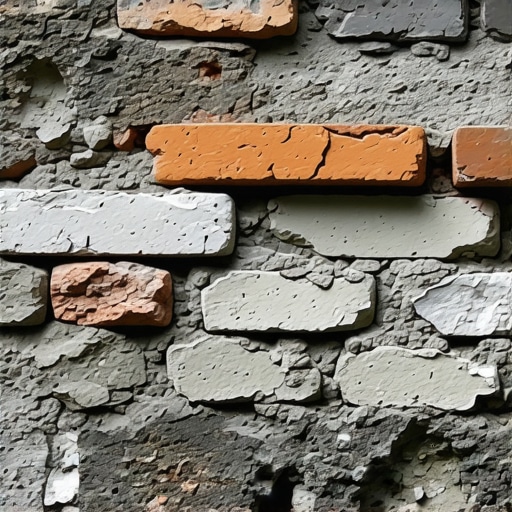
My old mentor once took me to a sprawling 1920s estate in the heights of Pennsylvania during a late-October drizzle. He didn’t look at the grand architecture; he walked straight to a corner of the library wing where the soldier course met the water table. He pulled a simple flathead screwdriver from his pocket and pressed it into a mortar joint. It didn’t just scratch; it disappeared up to the handle, sinking into the wall as if he were stabbing a birthday cake. ‘The lime is gone,’ he told me. ‘The water didn’t just wash it out; it breathed it out over eighty winters. This wall isn’t held together by mortar anymore; it’s held together by habit and gravity.’ That was my first lesson in masonry damage assessment: by the time you see the dust on the sidewalk, the structural integrity of your home might already be a memory.
The Physics of the Freeze-Thaw War
In the North, we live and die by the 9% rule. When water penetrates the pore structure of a brick or a mortar joint and the temperature drops, that water expands by exactly 9% in volume. This isn’t a gentle nudge; it is a hydraulic force capable of shearing the face off a hard-fired clay brick. This phenomenon, known as spalling, is the primary driver behind freeze-thaw damage restoration. Modern ‘lick-and-stick’ contractors often make the fatal mistake of using a high-strength Type S Portland cement to ‘fix’ an old wall. They think harder is better. They are wrong. In a historic wall, the mortar must be the sacrificial lamb. It must be softer and more vapor-permeable than the masonry units themselves. If you use a mortar that is too dense, you trap that 9% expansion inside the brick, and instead of the mortar crumbling—which is cheap to fix—the brick itself shatters, which is a catastrophe.
“Water penetration is the single greatest threat to masonry durability.” – BIA Technical Note 7
Identifying the Symptoms: When to Call for Re-Pointing Services
You need to look for ‘sugar’—that fine, white or grey powder at the base of your wall. This is the first sign of carbonation, where the calcium hydroxide in the mortar reacts with atmospheric carbon dioxide and turns back into calcium carbonate, losing its bond. If you see ‘honeycombing’—small, jagged holes in the joint surface—you’re looking at the early stages of a total failure. This often starts at the top. A cracked or missing chimney cap is the leading cause of internal wall saturation. Without a proper chimney cap replacement, water runs down the interior flue and saturates the crumbling mortar joint repair needs from the inside out. Once that moisture is trapped, the stone facade restoration process becomes ten times more expensive because you aren’t just fixing the surface; you’re drying out a saturated skeleton.
The Anatomy of a Proper Fix
When we perform re-pointing services, we don’t just ‘butter’ over the old cracks. That’s a ‘handyman special’ that will peel off in two seasons. A forensic-grade repair requires grinding out the failing joints to a depth of at least twice the width of the joint, or until we hit sound ‘mud.’ We then use a hawk and a slicker to pack the new mortar in ‘lifts.’ This prevents the mortar from ‘slumping’ or developing cold joints. For complex structures, we now utilize BIM masonry projects—Building Information Modeling—to map out the moisture migration and structural load points before we even mix a bag of lime. This allows us to see if the crumbling is due to simple age or if we have a deeper issue like structural brick ties replacement needs or even foundation helical pier installation requirements due to soil subsidence.
“Mortar should be designed as a sacrificial element; it should be more permeable and weaker than the masonry units to ensure the longevity of the wall.” – ASTM C270 Standards
The Gravity of the Situation: Retaining Walls and Foundations
If you’re looking at a retaining wall, look at the retaining wall capstone replacement needs first. If the caps are loose, water is entering the core of the wall. In a freeze-thaw environment, this creates hydrostatic pressure that can tilt a 50-ton wall in a single season. If your interior basement walls show stair-step cracking, you’re past the point of simple mortar repair. This is where foundation helical pier installation comes into play to stabilize the ‘footing’ before we can even think about crumbling mortar joint repair. Do not ignore the ‘weep holes.’ If your mason didn’t leave gaps in the bottom course for water to escape, that wall is a ticking time bomb. The ‘tooth’ of the mortar—its ability to grip the microscopic pores of the stone—depends entirely on the suction of the unit at the time of laying. If it’s too dry, it ‘burns’ the mortar; if it’s too wet, it won’t bond. This is why we treat masonry as a living, breathing science, not just stacking rocks. Check your walls today. Take a screwdriver and test the joints. If the wall feels like it’s made of sand and hope, it’s time to act before the next freeze turns your heritage into a pile of rubble.