
The Forensic Scene: When the Face of a House Tries to Walk Away
The homeowner thought it was just a hairline crack, a minor blemish on the south-facing gable of their 1930s estate. But when I put my scope inside that fissure, the reality was grim. I wasn’t looking at a stable wall; I was looking at a structural ghost. The original galvanized corrugated ties, meant to bridge the air gap between the brick and the stud wall, were gone. They hadn’t just rusted; they had oxidized into a fine red powder that offered the structural resistance of wet tissue paper. This is the reality of brick veneer detachment repair: what you see on the surface is rarely the extent of the rot. I have spent thirty years performing structural masonry inspection, and nothing tells a story like a bowing facade. You can smell it before you see it—that stagnant, metallic scent of damp wood and oxidizing steel trapped in the cavity. Modern builders love their ‘lick-and-stick’ shortcuts, but when the ‘tooth’ of the masonry is lost, the only thing keeping that brick from crushing your hydrangeas is gravity and luck.
“Corrosion of metal ties in masonry veneer can lead to catastrophic failure if not addressed during the early stages of detachment.” – BIA Technical Note 28
The Physics of the Air Gap and the Lever Arm Effect
In a standard veneer wall, the brick is not the load-bearing element; the timber studs are. The brick is a rain-screen, a heavy, porous skin. Between that skin and the studs lies a one-inch air gap—or at least, there should be. In many ‘handyman specials’ I’ve inspected, that gap is choked with mortar droppings, creating ‘bridges’ that wick moisture directly into the wooden framing. This leads to the very chimney leak detection issues that baffle less experienced techs. When the ties fail, the brick wall becomes an independent, unbraced column. Because it is tall and thin, any slight shift in the foundation or a heavy wind load creates a ‘lever arm’ effect. The wall bows outward, usually at the mid-point of the story height, a phenomenon often confused with foundation wall bowing repair. While a bowing foundation is a geotechnical nightmare involving hydrostatic pressure, a bowing veneer is a mechanical failure of the anchoring system. Understanding the geotechnical & climate logic here is vital. In the North, the freeze-thaw cycle is the primary executioner. Water enters the tile grouts on masonry or the hairline cracks in the mortar, expands by 9% upon freezing, and literally jacks the brick away from the studs, one millimeter at a time.
The Restoration Reality: Why We Don’t Use Portland in Old Work
If you are working on a pre-1940s home, the chemistry of your ‘mud’ is your best friend or your worst enemy. Historic bricks were often fired at lower temperatures, making them softer and more ‘breathable’ than the high-fired clinkers we see today. If you butter those bricks with a modern Type S Portland cement, you are signing a death warrant for the facade. Portland is too hard and too brittle. When the house moves—and it always moves—the mortar must be the sacrificial element. You want the mortar to crack, not the brick. This is why historic pointing styles and the use of lime-based Type O or Type K mortar are non-negotiable. I’ve seen full repointing services ruin a million-dollar historic facade because the contractor didn’t understand the suction of a dry brick. They didn’t wet the wall before applying the new mud, causing the brick to suck the moisture out of the mortar instantly—a ‘flash set’ that leaves the joint brittle and unbonded. You might as well be using metallic masonry finishes on a mud hut for all the good it does to the longevity of the structure.
The Process: Re-Anchoring Without Demolition
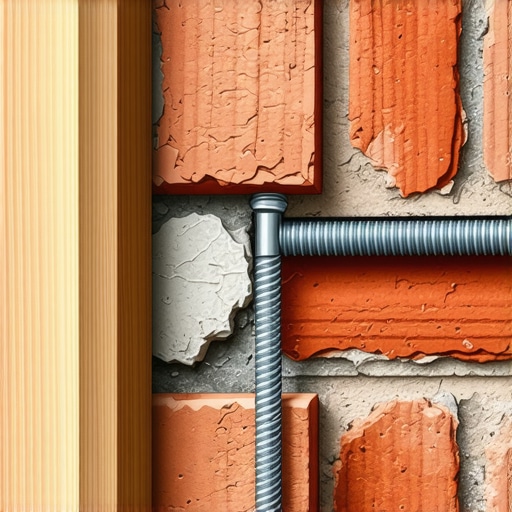
The core of brick veneer detachment repair today involves the surgical installation of helical anchors. These aren’t your grandfather’s nails. We’re talking about stainless steel fins that cut into both the masonry and the wood stud, creating a mechanical tie that won’t rust out in another fifty years. First, we use a high-powered magnetic sensor to find the studs. We then drill a pilot hole through the mortar joint—never the brick face—and drive the helical tie home. The beauty of this is the ‘tension’ it creates. It pulls the veneer back toward the structure without the need for mortarless masonry systems that often look like plastic siding. Once the anchors are set, we begin the full repointing services to hide the evidence. I always use a ‘slicker’ to strike the joints, ensuring the mortar is packed tight to resist water penetration. If the damage is severe, perhaps after a masonry rescue after disaster like a local flood or seismic event, we might have to remove sections of the soldier course to inspect the lintels. But for most bowing walls, the helical system is the ‘cure’ that avoids the ‘Band-Aid’ of a full tear-down.
“The mortar should always be weaker than the masonry units it binds together to allow for stress relief and prevent unit cracking.” – ASTM C270 Standard Specification for Mortar for Unit Masonry
The Danger of the ‘Quick Fix’ and Modern Gimmicks
I get calls every week from folks who tried to fix a detached wall with expanding spray foam or ‘special’ tile grouts on masonry. It’s enough to make a man throw his hawk at the wall. Expanding foam creates uneven pressure that can actually accelerate the ‘blowout’ of the wall. And don’t get me started on metallic masonry finishes used to hide cracks. If you seal the exterior of a brick wall with a non-breathable coating, you trap moisture inside. That moisture will rot your studs and eventually cause honeycombing in the inner wythe of any structural masonry. You must respect the ‘breathability’ of the system. Even chimney leak detection often leads back to the same culprit: someone used a waterproof sealer on the bricks, and now the chimney is spalling from the inside out because the water vapor has nowhere to go. Whether you’re dealing with a simple crack or a wall that’s literally ‘walking away,’ you have to respect the physics of the materials. Masonry is a slow-motion dance between stone and gravity. Don’t let a ‘handyman’ turn it into a funeral. Perform your structural masonry inspection early, use the right helical anchors, and for heaven’s sake, use the right mud. Your house deserves more than a ‘lick-and-stick’ prayer.