
The Forensic Scene: When the Veneer Lies
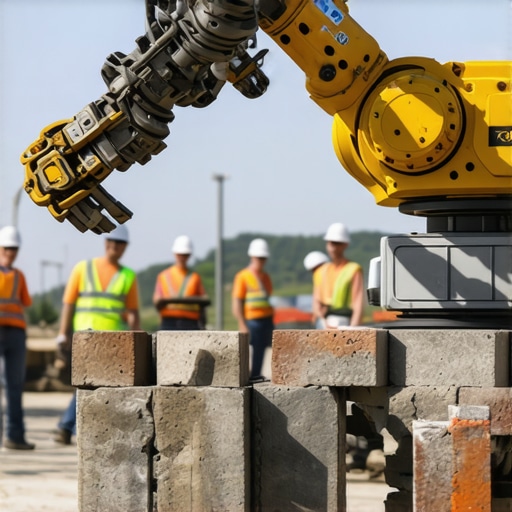
The homeowner thought it was just a hairline crack, a minor blemish on a 1930s Georgian facade. But when I put my scope inside the cavity, I saw the structural steel was rusted to dust. The ‘repair’ job done five years ago used a high-strength Portland-based mud that was too dense for the soft, lime-fired clay units. It trapped moisture, turned the wall into a vertical swamp, and catalyzed the oxidation of the brick ties. This is the reality of modern masonry: we are losing the battle against water because we have forgotten the physics of breathability. Now, the industry is pivoting. We are seeing the rise of automated masonry arms—robotic systems designed to replicate the precision of a master but at a speed that makes a three-man crew look like they are working in slow motion. Whether it is tuckpointing curved walls or performing a surgical stone facade restoration, the machines are here to address the human error that leads to catastrophic structural failure.
“Water penetration is the single greatest threat to masonry durability.” – BIA Technical Note 7
The Physics of Suction and the Robotic Trowel
In the world of brick wall restoration, the most critical variable is the Initial Rate of Absorption (IRA). When you ‘butter’ a brick, the dry clay starts pulling the water out of the mortar instantly. This is what we call ‘suction.’ If the suction is too high, the mortar loses its plasticity before it can properly bond, creating a ‘cold joint’ that will leak within three seasons. A human mason feels this through his wrist; he knows when to wet the wall and when to wait. Automated masonry arms are now being equipped with moisture sensors and haptic feedback loops that measure the specific humidity of the substrate in real-time. These robots don’t just ‘slap’ mud; they calibrate the ‘tooth’ of the mortar to the exact porosity of the stone. This is vital for stone coping installation, where the interface between the horizontal cap and the vertical rise is a prime entry point for the freeze-thaw cycle.
Micro-Zooming: The Carbonation of Lime vs. The Hydration of Portland
To understand why these automated systems are being programmed with ‘old world’ logic, we have to look at the chemistry. Traditional re-pointing services for historic buildings must use Type O or Type N lime-based mortars. Unlike Portland cement, which hardens through a rapid hydraulic reaction, lime mortar cures through carbonation—absorbing CO2 from the air over decades. It remains flexible. It ‘breathes.’ When a robotic arm is used for tuckpointing curved walls, it can maintain a consistent 1/8th inch depth that a human, tired after six hours on the hawk and slicker, simply cannot match. This precision ensures that the ‘sacrificial’ nature of the mortar is maintained across the entire surface area, preventing the bricks from spalling when the temperature drops and the water trapped in the pores expands by that deadly 9%.
The Hardscape Reality: Beyond the Vertical Wall
It isn’t just about the walls. The same robotic precision is being applied to patio stone realignment and outdoor kitchen masonry build projects. Most guys will throw some screenings down, give it a quick vibrate, and call it a day. Within two winters, the patio looks like a topographical map of the Andes. Why? Because they ignored the compaction physics of the base. Automated systems use laser-guided leveling to ensure the sub-base is pitch-perfect for drainage. This is especially critical for stone coping installation around pools or chimney damper repair where the geometry must be exact to prevent smoke shelf turbulence. If the base isn’t right, the finest re-pointing services in the world won’t save the structure from the eventual heave of the soil.
“Mortar should be weaker than the masonry units it binds to allow for thermal movement without fracturing the stone.” – ASTM C270 Standards
The Future: Self-Healing Concrete Foundations
We are moving into an era of self-healing concrete foundations. Imagine a robotic arm pouring a foundation and injecting it with micro-capsules of bacteria or sodium silicate. When a crack eventually forms due to hydrostatic pressure or settlement, the capsules rupture, reacting with the incoming moisture to ‘grow’ new crystals and seal the breach. This isn’t science fiction; it is the next step in forensic masonry. We are combining the raw power of automated masonry arms with advanced material science to eliminate the ‘handyman special’ errors that have plagued the industry for the last fifty years. Whether you are looking at a stone facade restoration or a simple chimney damper repair, the goal remains the same: manage the water, respect the material, and never trust a joint that hasn’t been properly struck with a jointer tool.