
The Ghost in the Wall: Reading the Language of Failure
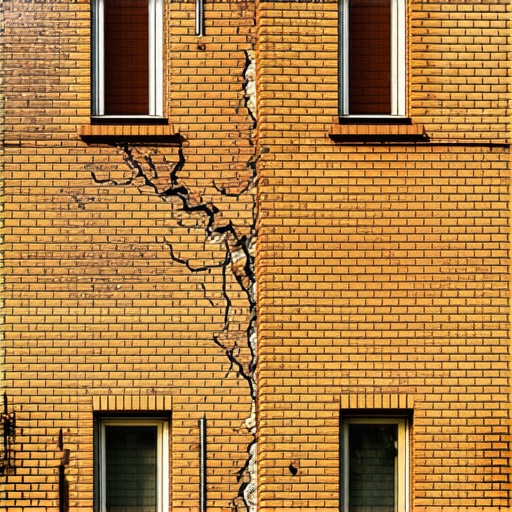
I remember my uncle, a man who spent fifty years with a trowel in his hand, once taking me to a Victorian-era townhouse in the city. The homeowner was complaining about a jagged stair-step crack that ran from the corner of the window down to the foundation. To the untrained eye, it was just a gap. But my uncle didn’t look at the gap; he looked at the ground. He knelt, took a handful of the dirt, and squeezed it. ‘The house isn’t breaking,’ he said, ‘the earth is moving, and the brick is just trying to follow it.’ He taught me that day that a crack is a symptom, not the disease. If you just shove some ‘mud’ (mortar) into that crack, you aren’t fixing anything. You’re just masking a tragedy. This article is about the forensic science of brick wall restoration and the surgical methods we use to heal masonry without leaving a scar.
“A crack in a brick wall is rarely just a cosmetic issue; it is a roadmap of structural movement that requires a fundamental understanding of the building’s load paths.” – Brick Industry Association (BIA) Technical Note 18A
The Physics of the Stair-Step: Why Brick Walls Snap
When you see a stair-step crack, you are looking at a shear failure. Masonry is incredibly strong in compression—you can stack a mountain of bricks on top of each other and they won’t flinch. But masonry has almost zero tensile strength. It cannot stretch. When a corner of a foundation settles due to poor drainage or soil compaction, the wall begins to rotate. Because the bricks are stronger than the mortar, the crack follows the weakest path: the joints. This is where concrete block foundation repair and foundation helical pier installation become the primary actors in the drama. If the foundation isn’t stabilized, your facade repair is a waste of time. We use helical piers—essentially giant steel screws driven deep into the load-bearing strata of the earth—to ‘pin’ the house in place. Only after the movement is arrested can we begin the brick wall restoration process.
The Chemistry of the Invisible Patch: Why ‘Off-the-Shelf’ Fails
The most common crime I see in historic mortar analysis is the use of modern Portland cement on old, soft-fired clay bricks. Before 1940, bricks were often fired in kilns that produced a soft, porous core. These bricks were designed to work with lime-based mortars. Lime is ‘self-healing’; it breathes, and it is softer than the brick. When a modern ‘handyman’ uses a hard, Type S pre-mixed bag of mortar to patch a crack, he is signing the wall’s death warrant. Modern cement is rigid. When the sun hits the wall and the bricks expand (thermal expansion), the hard cement won’t budge. The pressure has to go somewhere, so the face of the historic brick simply pops off. This is called spalling. To achieve a truly invisible repair, we perform a historic mortar analysis. We take a sample of the original ‘mud,’ dissolve the binders in acid, and look at the sand under a microscope. We match the grain size, the mineralogy, and the pigment. We aren’t just filling a hole; we are matching the chemical DNA of the building.
“The use of a mortar that is stronger than the masonry units can lead to cracking and spalling of the units themselves during cycles of thermal expansion and contraction.” – ASTM C270, Standard Specification for Mortar for Unit Masonry
Surgical Stitching: The Helical Bar Method
To fix a structural crack without a visible patch, we use a technique called ‘Helical Stitching.’ Instead of just ‘buttering’ the joint, we use a slicker and a grinder to rake out the mortar joints horizontally across the crack, usually about 18 inches on either side. We then embed 304-grade stainless steel helical bars into the bed joints. These bars act like structural rebar but are designed to allow for minor thermal movement while providing immense lateral strength. We ‘grout’ them in with a specialized high-shrinkage-compensated lime grout. Once the bars are in, we perform flush pointing services over the top. By the time we are done, the structural reinforcement is buried deep inside the wall, and the surface looks exactly like the original 100-year-old joint. This is the difference between a ‘patch’ and a ‘restoration.’
[IMAGE_PLACEHOLDER]
The Enemy Above: Chimneys and Retaining Walls
Structural cracks aren’t limited to the main facade. I’ve spent weeks on commercial smokestack repair projects where the thermal stress of industrial exhaust has literally shredded the masonry. Closer to home, a failing retaining wall repair often reveals that the freeze-thaw damage restoration was ignored for too long. In northern climates, water gets behind the brick, freezes, and expands by 9%. This hydrostatic pressure can push a wall out of plumb by several inches. If you’re dealing with a chimney, you might also need chimney damper repair or a new crown to stop water from migrating down into the flue, which causes the mortar to ‘honeycomb’ and lose its structural integrity. Even a brick patio restoration requires an understanding of ‘suction’—how the brick pulls water out of the bedding sand. If the compaction isn’t right, the patio becomes a wavy mess within two seasons.
The Art of the Strike: Finishing the Invisible Repair
The final secret to an invisible repair is the ‘strike.’ Every mason has a unique way of finishing a joint. Some use a ‘V-groove,’ some use a ‘grapevine,’ and some use a ‘weathered’ joint. To make a repair disappear, you have to mimic the patina and the tool marks of the original mason. This requires a hawk, a steady hand, and a deep knowledge of the ‘set time’ of the mud. If you strike the joint too early, you bring the ‘cream’ to the surface and change the color. If you strike it too late, you won’t get a good bond. We often use flush pointing services to ensure the new mortar sits perfectly flush with the aged edges of the brick, preventing water from pooling on the ‘ledger’ of the joint. This is critical for preventing future freeze-thaw damage restoration needs. Do it once, do it right, or you’ll be calling me back in five years to fix the mess the ‘lick-and-stick’ guys left behind.