
The Forensic Scene: When a Flake is a Warning
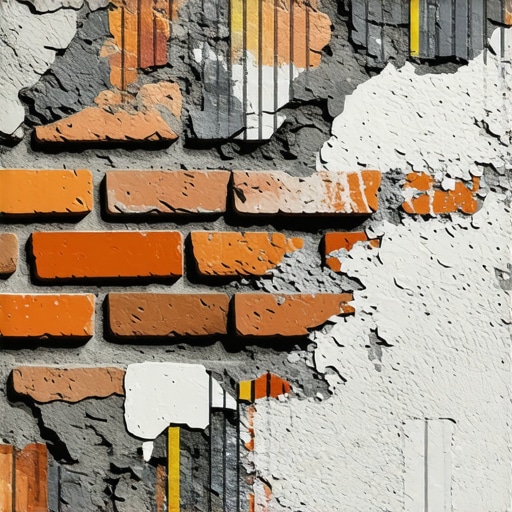
I was called out to a 1920s Tudor last November. The homeowner pointed to a few flakes of red clay on his driveway and called it a minor nuisance. To the untrained eye, it looked like the building was just shedding a little dust. But when I pulled my high-resolution scope out and peered into a horizontal fissure near the water table, the truth was uglier. Behind that thin, decorative face, the structural integrity was turning into wet graham crackers. The brick wasn’t just ‘peeling’; it was being pushed apart from the inside out by a combination of trapped moisture and a previous contractor’s decision to use a high-PSI Portland cement on a soft, lime-based historic wall. It is the classic forensic scene: a building being strangled by its own repair materials.
Spalling isn’t just an aesthetic defect; it is a symptom of a systemic failure in the masonry envelope. When you see the face of a brick pop off—leaving a jagged, pitted surface—you are looking at the end result of a microscopic war between water, salt, and temperature. My job as a third-generation mason is to stop the bleeding before the wall requires a full-scale foundation crack repair or a complete teardown.
The Micro-Physics of the Freeze-Thaw Cycle
To understand why your wall is failing, we have to look at the ‘tooth’ of the masonry. Brick is naturally porous; it’s a network of interconnected capillaries. In a healthy historic masonry preservation scenario, the brick breathes. Water enters, but it also escapes as vapor. The crisis begins when the pore pressure exceeds the tensile strength of the clay body. In northern climates where the thermometer dances across the freezing mark fifty times a season, the physics are brutal. Water expands by 9% when it turns to ice. If that water is trapped within the first half-inch of the brick face because someone applied a waterproof ‘sealer’ or used an impermeable concrete patch, that 9% expansion has nowhere to go but out. It exerts thousands of pounds of pressure, eventually snapping the face of the brick right off the ‘headers’ and ‘stretchers.’
“Water penetration is the single greatest threat to masonry durability. Moisture must be allowed to exit the wall system as freely as it enters.” – BIA Technical Note 7
We call this ‘cryogenic suction.’ As ice crystals form in the larger pores, they draw liquid water from the smaller pores toward the freezing front. This creates a hydraulic ram effect inside the brick. If you’ve used a modern, hard mortar—the kind of high-strength ‘mud’ you buy in bags at a big-box store—the brick becomes the weakest link. In the hierarchy of a wall, the mortar must be the ‘sacrificial’ element. It should be softer than the brick so that it fails first. When you flip that logic, the brick explodes instead of the joint crumbling. This is why historic brickwork repointing requires a deep understanding of lime-to-sand ratios rather than just grabbing the strongest mix available.
The Restoration Reality: Why ‘Lick-and-Stick’ Fails
Most modern handymen try to fix spalling by ‘buttering’ some thin-set or a concrete patch over the hole. It lasts one season. Why? Because they haven’t addressed the ‘interfacial transition zone.’ They are applying a hard, dense material over a soft, decaying substrate. The two materials have different coefficients of thermal expansion. When the sun hits that wall, the patch expands at a different rate than the brick, and by next spring, the patch is lying on the sidewalk, often taking another half-inch of the original brick with it. This is why stone facade restoration and brick repair must be handled with a forensic mindset.
True repair requires a full-depth replacement or a breathable restoration mortar. If I’m doing a retaining wall block replacement or fixing a facade, I’m looking at the ‘suction’ of the unit. We often have to pre-wet the existing masonry to prevent it from ‘burning’ the new mud. If the dry brick sucks the water out of your new mortar too fast, the hydration process is interrupted, and you end up with a ‘cold joint’ that will never bond. We use a hawk and a slicker to pack the joints tight, ensuring there are no voids where water can pool.
The Chemistry of Mortar Matching Services
You cannot just guess the color and call it a day. Mortar matching services are about more than aesthetics; they are about chemical compatibility. We take a sample of the original mortar, crush it, and perform an acid digestion test to see what the original aggregate looked like. Was it river sand? Crushed limestone? The sand is the ‘skeleton’ of the mortar. If we don’t match the sieve size and the mineralogy, the new repointing will act as a dam, trapping water and causing further spalling. In historic masonry preservation, we often use Type O or Type K mortars—mixes so soft you could scratch them with a fingernail—because that softness is what saves the brick.
“Mortar should be designed to be weaker than the masonry units so that any stress-induced cracking occurs in the mortar joints where it can be easily repaired.” – ASTM C270 Standard Specification
Specific Failure Points: Chimneys and Retaining Walls
The most common place I see catastrophic spalling is the chimney. Most homeowners ignore their chimney crown repair until they see bricks falling onto their roof. The crown is the roof of your chimney; if it has hairline cracks, every gallon of rainwater is being funneled into the core of the brickwork. By the time it hits the freeze-thaw cycle, the chimney becomes a ticking time bomb. Similarly, in retaining wall geogrid installation projects, if the drainage isn’t perfect, hydrostatic pressure will force water through the block, leading to massive efflorescence and face-shell spalling.
For larger commercial projects, we might use concrete pump masonry mixes to fill voids, but even then, we have to be careful about ‘honeycombing’—those air pockets that become little swimming pools for ice. Every step of the process, from the way we strike the joint with a slicker to the way we select a soldier course for the window headers, is a calculation of how water will move. If you don’t respect the water, the water will destroy your work. Do it once, or do it twice—that’s the mantra of the master mason.