Fix Sinking Foundations with 2026 Self-Leveling Masonry Lifts
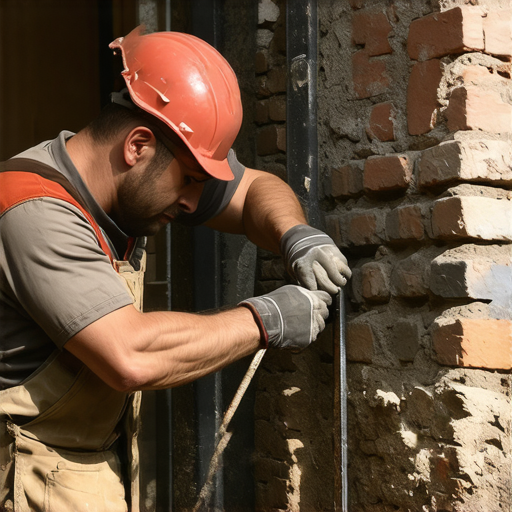
The homeowner thought it was just a hairline crack, a minor blemish on a century-old facade. But when I put my scope inside that dark void between the wythes, the truth was uglier than a cold joint in an August heatwave. The structural steel—the very bones of the building—was rusted to red dust, a victim of decades of water ingress that turned the wall into a slow-motion vertical swamp. This isn’t just about aesthetics; it’s about the physics of failure. When a foundation begins to settle, it speaks a language of stress and strain that most handymen can’t read. They see a gap and reach for the caulk; I see a structural cry for help. In the heavy clay soils of the North, where the freeze-thaw cycle is the ultimate wrecking ball, water is both the medium and the executioner. When water freezes, it expands by approximately nine percent. This expansion exerts a massive force known as cryostructure pressure. If your masonry isn’t ‘breathing’ or if the drainage is shot, that expansion has nowhere to go but out, popping the faces off your brick—a process we call spalling—or down, pushing the foundation into the yielding soil below.
“Water penetration is the single greatest threat to masonry durability.” – BIA Technical Note 7
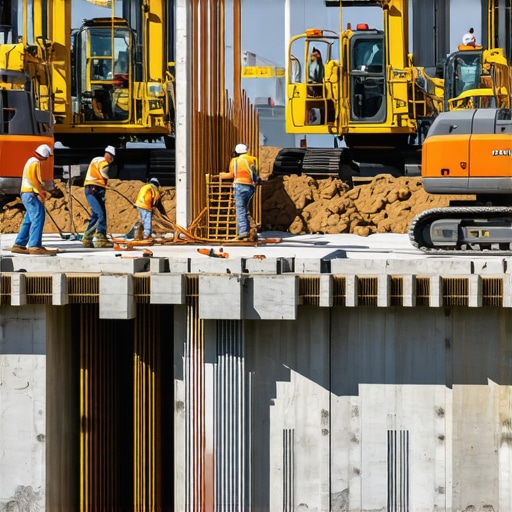
To diagnose a sinking structure, we must first look at the morphology of the failure. A stair-step crack following the mortar joints is the classic signature of settlement, usually occurring at the corners where the load-bearing capacity of the soil has been compromised by poor gutter runoff or subsurface erosion. Conversely, a horizontal crack midway up a basement wall often signals hydrostatic pressure—the weight of water-saturated soil pushing inward with thousands of pounds of force. This is where the 2026 self-leveling masonry lifts come into play. These aren’t the crude mud-jacking techniques of the 1990s. We are talking about advanced masonry adhesives and low-viscosity, fiber-reinforced mortars that act as a liquid shim. These engineered matrices utilize a pozzolanic reaction, where volcanic ash or silica fume reacts with calcium hydroxide to form additional Calcium Silicate Hydrate (C-S-H) crystals. This densifies the ‘mud’ on a molecular level, closing the microscopic capillaries that allow water to migrate. [IMAGE_PLACEHOLDER] The 2026 lifts utilize hydraulic injection of geopolymer resins that have a compressive strength exceeding 15,000 psi—far stronger than the soil they displace. When we perform foundation underpinning with these systems, we aren’t just adding mass; we are creating a monolithic structural base that bonds to the existing stone or brick through ‘suction.’ A dry brick has a natural thirst, a capillary draw that pulls the binder into its pores, creating a mechanical bond that is nearly impossible to shear. During a brick arch restoration, this bond is critical. If the mortar doesn’t have the right ‘tooth,’ the arch will fail as soon as the centering is removed.
“The stability of the foundation is the first principle of all architecture.” – Vitruvius, De Architectura
For homeowners looking at an outdoor kitchen masonry build, the added weight of stone ovens and heavy countertops can frequently cause a patio slab to heave or sink. We combat this by using fiber-reinforced mortars that can handle the thermal expansion of the heat source without cracking. When the lift is complete and the structure is level, we turn to the finish. Flush pointing services are the final defense; we use a slicker to compress the ‘mud’ into the joint, eliminating ‘honeycombing’—those nasty air pockets where water loves to hide. For architectural flair, the metallic brick colors application is used to restore the original luster of the facade, employing metal oxides like manganese or iron to create a permanent, UV-stable finish that won’t fade. If you’re seeing soldier courses leaning or your mortar joints turning to powder, don’t reach for a DIY kit. The chemistry of a proper masonry repair requires an understanding of the pH levels of the substrate and the specific gravity of the soil. A cold joint today is a structural failure tomorrow. Do it once, or do it twice—the choice is always in the mud.