How Historic Mortar Analysis Saves 2026 Restoration Projects
The Ghost of the 1980s: Why We Are Still Fixing ‘Bad Fixes’
I remember standing on a rickety scaffold in the late 90s with my mentor, a man who had more lime under his fingernails than blood in his veins. He didn’t just look at a wall; he listened to it. He took a small copper coin and dragged it across a joint of a 1912 brownstone that had been ‘repaired’ only five years prior. The sound was high-pitched, like a scream. The mortar didn’t give; it fought back. ‘See that?’ he barked, pointing at a brick face that had just popped off, exposing a raw, orange center. ‘They used Portland cement on a lime-king building. They might as well have poured acid on it.’ That lesson remains the cornerstone of my forensic practice. When we look toward 2026 restoration projects, we aren’t just looking at aesthetics; we are performing a chemical autopsy on failed logic. Modern brickwork sealants application and high-PSI ‘mud’ are the silent killers of our architectural heritage. The industry is finally waking up to the fact that stone wall repair isn’t about strength; it’s about compatibility.
The Physics of the Sacrificial Joint: Why Softer is Stronger
In the world of historic brick salvage, the most important rule is the sacrificial principle. A wall is a living, breathing lung. It expands when the sun hits it and contracts when the frost bites. If you use a mortar that is harder than the brick, the brick becomes the weakest link. In a freeze-thaw cycle, water gets trapped behind that hard Portland ‘butter.’ As that water turns to ice, expanding by exactly 9% of its volume, it has nowhere to go. It can’t push through the dense cement, so it pushes through the face of the brick. This is known as spalling.
“Mortar should always be softer and more permeable than the masonry units it binds, acting as a sacrificial element that allows for moisture movement and thermal expansion.” – ASTM C270 Standards for Unit Masonry
When we talk about sustainable tuckpointing mortars in 2026, we are really talking about returning to the lime cycle. Unlike modern cement which ‘cures’ through a rapid chemical hydration, traditional lime mortar ‘sets’ through carbonation. It absorbs CO2 from the atmosphere over decades, slowly turning back into stone while remaining flexible enough to heal its own hairline cracks. This is the ‘tooth’ of the material—the ability to grip the microscopic pores of the brick without strangling it.
The Forensic Lab: Mortar Matching Services and Petrographic Reality
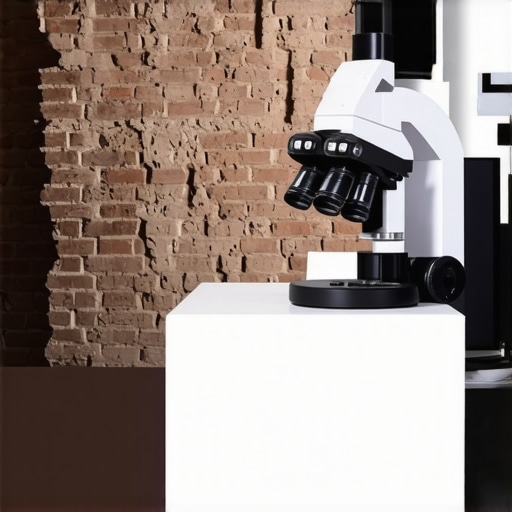
Before you even pick up a hawk or a slicker, you need to know what you’re dealing with. In 2026, the ‘best guess’ method of matching mortar color by eye is dead. We now use mortar matching services that utilize petrographic analysis. This involves taking a thumb-sized chunk of original ‘mud’ and putting it under a microscope to determine the exact sand-to-binder ratio. We look at the grain shape of the sand—is it river-washed and smooth, or crushed and angular? This dictates the ‘suction’ of the new mix. If your masonry joint sand repair uses the wrong grit, the new joint will never bond with the old, creating a cold joint that lets in driving rain. We are also seeing a rise in 3D printed masonry repairs for intricate carved stone elements, but even those high-tech solutions fail if the bedding mortar doesn’t match the host wall’s breathability. You can’t put a plastic heart in a stone body and expect it to beat.
The Toolkit of the Trade: Beyond the DIY Handyman
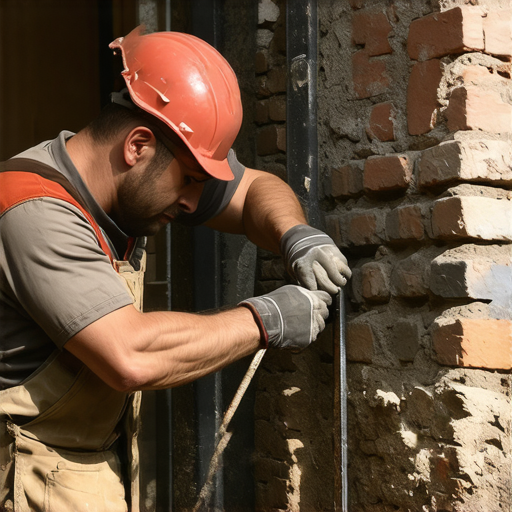
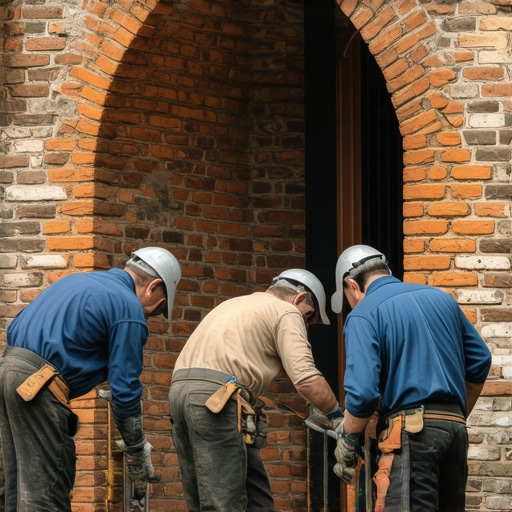
I see it every weekend: a homeowner with a bag of ‘all-purpose’ mix and a cheap trowel trying to save a buck. They don’t understand the nuance of tuckpointing tools for DIY. Real tuckpointing—the kind that lasts 80 years—requires a specialized kit. You need a slicker (a long, thin jointer) to pack the mud deep into the birdsmouth cuts. A birdsmouth cut isn’t just a fancy term; it’s a specific way of grinding out the old mortar to a depth of at least twice the width of the joint to ensure the new material has enough ‘meat’ to grab onto. If you just ‘lick-and-stick’ a thin layer over the surface, it will peel off like a scab in two seasons. You also need a hawk—the flat square plate that holds your mortar—to keep the mix hydrated. If the ‘mud’ sits on the wall too long and ‘burns’ (dries too fast), the hydration process is interrupted, and you’re left with a dusty, crumbling mess that has no structural integrity.
“Water penetration is the single greatest threat to masonry durability, and the quality of the mortar joint is the first line of defense.” – BIA Technical Note 7
Complex Geometries: Soldier Courses and Concrete Block Foundation Repair
When you move from the facade to the foundation, the stakes get higher. Concrete block foundation repair in historic homes often reveals honeycombing—voids where the aggregate didn’t settle properly during the original pour. Repairing this requires a different physics than a standard soldier course (bricks stood on end) on a chimney. Foundations are under constant hydrostatic pressure. If you use a standard brickwork sealants application on the inside of a basement, you are just trapping water inside the block, which will eventually lead to a structural collapse. The 2026 approach is about redirection, not just blockage. We use masonry birdsmouth cuts even in foundation cracks to create a mechanical key for epoxy or lime-based injections. It’s about creating a repair that is physically locked into the substrate, rather than just glued to the surface.
The Future of Restoration: Sustainability and 2026 Trends
As we move into 2026, the masonry industry is pivoting toward carbon-neutral materials. Sustainable tuckpointing mortars are now being engineered to sequester more carbon than they produce. We are seeing a return to local historic brick salvage yards, not just for the look, but for the material density. Old-growth clay bricks, fired in coal kilns a century ago, have a different thermal mass than modern, mass-produced units. Mixing these ‘old souls’ with new 3D printed masonry repairs creates a hybrid structure that respects the past while utilizing the precision of the future. But remember: whether you’re using a robotic arm or a 100-year-old trowel, if you don’t respect the chemistry of the wall, the wall will eventually win. Don’t be the contractor who leaves a cold joint for the next generation to fix. Do it once, do it right, and let the building breathe.
![3 Reasons to Install a Chimney Heat Shield in 2026 [Pro Tips]](https://masonryrescue.com/wp-content/uploads/2026/03/3-Reasons-to-Install-a-Chimney-Heat-Shield-in-2026-Pro-Tips.jpeg)