How to Use 2026 Digital Twin Tech for Faster Masonry Repairs
The Ghost in the Wall: Why Your Eyes Aren’t Enough Anymore
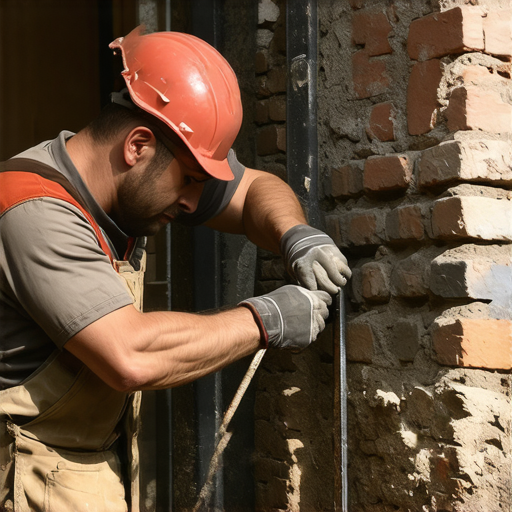
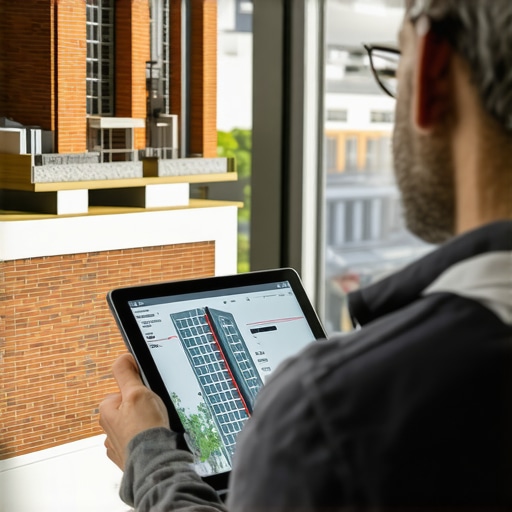
I was standing in the crawlspace of a 1920s Tudor in the blistering heat of a Texas July, sweating through my coveralls and staring at a crack that shouldn’t have been there. The homeowner thought it was just a hairline fracture, a minor nuisance. But when I fired up the 2026-spec LiDAR scanner and layered the real-time data onto the structure’s digital twin, the screen turned a violent shade of red. The internal structural steel—the very bones of the house—wasn’t just rusted; it was undergoing expansive oxidation, a slow-motion explosion that was pushing the masonry apart from the inside out. Without that digital overlay, I’d have just ‘buttered’ the joint and walked away, leaving a ticking time bomb behind. This is the new reality of emergency masonry repair: we aren’t just guessing based on the ‘ring’ of a brick anymore; we are looking through the mortar into the molecular soul of the building.
“Water penetration is the single greatest threat to masonry durability, leading to efflorescence, spalling, and the eventual loss of structural integrity.” – BIA Technical Note 7
The Physics of the ‘Burn’: Why Southern Masonry Fails
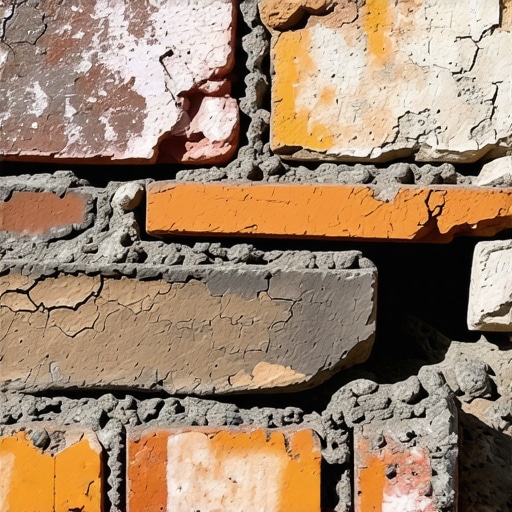
In the Southwest, we don’t worry about the freeze-thaw cycle like the boys in Chicago do. Here, the enemy is Thermal Expansion and Flash Setting. When a wall sits in 110-degree sun, the bricks expand. If the original builder didn’t include proper control joints, that pressure has nowhere to go but out. The wall bows, the mortar ‘burns’—meaning it loses its hydration water too quickly to ever reach full strength—and you end up with a facade that looks like a dried-out saltine cracker. When we perform masonry repair services today, we use digital twins to simulate the thermal loading of the next twenty summers. This tells us exactly where to install relief joints and whether we need fiber-reinforced mortars to handle the tension that standard Type N ‘mud’ just can’t touch.
Micro-Zooming into the Mud: The Chemistry of Sustainable Tuckpointing Mortars
Most modern handymen treat mortar like glue. It’s not. In historic pointing styles, the mortar is the sacrificial lamb. It has to be softer and more permeable than the brick itself. If you slap high-strength Portland cement onto an old, hand-pressed brick, the brick will eventually explode (spall) because the moisture gets trapped behind that hard, impermeable cement shelf. We are now seeing a massive shift toward sustainable tuckpointing mortars. These aren’t just ‘green’ for the sake of a certificate; they utilize pozzolans and hydraulic lime that breathe. The chemistry is fascinating: as lime mortar cures over a century, it actually re-absorbs carbon dioxide from the air, a process called carbonation. It’s literally turning back into stone, becoming part of the atmosphere’s cycle. When we use concrete pump masonry mixes for larger structural stabilizations, we’re now calibrating those mixes to match the specific vapor transmission rate of the existing wall, identified through our digital diagnostic twins.
The Lick-and-Stick Nightmare: Stone Veneer Repair
I have a particular disdain for modern ‘lick-and-stick’ stone veneer repair. These systems are often installed by crews who couldn’t tell a soldier course from a sidewalk. They rely on a thin layer of modified mortar to hold heavy cast-stone units against a substrate that often lacks a proper drainage plane. When the water gets behind that stone—and it always does—it creates a hydrostatic pressure chamber. In my forensic inspections, I often find the OSB sheathing behind the ‘beautiful’ stone has turned into a mushroom farm. Using 2026 digital twin tech, we can now use moisture-mapping sensors to see exactly where the flashing failed without tearing the whole wall down. We fix it by installing structural brick ties replacement systems that actually anchor the veneer to the studs, followed by a fire-rated masonry installation that ensures the thermal envelope isn’t just pretty, but safe.
“The use of reinforcement in masonry increases the ductility of the system and provides a secondary load path after the masonry has cracked.” – ASTM C1093 Standards
The Anatomy of a Fix: From Brick Paver Driveway Repair to Helical Piers
When you see a brick paver driveway repair job where the bricks look like a rolling wave, the problem isn’t the brick. It’s the compaction physics of the base. Most contractors throw down four inches of ‘crusher run’ and call it a day. A real master knows you need a graded sub-base, vibratory compaction in lifts, and a geotextile fabric to prevent soil migration. If the digital twin shows the sub-grade is shifting due to expansive clay, we don’t just re-lay the pavers. We go deep. We might use concrete pump masonry mixes to pressure-inject grout or install structural brick ties replacement to stabilize the surrounding retaining walls. It’s about the ‘tooth’ of the material—how it bites into the next layer to create a monolithic structure. Using a slicker or a hawk to finish a joint is the final touch of the artist, but the engineering underneath is what keeps that artist’s work from falling into the dirt.
How to Use Digital Twin Tech in Your 2026 Repair Workflow
If you’re facing a structural crisis, don’t just hire a guy with a truck and a bag of premix. Demand a forensic approach. First, we conduct a 3D scan to create the twin. We look for ‘honeycombing’ in the concrete and ‘cold joints’ where the original pour failed to bond. We simulate the load-bearing capacity of the structural brick ties replacement. Only then do we pick up the trowel. This data-driven approach means we do it once, and we do it right. Whether it’s emergency masonry repair after a vehicle impact or fire-rated masonry installation for a commercial upgrade, the tech allows us to ‘butter’ each unit with the confidence that the physics are on our side. The mud we use today is smarter, the tools are sharper, but the goal remains the same: a wall that stands long after the man who built it is gone.