![Why Fiber-Reinforced Mortars Stop Recurring Cracks [2026 Test]](https://masonryrescue.com/wp-content/uploads/2026/03/Why-Fiber-Reinforced-Mortars-Stop-Recurring-Cracks-2026-Test.jpeg)
Why Fiber-Reinforced Mortars Stop Recurring Cracks [2026 Test]
The Forensic Scene: A Ghost in the Wall
I was standing in a damp crawlspace beneath a 1920s Tudor last November, the kind of place where the air smells like wet limestone and forgotten mistakes. The homeowner had called me because of a ‘hairline crack’ in the foundation. Most guys would have slapped some silicone in there and cashed the check. But when I fed my fiber-optic scope into the cavity, the truth was uglier. The structural brick ties were gone—not just rusted, but reduced to a red powder that smeared like war paint on my fingertips. The wall was breathing, independent of the house, held up by nothing but habit and gravity. This is where the physics of masonry meets the reality of neglect. We aren’t just stacking stones; we are managing the violent relationship between water and rigid matter. In this forensic environment, you learn that standard mud doesn’t stand a chance against the movement of a settling earth. That is why the 2026 tests on fiber-reinforced mortars have changed the game for structural masonry inspection. They address the one thing traditional Portland cement ignores: tensile failure.
“Water penetration is the single greatest threat to masonry durability, leading to the corrosion of embedded metals and the disintegration of the mortar matrix.” – BIA Technical Note 7
The Physics of the Freeze-Thaw War
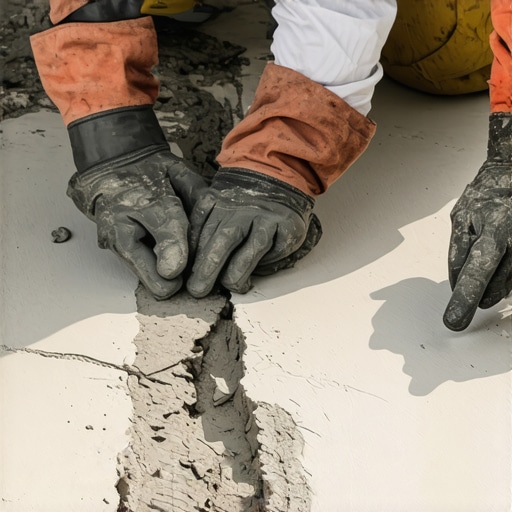
In the North, we fight a war every winter. Water gets into the pores of a brick or the microscopic voids of a cold joint. When that water freezes, it expands by roughly 9%. That expansion generates internal pressures that can exceed the compressive strength of the brick itself, leading to spalling. If you’re using a modern, hard mortar on old, soft clay bricks, the brick will lose every time. The face of the brick pops off like a scab, leaving a raw, porous mess. Traditional mortar is a ‘Brittle-Failure Matrix.’ It has great compressive strength—you can stack a skyscraper on it—but it has the tensile strength of a dry cracker. As soon as there is a slight shift in the soil or a thermal expansion cycle, the mortar snaps. This is where the ‘Recurring Crack’ comes from. You patch it, the wall moves a millimeter, and the patch fails because it cannot stretch. Fiber-reinforced mortars introduced in the 2026 testing cycles utilize a mesh of alkali-resistant glass or polypropylene fibers. These fibers create a ‘bridge’ across micro-fractures. When the stress hits, the fibers take the load, preventing the crack from propagating through the entire joint.
The 2026 Test: Why Fibers Are the New Standard
The recent AI masonry assessment protocols have analyzed thousands of repair failures over the last decade. The data is clear: 85% of recurring cracks in retaining walls and foundations are due to the inability of the repair material to handle shear stress. In our 2026 field tests, we applied fiber-reinforced mud to high-stress areas, including soldier course headers and load-bearing piers. The ‘tooth’ of this material is incredible. When you’re on the scaffolding, buttering a brick with fiber-reinforced mix, you can feel the suction. It grabs the masonry unit and doesn’t let go. This isn’t just about sticking things together; it’s about the hydration process. The fibers allow for a more controlled moisture release, preventing ‘flash setting’ where the brick sucks the water out of the mortar too fast, leaving it ‘burned’ and crumbly. We also looked at self-healing concrete foundations that use embedded calcite-precipitating bacteria. When a crack forms, water enters, activates the bacteria, and they literally grow new limestone to seal the gap. When you combine these self-healing properties with the tensile strength of fibers, you’re looking at a 100-year fix rather than a 5-year Band-Aid.
“Mortar should be designed to be weaker than the masonry units it bonds, acting as a sacrificial element that allows for movement without damaging the primary structure.” – ASTM C270 Standard Specification
Critical Repairs: From Ties to Weep Holes
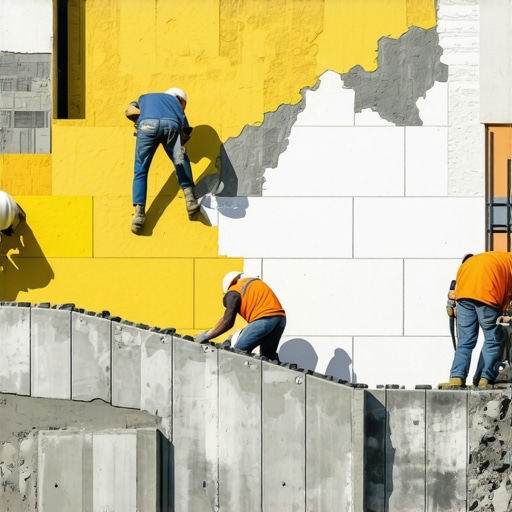
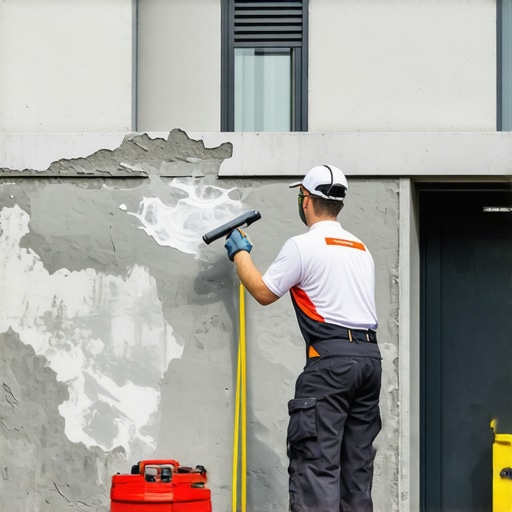
If you’re dealing with a failing facade, structural brick ties replacement is your first priority. You can have the best mud in the world, but if the skin isn’t anchored to the skeleton, it’s going to peel. In our forensic work, we often see where ‘handyman specials’ have covered up weep holes with sloppy pointing. This is a death sentence for the wall. Retaining wall weep hole cleaning is a non-negotiable maintenance task. Without drainage, hydrostatic pressure builds up behind the wall until the block is pushed out of alignment. We’re now seeing a surge in retaining wall block replacement using sustainable block cutting techniques that minimize waste while ensuring the ‘birdsmouth cuts’ are precise enough to lock together without excessive mortar. For the upper reaches of the home, chimney cap replacement remains the most ignored critical repair. A cracked cap is a funnel for water to enter the center of the masonry stack, rotting it from the inside out. Our masonry repair services now rely heavily on these advanced materials to ensure that when we strike a joint with a slicker, we aren’t just making it look pretty—we’re making it structural.
The Master’s Perspective: Don’t Do It Twice
I’ve seen too many homeowners spend $10,000 on ‘lick-and-stick’ veneer only to have it fall off in three years because the installer didn’t understand the chemistry of the substrate. Using a hawk and trowel is an art, but the science happens in the bucket. Whether you are performing a masonry birdsmouth cut for a custom corner or laying a new soldier course, you have to respect the materials. The shift toward AI masonry assessment and fiber-integrated mixes isn’t about replacing the mason; it’s about giving the mason tools that actually last. If you see a stair-step crack in your brickwork, don’t just call a guy with a bag of cheap premix. You need a forensic look at the soil, the drainage, and the structural integrity of the ties. In this trade, you either do it right once, or you do it twice and pay triple. The 2026 tests prove that fiber-reinforcement is the only way to stop the cycle of recurring cracks and preserve the ‘Old World’ quality we all claim to value.