4 Masonry Joint Sand Repair Fixes to Save Your Patio in 2026
The Hardscape Truth: Why Your Patio is Sinking into the Abyss
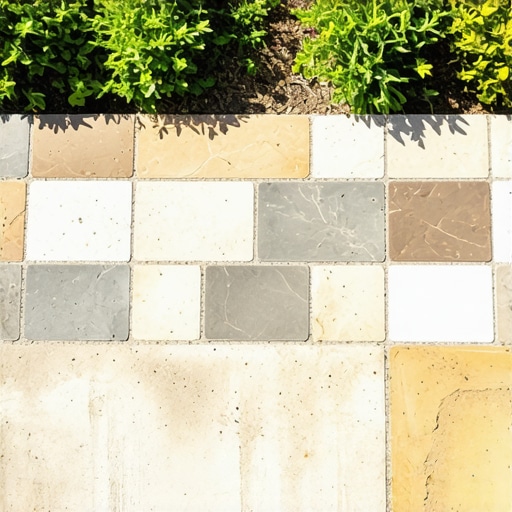
I have spent thirty years watching homeowners throw good money after bad. They see a ‘wavy’ patio or a paver driveway that looks like a topographical map of the Andes, and they think a quick bag of play sand from the big-box store will fix it. It won’t. I’ve walked onto job sites where the ‘contractor’ didn’t know the difference between a Soldier Course and a running bond, and the result is always the same: a structural disaster waiting for the first frost. When we talk about a masonry damage assessment, we aren’t just looking at the surface. We are looking at the physics of the base and the chemistry of the bond.
My old man didn’t care for fancy laser levels when we were first starting out in the late eighties. He cared about the ‘bite.’ He’d grab a handful of joint sand, the kind we used for high-end paver installs, and he’d squeeze it. If it felt too smooth, like river silt, he’d send the truck back before the driver even cut the engine. ‘Silk doesn’t hold a patio together, boy,’ he’d growl. ‘You need the grit. You need the angularity. If the sand doesn’t have the tooth to lock together, the first rain will wash your profit right into the storm drain.’ He was right. That angularity is what creates interlock, the holy grail of hardscaping. Without it, you’re just laying stones in the mud.
“The performance of a segmental pavement depends on the interlock provided by the jointing sand, which transfers loads between units through shear resistance.” – ASTM C144 Standard Specification
The Physics of the Freeze: Why Your Joints are Failing
If you live in a climate where the ground turns to iron in January, you are in a constant war with physics. Water expands by approximately 9% when it freezes. In a patio system, if your joint sand has washed away or has been replaced by organic debris (dirt and moss), water sits in those gaps. When that water freezes, it exerts massive lateral pressure on your pavers. This is where spalling begins. The pressure has nowhere to go, so it heaves the stone. This isn’t just an aesthetic issue; it’s a masonry rescue after disaster scenario in the making. By the time 2026 rolls around, the extreme weather swings we’ve been seeing will have punished any patio that wasn’t properly maintained.
Fix 1: The Forensic Deep Clean & Vacuum
You cannot simply pour new sand over old, compacted dirt. That’s a ‘handyman special’ that will fail in six months. A true repair starts with a masonry damage assessment. We use high-pressure air or specialized vacuums to clear the joints to a depth of at least 1 inch, or 1.5 times the width of the joint. We are looking for the ‘base’—that 4 to 8 inches of compacted 3/4-inch minus gravel that should be under your stone. If that base is contaminated with clay, no amount of sand will save you. You might need a retaining wall block replacement at the edges to ensure the lateral restraint is still holding. If your Soldier Course is ‘shoving’ outward, the joints will never stay full.
Fix 2: Precision Angular Sand Grading
We don’t use ‘sand’ in the way a child uses it at the beach. We use graded silica that meets ASTM C144 standards. Each grain is a tiny, jagged mountain. When you sweep this into the joints, the jagged edges catch on each other. This is ‘interlock.’ In 2026, the industry is moving toward high-performance polymeric sands that use cross-linking molecules. When you add water, these molecules form a flexible, rubber-like bond. It’s not rigid like tuckpointing mortar used in a brick arch restoration; it’s semi-flexible. It breathes. It allows the patio to move during a freeze without cracking, yet it resists the ‘suction’ of a leaf blower or a heavy rainstorm.
Fix 3: Managing the Cold Joint and Compaction
Here is where most DIYers and cheap crews fail. They sweep the sand and walk away. A pro uses a plate compactor with a protective mat. The vibration ‘walks’ the sand down into the full depth of the joint. If you don’t compact it, you leave air pockets—honeycombing in the sand. These pockets eventually collapse, the sand sinks, and you’re back to square one. If you are doing a large area and stop for the day, you create a cold joint. You have to ensure that the transition between ‘old’ sand and ‘new’ sand is blended perfectly, or you’ll see a structural seam that will crack under thermal expansion.
“Water penetration is the single greatest threat to masonry durability, and the maintenance of joint integrity is the primary defense against systemic failure.” – BIA Technical Note 7
Fix 4: The Hydration Secret (The Mist, Not the Flood)
The final step in saving your patio is the ‘activation.’ Modern polymeric sand requires a precise amount of water. Too little, and only the top 1/8th of an inch hardens (creating a ‘crust’ that pops off). Too much, and you wash the polymers out of the sand, leaving a white, hazy mess known as efflorescence. You need to butter the joints with a fine mist, allowing the water to seep down via capillary action. This triggers the hydration process, similar to how mortar matching services ensure the chemical bond in a tuck pointing services job is consistent throughout the wall. We aren’t just wetting sand; we are engineering a stabilized foundation.
The Reality of Tuckpointing and Vertical Masonry
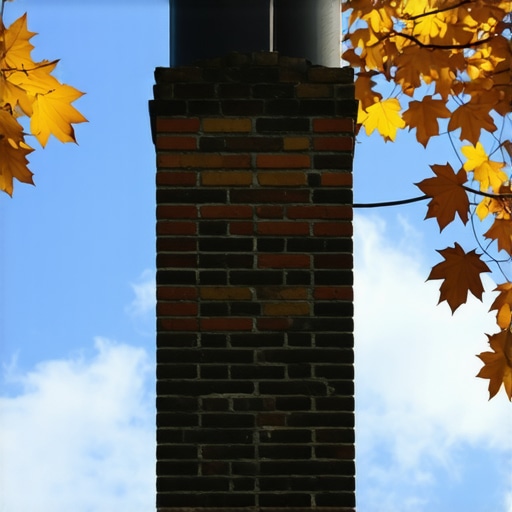
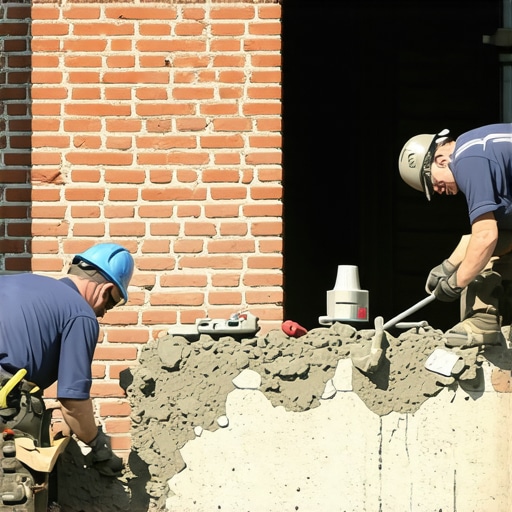
Often, a failing patio is just a symptom of a larger problem. If your patio is attached to the house, look up. Is the tuckpointing on the foundation crumbling? Are the retaining wall capstone replacements needed because the old ones are loose? If the vertical masonry is failing, the water is running behind the stone and undermining your patio’s base. You can’t fix the floor if the walls are weeping. This is why tuckpointing cost estimation should be part of your long-term maintenance budget. A brick paver driveway repair is useless if the brick arch restoration above the garage is dropping moisture into the subgrade.
The Scam Warning: Asphalt Gypsies and Leftover Mud
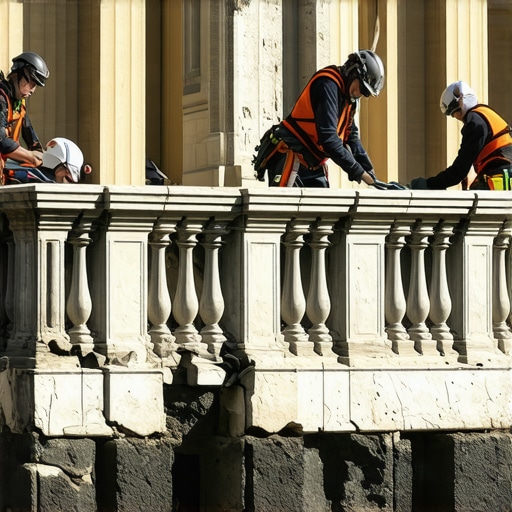
Every spring, I see the trucks. They claim they have ‘leftover material’ from a job down the street. They’ll offer to ‘seal’ your patio or ‘refill the cracks’ for a few hundred bucks. They aren’t using graded silica or cross-linking polymers. They are using cheap sand and a topical sealer that traps moisture inside the stone. This is a death sentence for masonry in a freeze-thaw climate. It causes the face of the stone to pop off in a process called spalling. If you want it done right, you do it once. You do it with the right chemistry, the right physics, and the right grit. Don’t let a ‘handyman’ turn your backyard into a masonry rescue after disaster site. [image_placeholder_1]