Bowing Foundation Walls? 4 Structural Repairs for 2026
The Forensic Scene: When a Hairline Is Actually a Fault Line
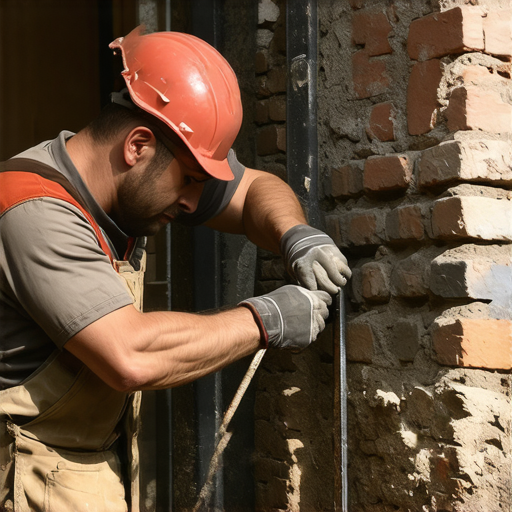
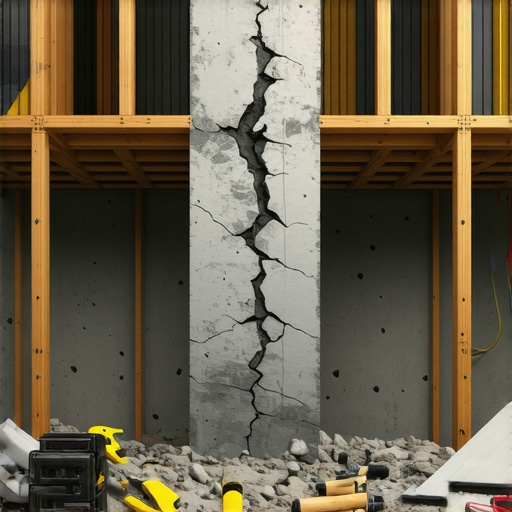
The homeowner called me out because of what they described as a ‘cosmetic nuisance’ in the basement. They’d lived there for ten years, watching a thin horizontal line trace its way across the third course of cinder blocks. To the untrained eye, it was just a gap to be filled with a $5 tube of caulk. But when I pulled back the insulation and ran my digital level, the wall was leaning inward by nearly three inches. I stuck my borescope into a weep hole and saw the real horror: the interior cells of the block were filled with stagnant, brackish water, and the rebar—if you could even call it that anymore—had been reduced to a weeping orange sludge of oxidized iron. The earth outside wasn’t just sitting there; it was actively trying to reclaim the living room. This wasn’t a job for a handyman with a bucket of concrete patch; this was a structural masonry inspection that revealed a house on the brink of a catastrophic shear failure.
The Physics of the Bow: Hydrostatic Pressure and Soil Mechanics
To understand why a 200-ton house starts to fold like a cardboard box, you have to look at the ‘mud.’ I’m not talking about the mortar on my hawk; I’m talking about the geology surrounding your foundation. In heavy clay environments, particularly those subject to the brutal freeze-thaw cycles of the North, the soil acts like a sponge. When clay saturates, it undergoes a molecular expansion. This creates hydrostatic pressure—a relentless lateral force that can exceed 500 pounds per square foot.
“Water penetration is the single greatest threat to masonry durability, acting as the primary vehicle for structural degradation through hydrostatic loading and freeze-thaw cycling.” – BIA Technical Note 7
When that water freezes, it expands by 9% in volume. If that expansion is trapped between a frozen top layer of soil and your foundation wall, something has to give. Usually, it’s the mortar joints. You start seeing crumbling mortar joint repair needs not because the mud was bad, but because the wall is physically being crushed. The horizontal crack you see at mid-height is the wall’s ‘hinge’ point, where the lateral pressure finally overcomes the gravity load of the house.
Repair 1: Carbon Fiber Reinforcement (The High-Tensile Shield)
By 2026, carbon fiber has become the gold standard for walls with less than two inches of deflection. We aren’t just ‘buttering’ a joint here. We are bonding aerospace-grade polymers to the masonry. The science lies in the tensile strength; carbon fiber is ten times stronger than steel but doesn’t occupy the footprint of a heavy I-beam. We grind the block face to reach the ‘tooth’ of the masonry, ensuring the epoxy resin can penetrate the pores. If you skip this prep, you’re just ‘licking and sticking’ a band-aid on a gunshot wound. The resin undergoes a chemical cross-linking process that essentially turns the wall and the fiber into a single monolithic unit. This prevents further bowing without the need for exterior excavation, provided you’ve already addressed the brick spalling prevention at the grade line to keep moisture out of the system.
Repair 2: Helical Tie-Backs (The Surgical Anchor)
When the bow exceeds the limits of carbon fiber, we go for the ‘Surgical Strike.’ Helical tie-backs are essentially giant steel screws driven deep into the ‘competent’ soil—the stable earth well beyond the reach of your foundation’s ‘active zone.’ We cut a small relief in the masonry, torque the anchor through the wall, and then tension it from the inside. This is where digital twin masonry projects come into play. We can now use 3D modeling to map the exact torque required to pull a wall back toward vertical without causing a cold joint or honeycombing in the surrounding footer. It’s about controlled force. You aren’t just bracing the wall; you are reclaiming the lost territory of your foundation.
Repair 3: Steel Soldier Crows and Foundation Slab Jacking
If the wall has shifted at the base—a condition known as ‘kicking out’—simple anchors won’t cut it. We install heavy-duty steel I-beams, or ‘soldier courses’ of steel, bolted to the floor joists above and anchored into the slab below. But here is the kicker: if the floor slab itself has heaved or settled, the beams have no solid footing. This is where foundation slab jacking (or poly-leveling) is required. We inject high-density structural polymers under the slab. As the foam expands, it fills the voids left by shifting soil, lifting the concrete back to its original elevation.
“The stability of any masonry structure is fundamentally dependent upon the uniform distribution of loads to the supporting soil strata.” – ASTM C1555
Without a level slab, your wall repairs are built on a lie.
Repair 4: Exterior Excavation and Waterproofing (The Permanent Cure)
Sometimes, you have to stop fighting the symptoms and kill the disease. This means digging down to the footer, removing the saturated soil, and replacing it with clean, well-drained gravel. While the wall is exposed, we address the chimney flashing repair and any chimney repair services needed, as moisture often travels down the chimney stack and pools at the foundation. We apply a thick elastomeric membrane—not the cheap ‘black paint’ the builders use, but a true waterproof shield. We also look at the retaining wall capstone replacement if your yard’s grading is dumping water toward the house. If the capstone is cracked, water gets behind the wall, freezes, and creates a secondary pressure point that pushes against your home’s main structure.
Beyond the Foundation: The Masonry Ecosystem
Structural integrity isn’t just about the basement; it’s about the whole ‘skin’ of the building. A crumbling outdoor fireplace rebuild or a failing chimney can be the early warning signs of soil movement. When I see a chimney pulling away from the house, I know the foundation is tipping. We use a slicker to finish the joints, but the aesthetics are secondary to the ‘suction’ of the bond. If your mason doesn’t understand the hydration curve of the mortar, the joints will ‘burn’ and crumble within three seasons. In 2026, we are also seeing more use of digital twin sensors embedded in the mortar to monitor moisture levels in real-time, allowing us to catch a failing flashing or a blocked drain tile before the first crack even appears.
When to Panic: The Forensic Checklist
You don’t always need to call the heavy equipment. But you should call a pro if you see: 1. Horizontal cracks wider than 1/4 inch. 2. Stair-step cracks in the brick veneer that match up with basement movements. 3. Shearing at the bottom course of blocks (the wall is sliding inward). 4. Doors or windows that suddenly stick in the upper floors. Don’t fall for the ‘handyman special’ of a concrete patch and a prayer. Masonry is a game of physics, and gravity never loses a fair fight. If you see the bow, the time for ‘wait and see’ ended six months ago.

![Why Sagging Windows Need New Brick Lintels Fast [2026 Fix]](https://masonryrescue.com/wp-content/uploads/2026/02/Why-Sagging-Windows-Need-New-Brick-Lintels-Fast-2026-Fix.jpeg)
![4 Geogrid Mistakes Ruining Retaining Walls [2026 Checklist]](https://masonryrescue.com/wp-content/uploads/2026/02/4-Geogrid-Mistakes-Ruining-Retaining-Walls-2026-Checklist.jpeg)
![Emergency Masonry Repair: 3 Signs Your Wall Might Collapse [2026]](https://masonryrescue.com/wp-content/uploads/2026/03/Emergency-Masonry-Repair-3-Signs-Your-Wall-Might-Collapse-2026.jpeg)