Stop 2026 Basement Leaks with Self-Healing Concrete Foundations
The homeowner stood there, pointing at what she called a ‘harmless’ hairline crack near the floor-to-wall joint. She thought a five-dollar tube of hardware-store caulk would fix it. But as a third-generation mason, I don’t look at the surface; I look at the ghost of the structure. When I slid my fiber-optic scope into a 1/4-inch bore hole, I didn’t see solid concrete. I saw a tragedy. The structural steel was rusted to a fine orange dust, and the ‘honeycombing’—those deep, cavernous voids left by a contractor who didn’t vibrate the pour—had turned the foundation into a subterranean sponge. This wasn’t a leak; it was a systemic failure. This is the reality of masonry rescue after disaster. We are fighting a war against hydrostatic pressure that never sleeps, and in 2026, the weapons of choice are changing from reactive patches to proactive, self-healing chemistry.
The Physics of the Wet Grave: Why Foundations Fail
In the heavy, clay-rich soils of the north, we deal with the ‘Freeze-Thaw’ cycle, a brutal mechanical process that treats concrete like a child treats a Lego set. When the temperature drops, the water trapped in the pores of your masonry expands by 9%. That expansion is an irresistible force. If your wall is built with cheap, modern ‘lick-and-stick’ veneer or high-PSI Portland cement that doesn’t breathe, the face of the material will simply pop off. This is brick spalling prevention 101: you cannot trap water; you must manage its exit. Most basements leak because of a ‘cold joint’—that’s where a new batch of ‘mud’ was poured against a set batch, creating a microscopic seam that water finds with surgical precision.
“Water penetration is the single greatest threat to masonry durability. It acts as a vehicle for the transport of salts and as a catalyst for chemical and mechanical degradation.” – BIA Technical Note 7
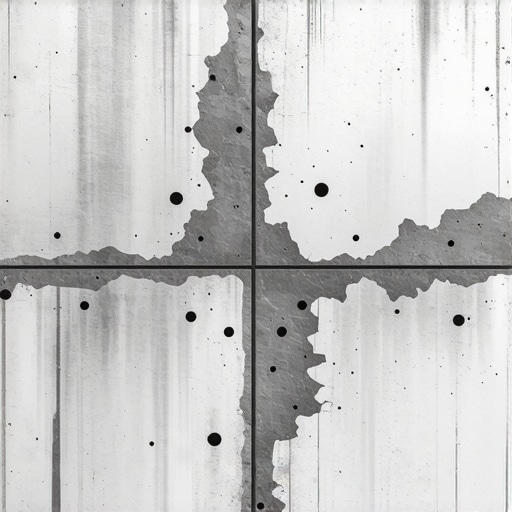
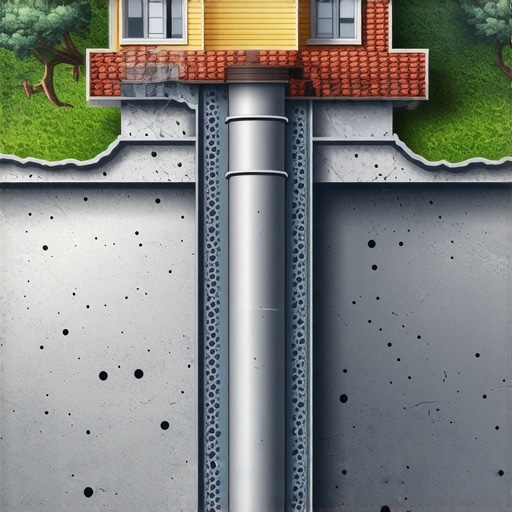
The ‘Crack Whisperer’ approach to forensics involves reading the geometry of the failure. A stair-step crack in the mortar joints usually tells me the footing is settling into an old silt pocket. But a horizontal crack? That’s the terrifying sound of the earth trying to push your wall into the center of the room. This is hydrostatic pressure—the weight of the saturated earth pressing against the structure. Without retaining wall weep hole cleaning and proper drainage, even a ten-inch thick wall will eventually bow. I’ve seen brick arch restoration projects where the weight of the water above the arch actually crushed the key stone because the drainage was blocked by decades of debris.
The 2026 Revolution: Self-Healing Concrete and Sustainable Masonry Materials
We are moving away from the era of ‘bituminous coatings’—that black tar guys slap on walls that cracks the moment the ground shifts. The future is sustainable masonry materials that behave more like living tissue than dead stone. Self-healing concrete utilizes micro-encapsulated bacteria, such as Bacillus pasteurii, or crystalline admixtures. When a crack forms and water enters, the ‘sleeping’ bacteria wake up, consume the nutrients embedded in the mix, and excrete calcite (limestone) to seal the crack from the inside out. It’s an ‘Old World’ concept—lime carbonation—reimagined for the high-performance demands of 2026.
The Science of Crystalline Waterproofing
Unlike a membrane that sits on the surface, masonry waterproofing solutions in the modern era use the concrete’s own capillary tract. These chemicals use water as a medium to migrate deep into the substrate, growing a non-soluble crystalline structure that fills the pores. Think of it as ‘buttering’ the inside of the concrete at a molecular level. This is critical for historic masonry preservation, where we cannot simply coat a 100-year-old wall with plastic without causing it to rot from the inside. We need the wall to be ‘vapor permeable’ but ‘water-tight.’ If you’ve ever used a slicker to finish a joint, you know the importance of a tight seal; crystalline tech does that for the entire wall volume.
The Restoration Reality: Tuckpointing and Beyond
I get calls every week about tuckpointing machine services. These guys show up with grinders and vacuum systems, claiming they can do in a day what takes me a week. But here’s the truth: a machine doesn’t feel the ‘tooth’ of the mortar. When we do a brick wall restoration, we are looking for the ‘sacrificial’ principle. The mortar must always be softer than the brick. If you use a high-strength Type S mortar on soft, handmade 19th-century bricks, the mortar will stay perfect while the bricks crumble into dust. You have to mix the ‘mud’ with the right ratio of lime to ensure it can flex. Even an outdoor masonry fountain restoration requires this level of detail; otherwise, the constant moisture will blow the joints apart in a single winter.
“Concrete will crack. It is the nature of the material to undergo volume changes due to temperature, moisture, and chemical reactions. Proper design must account for these inevitable movements.” – ACI 224.1R-07
The Soldier Course and the Hawk: Tools of the Trade
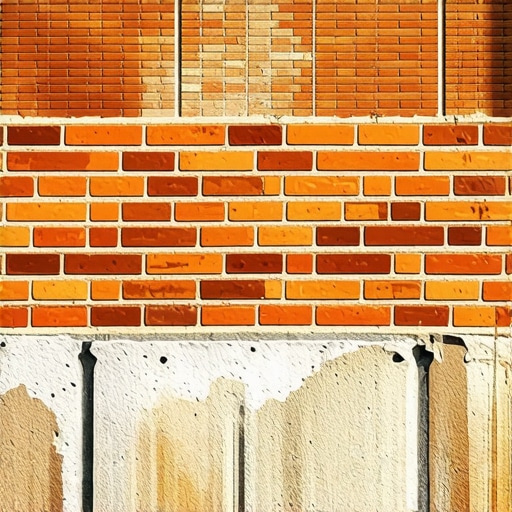
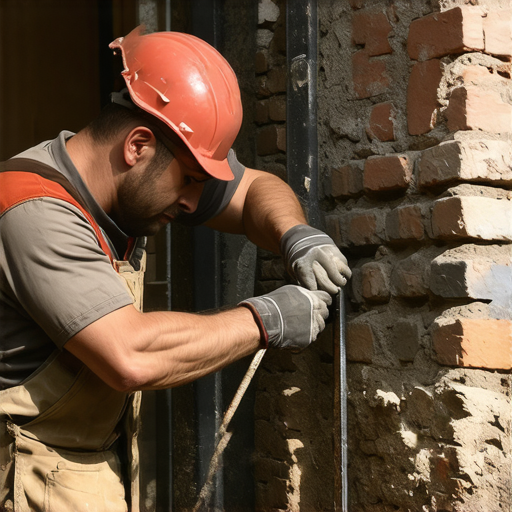
When I’m standing on a scaffold, my hawk loaded with a stiff lime-putty mix, I’m looking at the soldier course—those bricks standing on end. They are notoriously bad for water penetration because of the sheer number of vertical joints. If the previous guy didn’t pack the joints properly, you get ‘wicking.’ I use my trowel to tap the brick; it should ring with a high-frequency ‘ping.’ If it thuds, it’s ‘dead’—water-logged and structurally compromised. In brick wall restoration, we often have to surgically remove these dead units and replace them with salvaged brick that matches the original density.
How-To: Forensic Inspection of a Leaking Foundation
To identify if your basement needs masonry waterproofing solutions or a full-scale masonry rescue after disaster, follow these steps: 1. Clean the wall surface with a stiff brush; remove any efflorescence (that white, salty powder). 2. Map the cracks using a crack injection port or a simple pencil. 3. Check the exterior grade; if the dirt is sloping toward the house, you’re doomed regardless of the concrete tech. 4. Inspect the retaining wall weep hole cleaning status; if they are plugged, the pressure is building. 5. Perform a ‘calcium chloride’ test to measure the moisture vapor emission rate. If the rate is high, you need crystalline penetration, not just a surface sealer.
The Final Word: Do It Once or Do It Twice
There is no such thing as a ‘maintenance-free’ stone house. Whether it’s historic masonry preservation or a new build using self-healing tech, you are the steward of a structural organism. Don’t be fooled by ‘handyman specials’ or ‘leftover material’ scams. True masonry is about the chemistry of the bond and the physics of the water. If you don’t respect the ‘suction’ of the brick and the ‘hydration’ of the cement, the earth will eventually take its materials back. Choose the 2026 path: sustainable, self-healing, and scientifically sound. Stop the leak before it starts by understanding the ‘why’ behind the ‘how.’“,”image”:{“imagePrompt”:”A gritty, close-up forensic photo of a cracked concrete basement wall with a fiber-optic scope inserted into a drill hole, showing rusted rebar and crystalline growth, in a dimly lit, damp environment, highly detailed texture of the concrete.”,”imageTitle”:”Forensic Masonry Inspection of a Failing Foundation”,”imageAlt”:”Forensic inspector looking for structural failure in a leaking basement wall using a scope.”},”categoryId”:1,”postTime”:””}