Prevent 2026 Freeze-Thaw Damage With 5 Pro Spalling Fixes
The Forensic Scene: When the Face Falls Off
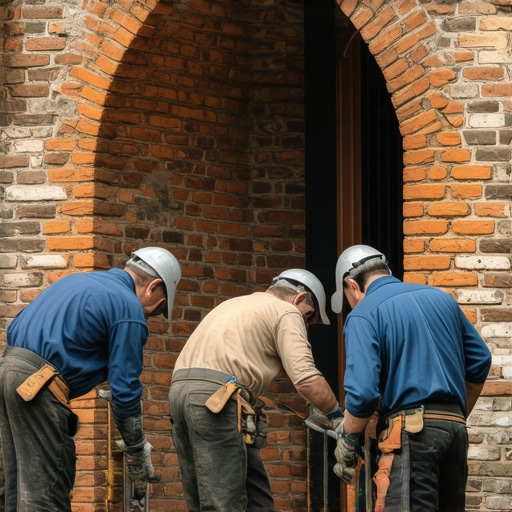
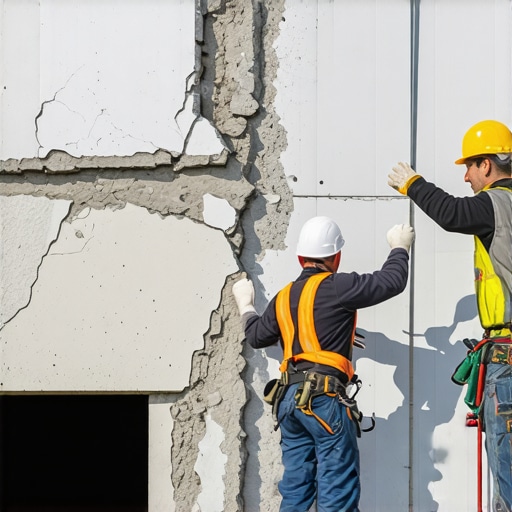
I stood on a job site last November, staring at a set of century-old steps that looked like they’d been hit by a shotgun blast. The homeowner told me it was just a few hairline cracks the year before. But when I put my scope into the voids of that concrete masonry unit restoration project, I saw the truth: the internal structure was a graveyard of rusted rebar and pulverized aggregate. The ‘cosmetic’ flakes they ignored were the early symptoms of a systemic failure caused by the brutal freeze-thaw cycle. In the masonry trade, we call this the ‘death by a thousand expansions.’ If you don’t act now, your property is on a collision course with the 2026 thaw. This isn’t just about aesthetics; it’s about the physics of water and the chemical integrity of your home’s foundation.
The Physics of the Spall: Why Your Masonry Explodes
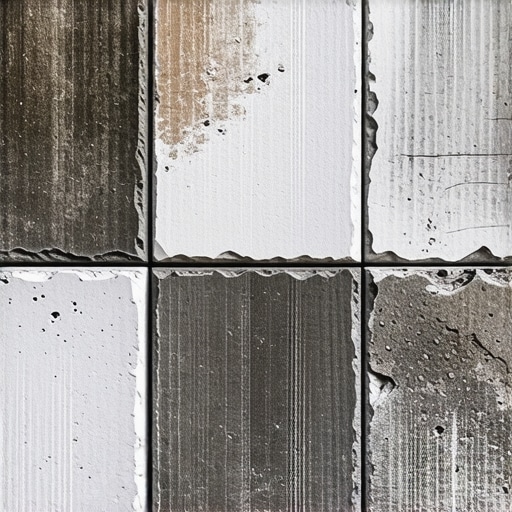
To understand spalled concrete steps repair, you have to understand the violence happening at a molecular level. Water is one of the few substances that expands when it transitions from liquid to solid—roughly 9% in volume. When moisture penetrates the capillary pores of your brick or concrete, it waits. When the temperature drops, that water transforms into ice crystals, generating internal pressures that can exceed 100,000 psi. This pressure exceeds the tensile strength of the material, causing the ‘face’ of the brick or concrete to pop off, or ‘spall.’ This is often exacerbated by honeycombing—those tiny air pockets left behind by poor vibration during the original pour—which act as reservoirs for destructive moisture.
“Water penetration is the single greatest threat to masonry durability.” – BIA Technical Note 7
1. The Chemistry of High-Performance Mortar Mixes
Stop buying the pre-mixed ‘all-purpose’ bags from the big-box stores. Those mixes are often too high in Portland cement, making them too brittle for restoration work. For a lasting cracked brick wall repair, you need high-performance mortar mixes tailored to the ‘modulus of elasticity’ of your specific wall. If your mortar is harder than your brick, the brick will break instead of the mortar. That’s a cardinal sin. We look for a mix that allows for autogenous healing—where the lime in the mortar can actually reseal micro-cracks over time through carbonation. When you’re buttering a replacement brick, that ‘mud’ needs to have the right ‘tooth’ to grab the unit while remaining flexible enough to breathe.
2. Advanced Masonry Adhesives and the Cold Joint Crisis
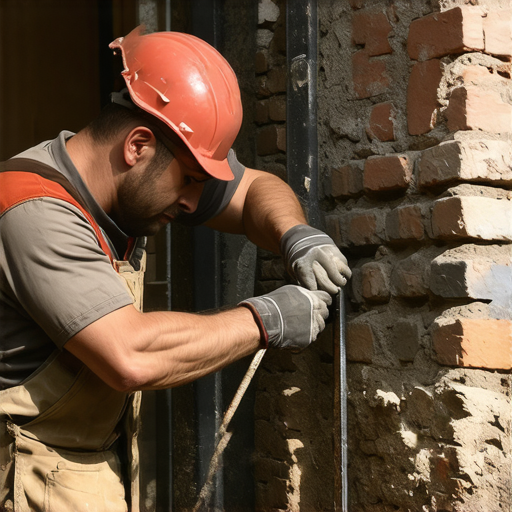
One of the biggest failures I see in spalled concrete steps repair is the ‘cold joint.’ This happens when new concrete is poured against old concrete without a proper bonding agent. They don’t knit together; they just sit next to each other, creating a massive highway for water. This is where advanced masonry adhesives come into play. These aren’t just glues; they are epoxy-based or polymer-modified resins that create a molecular bridge between the old substrate and the new patch. When we perform concrete masonry unit restoration, we ‘scab’ the surface—meaning we mechanically roughen it—then apply the adhesive to ensure the patch becomes a monolithic part of the structure, resistant to the prying force of ice.
3. Chimney Interior Parging and the Flashing Dance
Your chimney is the most exposed part of your home, taking a beating from 360 degrees. Most ‘pros’ just look at the outside, but the real rot often starts inside the flue or behind the brick. Chimney interior parging—applying a smooth coat of refractory mortar to the inside—is essential to prevent moisture from soaking into the brickwork from the inside out. Pair this with chimney flashing repair. If your lead or copper flashing is pulled away, water enters the ‘soldier course’ and settles behind the brick. By the time you see the white powder of efflorescence on the outside, the interior of your chimney is already turning to mush. You need a slicker to ensure those joints are struck perfectly to shed water, not catch it.
4. Flush Pointing Services vs. The Weathering Joint
Not all mortar joints are created equal. Many handymen provide flush pointing services because it’s fast. But a flush joint—where the mortar is level with the brick face—is a disaster in freeze-thaw climates. It creates a shelf where water can sit. As a master mason, I insist on a ‘weathered’ or ‘concave’ joint. Using a hawk and a specialized jointer, we compress the ‘mud’ into the joint, which increases its density and creates a profile that sheds water like a shingle. This compression is vital; it closes the micro-pores in the mortar, making it much harder for liquid water to gain a foothold before the mercury drops.
“The bond between mortar and masonry units is the most important property of masonry.” – ASTM C270
5. The Molecular Shield: Masonry Waterproofing Solutions
Once the foundation crack repair is complete and the joints are struck, you must seal the deal. But don’t use a surface sealer that creates a plastic-like film; that traps moisture inside and causes even more spalling. You need masonry waterproofing solutions that are ‘breathable’ or vapor-permeable. We use silanes or siloxanes. These chemicals don’t just sit on top; they penetrate up to 3/8 of an inch into the masonry and chemically bond to the silica. They change the surface tension of the pores, making them hydrophobic. Water beads up and rolls off, but water vapor inside the wall can still escape. It’s the difference between wearing a rubber raincoat and a high-tech Gore-Tex jacket.
Closing the Gap: Do It Once, or Do It Twice
Masonry isn’t a ‘set it and forget it’ trade. It’s a living, breathing part of your home’s skeletal system. When you see a crack, you aren’t just looking at a line; you’re looking at a structural cry for help. Whether it’s foundation crack repair or simple repointing, the goal is to keep the water out and the heat in. If you ignore these 5 pro fixes, by the spring of 2026, you won’t be looking at a repair bill—you’ll be looking at a demolition estimate. Get your slicker out, mix your mud correctly, and stop the spall before it stops you.
![3 Reasons to Install a Chimney Heat Shield in 2026 [Pro Tips]](https://masonryrescue.com/wp-content/uploads/2026/03/3-Reasons-to-Install-a-Chimney-Heat-Shield-in-2026-Pro-Tips.jpeg)
![Is Your Chimney Flue Flaking? 3 Interior Parging Fixes [2026]](https://masonryrescue.com/wp-content/uploads/2026/03/Is-Your-Chimney-Flue-Flaking-3-Interior-Parging-Fixes-2026.jpeg)
![Why Your 2026 Chimney Needs a Heat Shield [Safety Update]](https://masonryrescue.com/wp-content/uploads/2026/04/Why-Your-2026-Chimney-Needs-a-Heat-Shield-Safety-Update.jpeg)