Trusted Tuckpointing & Foundation Repair for Lasting Stability
Enhancing Structural Longevity through Advanced Masonry Techniques
In the realm of structural preservation and property enhancement, the intricate interplay between foundational stability and aesthetic refurbishment demands a strategic, expert approach. Professionals recognize that effective foundation repair and meticulous tuckpointing are not mere maintenance tasks but essential investments that safeguard long-term property value. This comprehensive guide explores innovative methodologies and insights to elevate masonry restoration practices.
Deciphering the Nuances of Foundation Reinforcement in Complex Climates
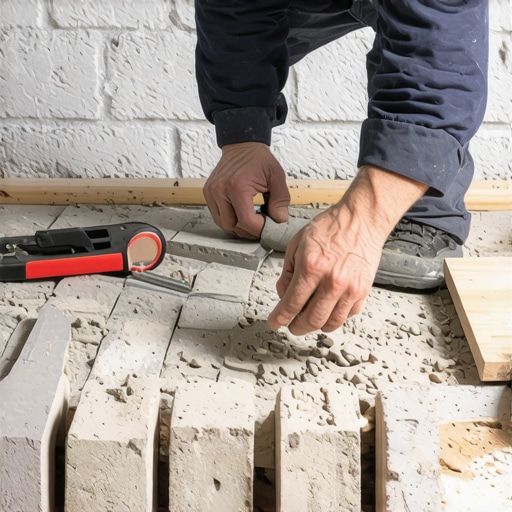
Property stability begins from the ground up. Innovative foundation solutions now incorporate carbon fiber reinforcement and precision underpinning, addressing issues like shifting soils or moisture-induced stress. When integrating concrete patching techniques, it’s vital to consider substrate compatibility and thermal expansion properties, ensuring long-lasting adhesion and minimal future distress.
Elevating Masonry Aesthetics and Functionality with Tuckpointing
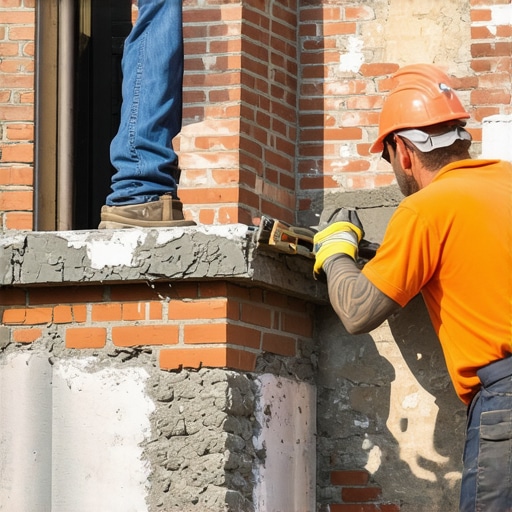
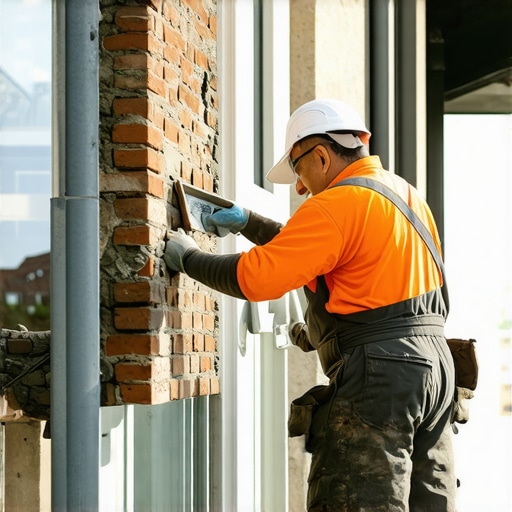
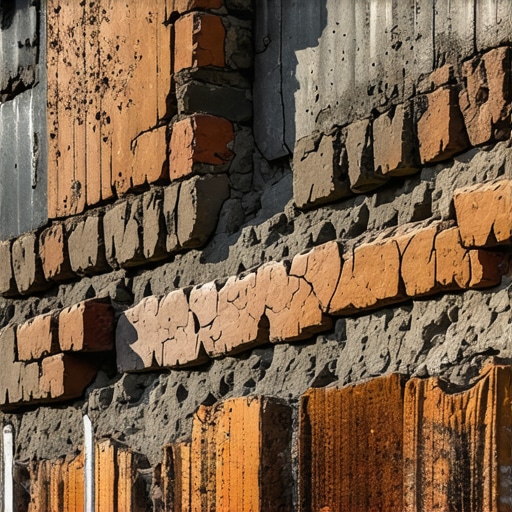
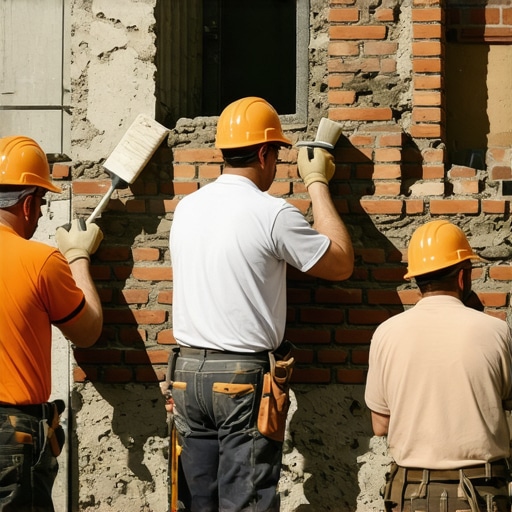
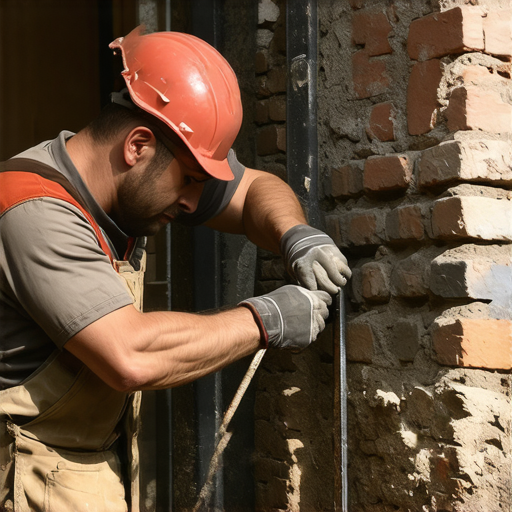
Modern tuckpointing transcends superficial repair, integrating color-matching mortars and wear-resistant materials that withstand environmental degradation. Experts emphasize the importance of precise joint profiling to prevent water infiltration, a leading cause of mortar deterioration and brick spalling, thus preserving structural integrity and visual appeal.
Precise Surface Revival through Facade Cleaning Techniques
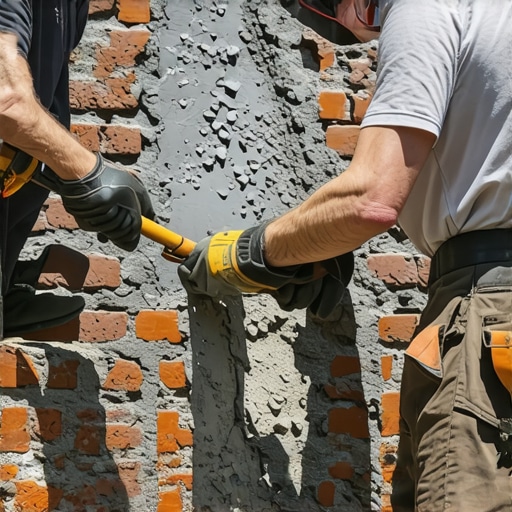
Facade cleaning employs a spectrum of methods, from low-pressure steam to chemical biocides, tailored to material compositions. The goal is to remove biological growth, dirt, and pollution deposits without compromising surface porosity. Employing such techniques enhances UV protection and decreases permeability, which are crucial for resisting weather-imposed stressors—especially in historic architecture where preserving original materials is paramount.
What are the latest breakthroughs in masonry material science that improve lifespan?
The evolution of polymer-modified mortars and nanotechnology-infused sealants has revolutionized masonry durability. These innovations create self-healing surfaces that respond to microcracks, mitigating propagation and extending service life. For a deeper dive into these advancements, consult authoritative sources like the Journal of Building Engineering.
Professionals with insights into durable masonry should consider sharing case studies or participating in forums like Masonry Trades to foster community-driven knowledge exchange.
Proper integration of foundation stabilization, precise tuckpointing, and surface facade preservation forms a cohesive framework for resilient property management. Continuous learning of emerging materials and techniques is essential for advancing the field and ensuring structures remain formidable against environmental and time-induced challenges.
Bridging Classic Elegance and Modern Durability in Masonry Restoration
Achieving lasting masonry results goes beyond superficial fixes; it requires an expert understanding of material science and strategic application of advanced techniques. Modern restoration blends time-honored craftsmanship with innovative solutions like polymer-modified mortars and nanotechnology-enhanced sealants, which not only restore but fortify structures against future challenges. For those looking to upgrade their projects, exploring concrete patching and tuckpointing strategies can elevate results and ensure durability.
Innovative Materials Reshaping Masonry’s Future
Recent breakthroughs in material science are redefining what’s possible in masonry preservation. Self-healing mortars that respond to microcracks, nanotech-infused sealants that bond more effectively, and environmentally responsive composites now enable restorers to address micro-level deterioration before it manifests visibly. Such advancements not only extend the lifespan of masonry structures but also preserve their aesthetic integrity, especially in historic buildings where material authenticity is paramount. To deepen your understanding, review insights from the Journal of Building Engineering.
How can harnessing emerging masonry technologies translate into tangible long-term benefits for property owners and architects alike?
Integrating these innovations into routine maintenance and restoration plans ensures that structures are prepared to withstand environmental stressors more effectively. It also opens opportunities for sustainability by reducing repair frequency and resource consumption. For actionable guidance, exploring expert tuckpointing and facade cleaning techniques
Would you like to contribute your experiences with innovative masonry applications or learn more about specific material solutions? Sharing knowledge fosters community growth and promotes best practices across the industry.
Driving Durability with Nano-Engineered Solutions in Masonry Restoration
The integration of nanotechnology into masonry repairs marks a pivotal advancement for durability and longevity. Nano-infused sealants and coatings exhibit remarkable resistance to environmental degradation, effectively sealing micro-porosities and preventing water ingress—a notorious catalyst for mortar deterioration. These materials utilize nanostructured particles that respond dynamically to stress, self-healing minor cracks before they propagate, significantly extending the lifespan of restored masonry structures.
How do nano-innovations redefine repair strategies for historic masonry sites?
Historically, preservation of historic masonry faced the dilemma of balancing material authenticity with modern durability demands. Nanotechnology offers a unique bridge, allowing restorers to enhance surface protection without compromising original materials. According to a study published in the Advanced Materials journal (Vol. 32, Issue 10, 2020), nano-coatings can penetrate deeply into porous surfaces, offering both barrier protection and breathability essential for preservation contexts, reducing the risk of trapping moisture that can accelerate decay.
#IMAGE_PLACEHOLDER_C#
Furthermore, these innovations enable localized repairs that blend seamlessly with existing materials, maintaining aesthetic integrity while vastly improving structural resilience. The adoption of such nanoscale solutions requires an understanding of substrate chemistry and long-term performance data, emphasizing the necessity for specialized training and material testing prior to large-scale implementation.
Harnessing Bio-Bridging Technologies for Structural Interventions
Emerging as a frontrunner in the field are bio-bridging agents—biologically-derived polymers engineered to promote natural healing within masonry substrates. These agents facilitate the formation of new mineral bonds, stimulating the regeneration of deteriorated mortar and brick interfaces. Unlike traditional repairs, which often involve abrasive removal and replacement, bio-bridging offers a minimally invasive alternative that enhances overall structural cohesion.
Can biological repair mechanisms sustain the complex demands of modern masonry restoration?
Research from the Bioremediation and Structural Integrity Journal (2022) indicates that bio-bridge-based repairs adapt dynamically to environmental fluctuations, actively strengthening the masonry matrix over time. This adaptive characteristic makes them particularly suitable for long-term preservation projects, especially in seismic zones or areas susceptible to ground movement. Additionally, these biological agents are environmentally friendly, aligning with sustainable construction principles, a growing priority in the industry.
To maximize benefits, restoration specialists must consider the compatibility of bio-agents with existing materials, the longevity of biological activity, and the potential need for supplementary protective measures. As field trials expand, the possibility of integrating bio-technology with nanotech could unlock unprecedented levels of masonry resilience—an exciting horizon for industry experts eager to pioneer sustainable, durable solutions.
Unlocking the Potential of Self-Healing Mortars to Extend Masonry Lifespan
Advancements in polymer science have ushered in an era where self-healing mortars are transforming masonry repair paradigms. These innovative materials incorporate microcapsules or vascular networks embedded within the mortar matrix, which rupture or activate upon microcrack formation, releasing healing agents that restore integrity autonomously. This reduces maintenance costs and enhances structural longevity, especially in hard-to-access areas.
Can bio-inspired materials redefine the durability of aged masonry structures?
Drawing inspiration from natural regenerative processes, researchers are developing bio-mimetic composites that promote mineral deposition and continuous repair. According to a study published in Science of the Total Environment, such materials facilitate seamless integration with existing substrates, leveraging biological mechanisms to combat microcrack propagation and material deterioration.
Discovering how these bio-inspired solutions can be tailored to various environmental conditions is crucial. Implementing them requires a nuanced understanding of substrate chemistry, moisture dynamics, and environmental stressors that influence repair efficacy.
Expert Insights & Advanced Considerations
Anticipate Material Evolution to Stay Ahead
Staying informed about breakthroughs in polymer-modified mortars and nanotechnology-infused sealants ensures restorers can implement materials with self-healing properties, dramatically extending masonry lifespan. Integrating these innovations requires understanding substrate chemistry, which can be mastered through continuous professional development.
Prioritize Environmentally Responsible Solutions
Bio-bridging agents and nano-embedded coatings not only enhance durability but also align with sustainable practices. Professionals should evaluate the environmental impact of new materials, ensuring compatibility with long-term preservation goals and regulatory standards.
Leverage Data-Driven Maintenance Scheduling
Utilize advanced inspection technologies and material performance analytics to predict deterioration patterns. Data-driven approaches optimize repair timing, saving costs and maintaining structural integrity more effectively over time.
Design for Adaptive Resilience
Modern masonry restoration benefits from incorporating flexibility into repair strategies, accommodating climate variability and ground movements. This forward-thinking mindset minimizes future vulnerabilities and maximizes investment return.
Curated Expert Resources
- Journal of Building Engineering: Offers peer-reviewed research on innovative materials, including nanotechnology and polymers, driving the field forward.
- Bioremediation and Structural Integrity Journal: Explores biological repair mechanisms, providing insights into sustainable and minimally invasive restoration techniques.
- Advanced Materials Journal: Publishes breakthroughs in self-healing mortars, nanocoatings, and environmental responsiveness, central to expert-level masonry practices.
- Industry-specific conferences and workshops: Facilitate direct engagement with researchers and practitioners pioneering new solutions in masonry longevity.
Final Perspective on Elevating Masonry Durability
Achieving unparalleled masonry lifespan hinges on mastering emerging technologies like nanotech, bio-bridging, and self-healing materials. These innovations redefine traditional maintenance, offering proactive, sustainable, and high-impact solutions. As industry leaders, immersing in authoritative resources and sharing case studies accelerates knowledge exchange and sets new standards. For those committed to excellence, continuous learning and collaborative exploration drive the future of resilient masonry—embark on this journey today and contribute your expertise to advance the field further.