
The Deceptive Promise of the Liquid Raincoat
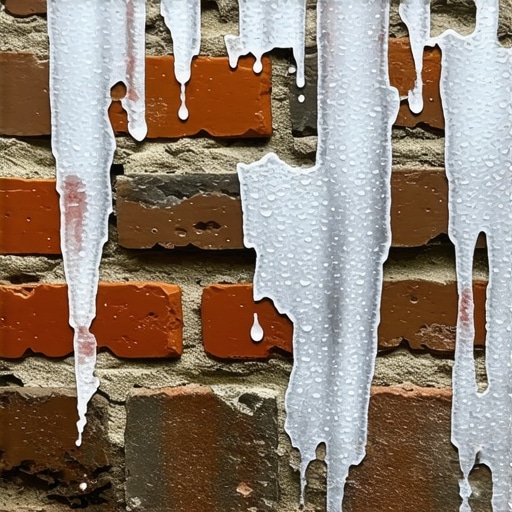
I once walked up to a late 19th-century brick brownstone that looked like it had been dipped in liquid plastic. The homeowner proudly told me he had paid a local handyperson to spray a clear, high-gloss silicone sealant across the entire facade to protect it from the elements. I pulled out my pocket knife, tapped a crumbling red unit, and the face of the brick sheared off like wet cardboard, spilling a handful of red, powdery dust into my palm. The masonry was literally rotting from the inside out. This is the tragic reality of sealing historic clay and lime structures with modern, non-breathable clear sealants.
“Water penetration is the single greatest threat to masonry durability, but restricting its natural egress can cause rapid, catastrophic physical failure of both unit and mortar.” – BIA Technical Note 7
Many property owners mistake brick and stone for impervious barriers. They are not. Masonry is a breathing, porous system of transit. It acts like a hard sponge, absorbing moisture during rainstorms and releasing it back into the atmosphere as vapor through evaporation. When you apply a topical, non-breathable clear sealant, you do not keep water out forever; you lock the water in. This trapped moisture initiates a destructive cycle of brick efflorescence removal needs, internal spalling, and structural decay that eventually demands historic tuckpointing or complete wall reconstruction.
The Thermodynamics of Vapor Drive: Why Clear Sealants Fail
To understand why clear sealants are often a death sentence for masonry, we must analyze the physical process known as vapor drive. Moisture enters a masonry assembly from multiple directions: through capillary action from damp soil (rising damp), from interior living spaces (showering, cooking, breathing), and through micro-fissures in aging joints. When the sun beats down on a damp wall, the water within tries to migrate outward as a gas. If it encounters a synthetic, film-forming polymer sealer at the surface, it cannot escape. The vapor pressure builds behind this microscopic barrier.
In historic structures built before World War II, the units are soft and the mortar is composed of simple hydrated lime and sand. This setup relies on the mortar being softer and more porous than the brick, acting as a sacrificial wick. Applying a modern impervious sealant changes the physical properties of the wall surface. Instead of evaporating harmlessly, the trapped liquid water undergoes cyclic phase changes. In regions experiencing temperature swings, this trapped water expands by nine percent when it freezes, exerting immense hydraulic pressure that pops the face off the brick, a phenomenon known as spalling.
The Menace of Efflorescence and Subflorescence
When water travels through masonry, it dissolves natural soluble salts present in the clay, cement, or soil. Under normal circumstances, this salty solution reaches the surface, the water evaporates, and a white, powdery residue remains. This is known as efflorescence. While unsightly, it can be managed with professional brick efflorescence removal techniques. However, when a clear sealer is applied, the evaporation front is pushed deeper into the wall assembly. The salts crystallize behind the sealed surface. This hidden process, called subflorescence, exerts crystallization pressures that exceed the tensile strength of the clay, disintegrating the internal matrix of the brick until it crumbles under finger pressure.
“Soluble salt crystallization within the pore structure of historic brickwork is a primary agent of physical decay, often exacerbated by surface coatings that alter the evaporation zone.” – ASTM C1713 Standard Guide for Mortars for Historic Masonry
Once subflorescence sets in, the damage is structural. Simply brushing off the white powder is no longer an option. The crumbling substrate can compromise load-bearing walls, leading to bowing masonry units and requiring expensive foundation wall bowing repair or structural stabilization.
Waterproofing vs. Damp-proofing: The Professional Path to Dry Walls
So, how do we protect our buildings without suffocating them? The answer lies in addressing the root cause of water intrusion rather than slapping a band-aid over the brick. True protection requires a systematic approach, starting with chimney leak detection, drone chimney inspections to spot high-altitude masonry failures, and repairing defective flashings. Rather than sealing a chimney facade, you may need a professional chimney flue liner installation to prevent acidic flue gases from condensing within the brickwork.
Instead of topical film-formers, historic preservationists utilize highly breathable, penetrating water repellents such as silanes or siloxanes. These compounds do not form a skin; they chemically bond to the interior of the pores, changing the surface tension of the masonry to repel liquid water while allowing vapor molecules to pass through freely. However, these sealers should only be applied to stable, clean masonry. If the joints are already cracked and failing, no liquid in a bucket will save them; you need full repointing services or historic tuckpointing to rake out the old joints and butter them with fresh, lime-rich mud.
The Anatomy of Proper Restoration: Ditch the Sealant, Fix the Joints
If you are facing damp walls, the solution is almost always mechanical, not chemical. A trained mason will examine the structural integrity of your wall, checking for honeycombing in concrete masonry unit restoration, or applying foundation waterproofing membrane systems below grade where hydrostatic pressure is highest, rather than sealing the above-grade facade. The true cure for leaking walls involves removing the failed, hard Portland cement mortar and executing a historic tuckpointing job using a soft, breathable lime-based mix that matches the original materials.
First, the old mortar must be ground out to a depth of twice the joint width using hand tools or specialized dust-less grinders. Next, the joints are flushed with water to control suction—preventing the dry brick from drinking the water out of the fresh mud too quickly, which would cause the mortar to burn and crumble. Then, the mason uses a hawk and slicker to tightly pack the joint in lifts, striking it to match the historic profile. This ensures the wall can breathe, shed water, and flex with seasonal thermal movement without cracking. Don’t fall for the cheap fix of a spray-on sealant. Maintain your joints, ensure proper drainage, and let your building breathe.